
Root aphid
Trama
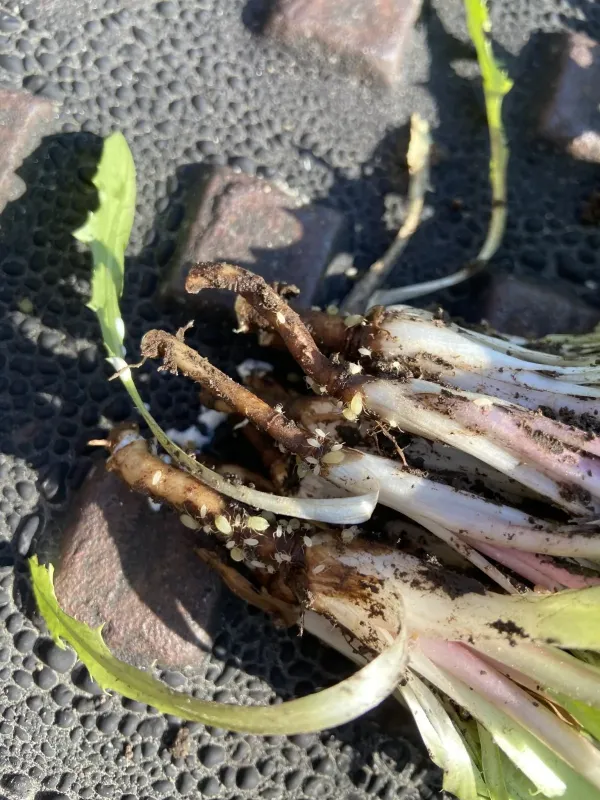
Description
How to identify
The genus Trama belongs to the family Aphididae. These are highly specialized subterranean pests that spend their entire life cycle on the roots of host plants.
Adult individuals are relatively large compared to other aphid species and are often covered with a waxy substance to protect them against soil moisture.
They maintain a symbiotic relationship with ants, which protect the aphids and facilitate their movement between different root systems in the soil.
Their mouthparts are specifically adapted to pierce tough root tissues and extract plant sap, which serves as their primary food source.
Reproduction occurs mainly through parthenogenesis, enabling these aphids to rapidly build large subterranean colonies during favorable seasonal conditions.
What it damages
Root aphids of the genus Trama primarily infest plants in the Asteraceae family, including artichokes, thistles, and other related ornamental species.
The damage is localized in the root zone, making it difficult to detect the infestation until the plant shows significant signs of physiological stress.
By feeding on the root system, aphids disrupt the plant's ability to absorb water and essential nutrients, leading to stunted growth.
Feeding sites often become entry points for various soil-borne pathogens and root rot diseases, further damaging the plant's vascular system.
Severe infestations can lead to a drastic decline in crop yield and, in sensitive young plants, may cause total plant death.
Signs of infestation
The most visible indicator of an infestation is the presence of ant mounds or increased ant activity around the base of the plant.
If the plant is carefully uprooted, one can observe clusters of pale, slow-moving aphids clinging to the root mass, surrounded by attending ants.
Affected plants exhibit symptoms of water stress, including yellowing leaves and wilting, which does not improve despite adequate irrigation.
A white, powdery substance—composed of wax and aphid excrement—is often found in the soil surrounding the infested root area.
General loss of vigor and poor development compared to healthy specimens nearby often point toward root system interference by pests.
Control measures
Managing Trama populations primarily requires controlling the ant colonies that protect and transport the aphids across the root zones.
Application of soil-drenching insecticides is often the most effective method for immediate reduction of aphid numbers in the rhizosphere.
Cultural practices, such as deep tilling and regular soil cultivation, help disrupt ant galleries and destroy the underground habitats of the aphids.
Biological controls, including the use of entomopathogenic fungi or nematodes, are increasingly used in integrated pest management to suppress populations.
Monitoring host plants and implementing proper crop rotation are essential strategies to prevent the buildup of root aphid populations over time.
Taxonomy
- Latin name
- Trama
- Order
- Hemiptera (bugs, aphids, leafhoppers)
- Family
- Aphididae
- EPPO code
- TRAMSP
Discussion
No discussions yet — be the first.