
Torymus
Torymus eurytomae
Description
How to identify
Torymus eurytomae is a species of parasitic wasp belonging to the family Torymidae within the order Hymenoptera. While many torymids are known as beneficial parasitoids, specific species like this one can act as pests that damage the reproductive organs of plants.
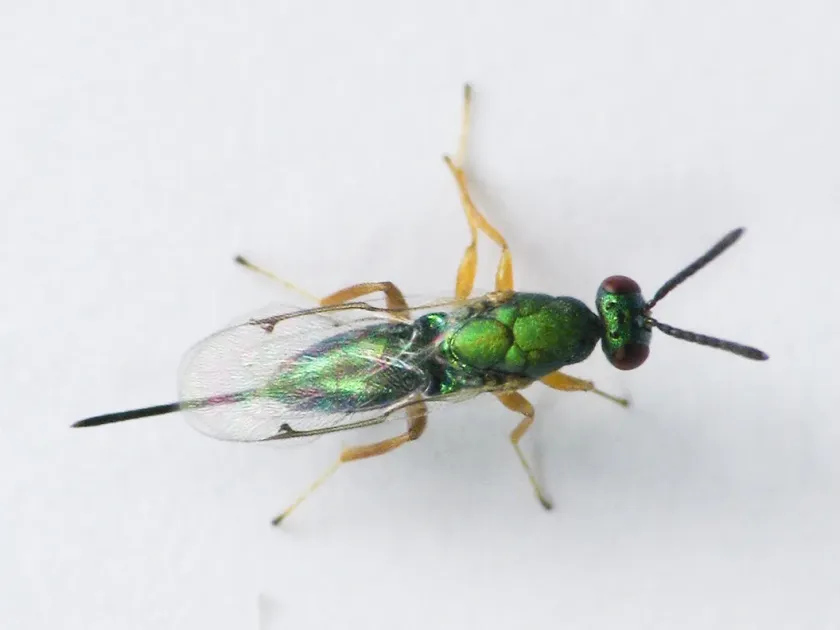
Adult insects are small chalcid wasps characterized by a metallic, often greenish or copper-colored sheen. Females possess a long ovipositor, which they use to penetrate tough plant tissues to deposit eggs directly into developing seeds or fruits.
The larvae of the pest lead a concealed lifestyle, feeding on internal plant tissues. This cryptic behavior makes the pest difficult to detect until the damage is already severe or the adult wasp has emerged from the fruit.
The life cycle of the insect is strictly synchronized with the phenology of its host plant, ensuring that larvae have sufficient nutrients during the seed formation stage. Pupation typically occurs inside the infested object, providing a safe environment.
Distinguishing between different species of the genus Torymus is essential, as some are specialized parasites of other insect pests, while others directly damage the crop, causing economic losses for growers.
What it damages
The primary damage is caused to the seeds and fruits of various fruit-bearing and nut trees. Larval feeding destroys the seed's embryo or internal structure, rendering the seed non-viable and reducing the commercial quality of the fruit.
In seed production nurseries, this pest can cause significant financial losses, as infested seeds fail to germinate, and infested fruits often drop prematurely due to weakened internal structures.
Damaged fruits are often more susceptible to secondary pathogens, including fungi and bacteria, which enter through the small holes created by emerging adults, leading to rot and further spoilage.
The economic impact of the pest is often underestimated due to the internal nature of the damage. By the time holes appear on the surface of the fruit, the damage to the seed stock is already irreversible.
Effective scouting is difficult, as infested fruits may appear externally normal for most of the growing season, masking the presence of the larvae developing within.
Control measures
Management strategies focus on breaking the insect's life cycle. The most critical step is the sanitation of the orchard, which includes the immediate collection and disposal of fallen fruits where larvae or pupae may be overwintering.
Chemical control must be applied with precision, targeting the adult stage during the brief window of peak activity before egg-laying occurs. Integrated pest management (IPM) practices should be prioritized.
In nurseries, strict quarantine protocols are necessary when handling seeds or young transplants to ensure the pest is not introduced to new areas or clean orchards.
Regular orchard maintenance, such as pruning branches where infested fruit may remain trapped, helps to reduce the population density of the pest over time.
- Sanitary cleanup and removal of fallen fruit.
- Pruning and destruction of infested twigs or fruits.
- Use of pheromone traps for timing pesticide applications.
- Monitoring fruit samples for signs of internal larval development.
Taxonomy
- Latin name
- Torymus eurytomae
- Order
- Hymenoptera
- Family
- Torymidae
- EPPO code
- SYNOEU
Discussion
No discussions yet — be the first.