
Rose seed chalcid
Megastigmus aculeatus
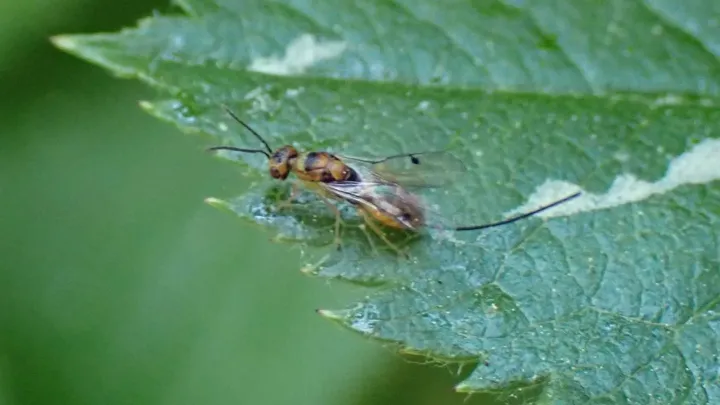
Description
How to identify
The rose seed chalcid, Megastigmus aculeatus, is a small wasp belonging to the family Torymidae. It is a highly specialized parasite that affects rose species.
Adult wasps are typically 2 to 3 millimeters long with a slender, yellowish-brown body featuring dark markings, characteristic of the genus.
Females possess a long, distinct ovipositor, which they use to penetrate the flesh of developing rose hips and lay eggs directly into the seeds.
The larvae are white, legless, and have a curved body shape. They live and develop exclusively inside the seed, consuming the internal nutrient-rich tissues.
Pupation occurs within the seed coat, and the adult wasp emerges by chewing a small exit hole through both the seed and the fruit wall.
What it damages
The pest primarily targets roses (Rosa spp.). It causes significant economic damage to seed production in nurseries and specialized garden centers.
Larval feeding destroys the embryo and endosperm of the rose seed. Because the larvae feed internally, the damage is completely hidden until the fruit is opened or the adult emerges.
A single rose hip can harbor multiple larvae, leading to the destruction of the entire seed lot within that fruit.
For breeders and commercial growers, the loss of seed viability is a major issue, as it drastically reduces the yield of rootstocks and planting material.
The presence of the pest does not usually affect the external quality of the hip for ornamental purposes, but it severely compromises the reproductive capability of the plant.
When it appears
The lifecycle of the rose seed chalcid is perfectly synchronized with the flowering and fruit-setting period of roses.
Adult wasps emerge in spring and early summer when the young hips are forming, providing the ideal substrate for egg-laying.
Throughout the summer, the larvae feed and grow inside the hardening seeds, completing their development in protected conditions.
The insect overwinters as a mature larva inside the seed, regardless of whether the hip remains on the shrub or falls to the ground.
Pupation takes place inside the seed the following spring, just before the cycle restarts with the emergence of the new generation of adults.
Signs of infestation
The most reliable sign of an infestation is the presence of tiny, circular exit holes on the exterior of mature rose hips.
When seeds are extracted and cracked open, they appear hollow or contain larval frass and debris instead of a healthy, white embryo.
In cases of heavy infestation, you might notice premature ripening or drying of the fruit, although this is not always a consistent symptom.
- Circular emergence holes on the hip skin.
- Hollow or damaged seeds upon inspection.
- Reduced germination rates in stored seed lots.
Monitoring the adult wasps during the flowering period using traps can also indicate the level of potential pressure on the current season's crop.
Control measures
Sanitation is the cornerstone of controlling the rose seed chalcid, as it aims to break the insect's life cycle before the next generation emerges.
Regularly collect and destroy all fallen and infested rose hips to ensure that larvae inside them do not reach adulthood.
If seeds are harvested for planting, they should be treated or sorted through floating methods to remove empty, infested seeds.
Insecticide sprays are rarely effective due to the difficulty of hitting the adult wasps and the risks posed to beneficial pollinators visiting the roses.
Maintaining a distance from neglected, wild rose thickets can prevent re-infestation, as these areas often serve as constant reservoirs for the pest.
Taxonomy
- Latin name
- Megastigmus aculeatus
- Order
- Hymenoptera
- Family
- Torymidae
- EPPO code
- MEGSAC
Discussion
No discussions yet — be the first.