
Torymus cyaneus
Torymus cyaneus
Description
How to identify
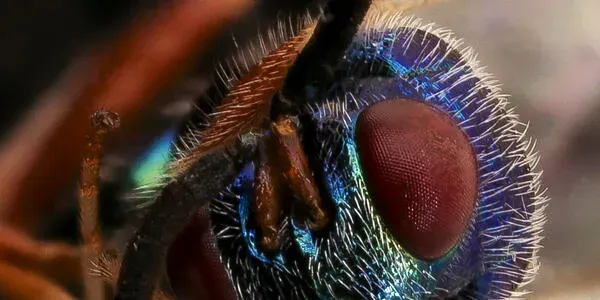
Torymus cyaneus is a parasitic wasp belonging to the family Torymidae, order Hymenoptera. It is recognized by its brilliant metallic-blue or green exoskeleton, which distinguishes it from many other forest insects.
Adult females are characterized by a long, slender ovipositor, an anatomical feature that allows them to drill through woody tissues to lay eggs inside plant galls or seeds.
The larval stage is legless and white, developing internally within the host tissue, where it consumes the host or competes with other larvae inhabiting the same space.
Systematically, this species plays a complex role in the ecosystem, sometimes acting as a parasite of gall-inducing insects, and at other times causing direct damage to host plants.
Accurate identification usually requires specialized keys focusing on morphological details such as antennal structure, wing venation, and the length of the ovipositor relative to the body size.
What it damages
This species primarily targets forest trees, particularly oaks, where it interacts with various gall-forming insects that affect buds, leaves, and reproductive structures.
Direct damage occurs when larvae develop inside the plant organs, disrupting the normal supply of nutrients and causing the tissues to wither or undergo premature senescence.
By damaging seeds and fruits, the pest can significantly reduce the regeneration capacity of the forest, which is critical for the long-term sustainability of oak stands.
The feeding activity of larvae creates internal channels that compromise the structural integrity of twigs and buds, leading to stunted growth in young saplings.
Economic damage is observed in nurseries and botanical gardens where high levels of infestation reduce the ornamental value and the overall vitality of valuable specimens.
When it appears
The flight activity of Torymus cyaneus is typically observed during the late spring and early summer, coinciding with the growth phase of new foliage and buds.
Overwintering occurs in the pupal stage, usually sequestered inside galls or in the leaf litter, which provides protection against cold weather and environmental stressors.
The emergence of adults is highly synchronized with the phenology of the host plant, ensuring that females can locate suitable sites for oviposition immediately after emergence.
There is generally one generation per year; however, temperature variations can slightly shift the timing of emergence, potentially leading to overlapping life cycles.
The mating and egg-laying phase is relatively short, lasting only a few weeks, which is the most sensitive period for the application of protective measures.
Signs of infestation
The most reliable sign of an infestation is the presence of small, circular exit holes on the surface of plant galls, which indicate that an adult wasp has emerged.
Plants infested by Torymus cyaneus may show deformities in leaf shape, premature browning of needles or leaves, and the drying out of terminal buds.
- Circular emergence holes on galls.
- Deformation and abnormal swelling of buds.
- Premature leaf drop during the growing season.
- Evidence of tunneling within fruit or seed tissues.
- Reduced vitality and stunted annual growth.
The presence of adults, identified by their characteristic metallic shimmer, around host trees during the peak flight period is a major diagnostic indicator.
In cases of severe infestation, the accumulation of damaged galls and the visual thinning of the canopy provide clear evidence of a high population density.
Control measures
Cultural control is the most effective management strategy, involving the removal and destruction of infested twigs and leaf litter to eliminate overwintering pupae.
Biological control relies on maintaining healthy populations of natural predators, such as ants and birds, which can reduce the wasp's numbers in forest ecosystems.
Chemical intervention is limited due to the concealed larval stage and should only be applied during the brief adult flight period to target the reproductive population.
Using pheromone-based monitoring tools helps foresters track the arrival of the pest and implement control measures at the precise moment of emergence.
Promoting a mixed forest structure improves tree resilience and prevents mass outbreaks, ensuring that the population of Torymus cyaneus remains below economic thresholds.
Taxonomy
- Latin name
- Torymus cyaneus
- Order
- Hymenoptera
- Family
- Torymidae
- EPPO code
- TORYCY
Discussion
No discussions yet — be the first.