
Torymus coloradensis
Torymus coloradensis
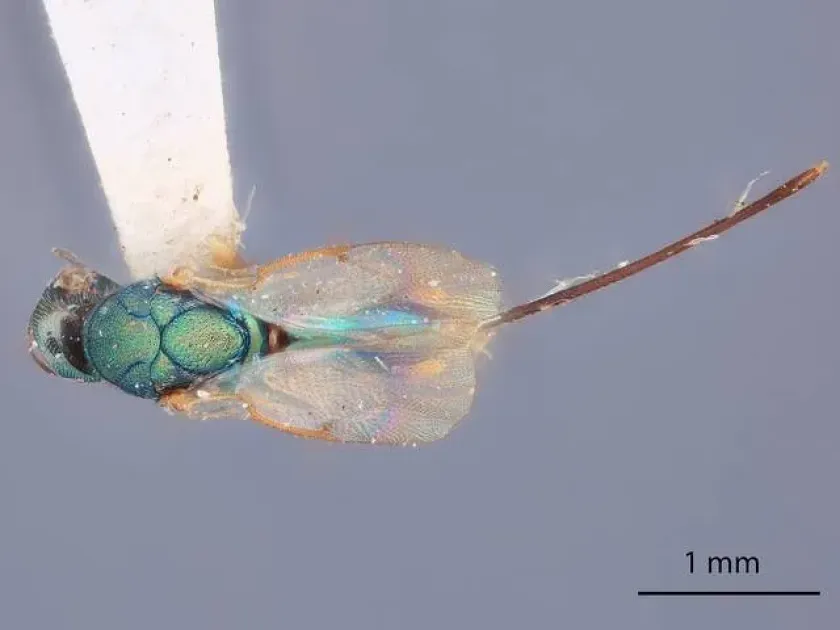
Description
How to identify
Torymus coloradensis is a tiny parasitic wasp belonging to the family Torymidae within the order Hymenoptera. Adult specimens are often characterized by a vibrant metallic sheen, ranging from emerald green to copper, which serves as a key identifying feature.
Females are easily recognized by their long, needle-like ovipositors, which they use to penetrate tough seed coats. These insects are quite small, typically measuring only a few millimeters in length, making them difficult to spot in dense foliage without specific monitoring tools.
The larval stage is characterized by a legless, C-shaped body that resides entirely within the host's seed. Unlike other wasps, they do not build nests, as they rely on the seed's interior to provide shelter and nutrition throughout their development.
Morphological identification is often based on the venation patterns of their wings and the relative proportions of their abdominal segments. Experts usually require microscopic inspection to confirm the species with absolute certainty.
The reproductive strategy of this species is highly synchronized with the host plant's phenology. Successful propagation depends on the availability of receptive seeds during the specific window of egg-laying activity.
What it damages
This pest is a specialized seed-feeder, primarily affecting the reproductive organs of various host plants. The larvae feed directly on the developing embryo and endosperm, effectively rendering the seed inviable.
The economic impact of Torymus coloradensis is most pronounced in seed orchards and nurseries. Because the damage is internal, it frequently goes undetected until the seeds are processed or tested for germination viability.
High infestation rates can lead to substantial losses in seed yield. When populations are dense, the pest can consume a significant portion of the seasonal harvest, complicating reforestation and cultivation efforts.
Since the exterior of the seed remains intact during the larval feeding stage, visual inspection alone often fails to identify the damage. This concealment allows the pest to proliferate before agricultural managers are aware of the threat.
Beyond simple numerical losses, the pest causes a qualitative decline in seed batches. This poses a challenge for seed certification processes, as infected seeds may be mixed with healthy ones, spreading the infestation further.
When it appears
Adult emergence typically begins in the spring, triggered by rising temperatures and the phenological development of host plant buds. This synchronization is crucial for the female to find suitable seeds for oviposition.
The activity period of adults is relatively short but intense. It is during this window that they mate and lay eggs, ensuring their offspring have adequate time to develop within the forming seeds.
Throughout the summer, larvae grow inside the seeds, completing their development as the season progresses. Depending on the local climate, they may pupate in late summer or remain in a quiescent state through the winter.
Overwintering usually occurs as a mature larva or pupa within the protected environment of the seed shell. This strategy provides an excellent defense against harsh winter temperatures and predation.
Monitoring for adults should be concentrated during the blooming and seed-setting phases. Using yellow sticky traps can provide valuable data on the timing of peak emergence, facilitating timely intervention.
Signs of infestation
The most reliable sign of an infestation is the presence of small, perfectly circular exit holes on the seed surface. These are created by emerging adults when they leave the seed after metamorphosis.
Infected seeds are often lighter in weight than healthy ones. When handling large batches, those that float in water or feel hollow are prime candidates for closer inspection to check for internal larval activity.
Poor germination results in standard testing are frequently the first indicator of a hidden pest problem. If a batch shows unusually low viability, destructive sampling and dissection of the seeds are necessary to verify the presence of larvae.
While the reproductive organs are severely damaged, the host plant's vegetative growth remains largely unaffected. This paradox can be misleading, as the plant appears healthy despite the loss of its current reproductive output.
The observation of small, metallic-colored wasps hovering around the canopy during the late spring is a clear indicator of active infestation. Such observations should trigger immediate scouting and management protocols.
Control measures
Effective management requires an integrated approach that targets the pest during its vulnerable adult stage. Because the larvae are protected inside the seeds, chemical control is most successful when timed with the adult flight period.
Prompt harvesting is a critical cultural control practice. By collecting seeds as soon as they mature and before adult emergence occurs, managers can physically remove the pest population from the site.
- Applying systemic insecticides during the peak adult flight period.
- Using pheromone or sticky traps to monitor populations and identify infestation trends.
- Implementing gravity-based sorting machines to remove hollow, infested seeds from the batch.
- Fumigating stored seed lots to eliminate any lingering larvae or pupae.
- Removing and destroying infested plant material to prevent the buildup of local populations.
Biological control, such as the encouragement of natural predators or parasitoids that attack the wasp, can also be utilized. This reduces the need for chemicals and supports a healthier ecosystem.
Strict sanitation measures, including the proper disposal of infested debris, are essential to stop the spread of the pest. Continuous monitoring allows for proactive rather than reactive management decisions.
Taxonomy
- Latin name
- Torymus coloradensis
- Order
- Hymenoptera
- Family
- Torymidae
- EPPO code
- CLLMCO
Discussion
No discussions yet — be the first.