
Torymus beneficus
Torymus beneficus
Description
How to identify
Torymus beneficus is a Hymenopteran insect belonging to the family Torymidae. Within agricultural and forestry ecosystems, it is widely recognized as a specialized parasitoid that targets the chestnut gall wasp, Dryocosmus kuriphilus.
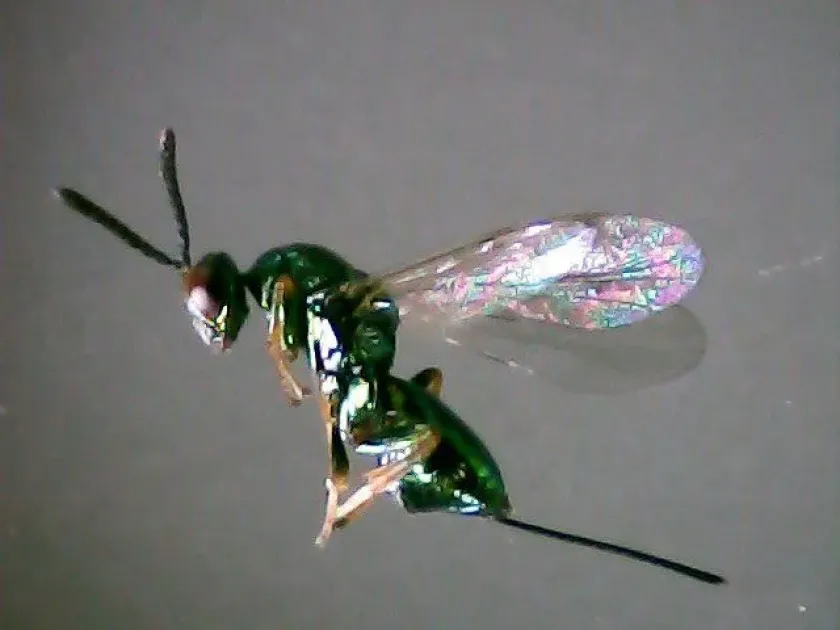
The adult insects are small wasps with a distinct metallic luster. Females possess an elongated ovipositor, which they use to pierce plant tissues and deposit eggs directly into the galls where the host larvae reside.
The life cycle of this species is intricately synchronized with the phenology of the chestnut tree and the development cycle of the gall wasp. Larval development occurs inside the gall, where the Torymus larva feeds on the host.
This species is highly valued for its searching efficiency. Females are capable of locating host populations across dense canopy layers, making them a cornerstone of biological control programs in affected regions.
Systematically, it is classified as a parasitoid rather than a primary pest. Its identification is crucial for farmers monitoring orchard health to distinguish it from harmful species that require direct intervention.
What it damages
The "damage" caused by Torymus beneficus is largely ecological rather than direct. In healthy ecosystems, it acts as a regulator, but in disturbed environments, an overpopulation of this species can lead to the displacement of other beneficial parasitoids.
Occasional mechanical damage occurs when female wasps search for hosts, causing minor injury to young shoots and leaves. While these injuries are generally microscopic, they can affect the aesthetic value of ornamental chestnut plantations.
Indirect damage stems from the disruption of natural pest-parasitoid dynamics. If the population of Torymus beneficus spikes, it can inadvertently leave other pests uncontrolled by eliminating their competing natural enemies.
In commercial chestnut production, the economic impact is usually indirect, related to the costs of monitoring and adjusting integrated pest management (IPM) strategies to maintain a healthy balance.
The species does not cause extensive direct harm to plant foliage or fruit yield, making it an object of study rather than a major threat to agricultural productivity in most settings.
Control measures
The management of Torymus beneficus is rooted in conservation biological control. Chemical intervention is strictly avoided as broad-spectrum insecticides would devastate the beneficial insect complex of the orchard.
Sanitation practices, such as the removal and proper disposal of infested galls during the winter dormancy period, are the most effective way to regulate the population levels of both the host and the parasitoid.
Maintaining biodiversity through the planting of flowering nectar-producing plants near chestnut groves supports the longevity and fecundity of adult wasps, ensuring a stable population that effectively manages pest numbers.
Monitoring using pheromone-based or visual trap systems allows agronomists to track population trends. These data points help in making informed decisions about whether specific management actions are necessary.
Adhering to rigorous agronomical standards, including balanced fertilization and irrigation, ensures that chestnut trees remain vigorous and better able to recover from minor insect-related disturbances.
Taxonomy
- Latin name
- Torymus beneficus
- Order
- Hymenoptera
- Family
- Torymidae
- EPPO code
- TORYBE
Discussion
No discussions yet — be the first.