
Blue Torymus
Torymus azureus
Description
How to identify
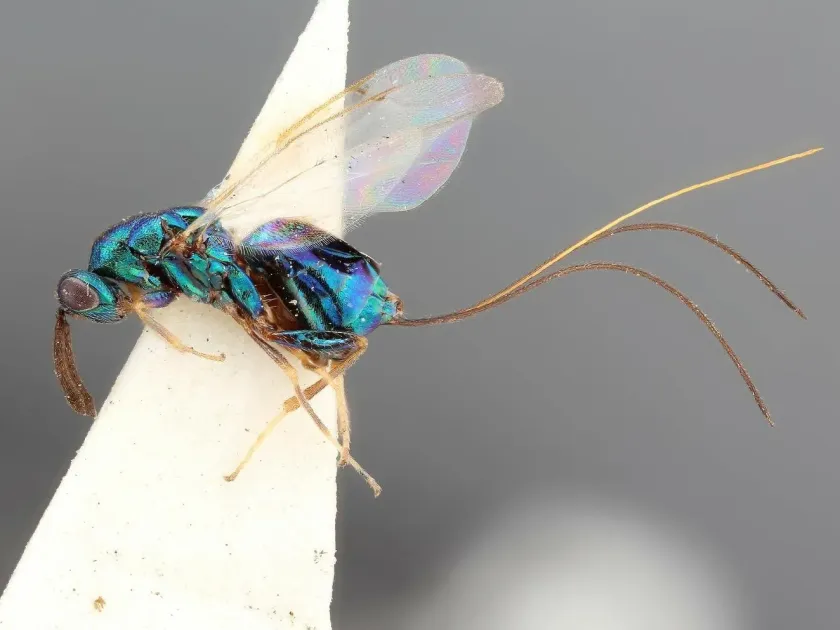
Blue Torymus (Torymus azureus) belongs to the order Hymenoptera and the family Torymidae. These are small parasitic wasps easily recognized by their brilliant metallic blue or green coloration.
Adult females are characterized by a prominent, long ovipositor, which is a specialized tool used to deposit eggs deep into plant tissue, seeds, or galls. Due to their minute size and rapid movement, they are rarely observed unless specifically monitored.
What it damages
This species primarily targets the reproductive structures of various trees and shrubs. By laying eggs inside the fruit or seeds, the larvae feed on the internal tissues, effectively destroying the seeds and rendering them infertile.
Economic damage is most significant in forestry and seed orchards where seed quality is paramount. Infested fruits may also suffer from developmental deformities, affecting the overall vigor and productivity of the host plant.
When it appears
The life cycle of the Blue Torymus is strictly synchronized with the flowering and fruiting period of its host plants. Emergence of the adult wasps typically occurs in the spring, coinciding with the early stages of fruit development.
The larvae spend the majority of the growing season inside the fruit, feeding and developing. By late summer or autumn, they prepare to overwinter, often remaining in the pupal stage protected within the remnants of the fruit or gall until the following spring.
Signs of infestation
The most reliable sign of an infestation is the presence of tiny, pin-sized exit holes on the surface of ripened or fallen fruits. These holes are created by the adult wasps as they emerge after completing their metamorphosis.
Additional signs include premature dropping of fruits and a noticeable internal decay or hollowing of the seed structure. In some cases, external deformities or abnormal swellings on the fruit surface indicate larval activity within.
Control measures
Effective management of the Blue Torymus focuses on breaking its life cycle. The most critical practice is the consistent removal and destruction of fallen fruits and infested plant debris to eliminate overwintering populations.
If chemical control is necessary, applications should be timed precisely with the spring emergence of the adults. Using sticky traps can help monitor population levels, allowing for more targeted application of systematic insecticides to prevent egg-laying.
Taxonomy
- Latin name
- Torymus azureus
- Order
- Hymenoptera
- Family
- Torymidae
- EPPO code
- TORYAZ
Discussion
No discussions yet — be the first.