
Torymus affinis
Torymus affinis
Description
How to identify
Torymus affinis is a species of parasitic wasp belonging to the family Torymidae within the order Hymenoptera. It is recognized for its specialized life history.
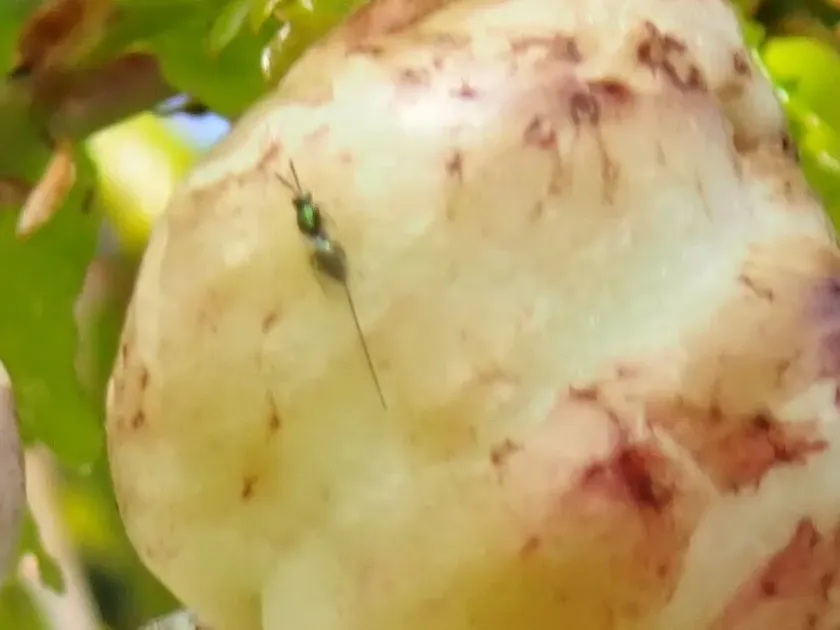
The adults are typically characterized by a metallic, iridescent body color. The females possess a prominent ovipositor, which is a specialized organ for laying eggs inside protected plant tissues.
Larvae are legless, cream-colored, and adapted to living within the confined spaces of seeds or fruits. Their development is often hidden from the naked eye for most of the season.
Accurate identification of this species usually requires examination under high magnification, as it shares many morphological similarities with other species within the genus.
While often studied in the context of plant-insect interactions, Torymus affinis has established itself as a pest affecting the yield of specific orchard crops.
What it damages
The primary hosts for Torymus affinis are hazelnut trees. The larvae develop inside the nuts, feeding on the developing kernel during the growing season.
Feeding by the larvae causes the kernels to be destroyed, resulting in empty or undersized nuts that are unfit for commercial use.
Early infestation often leads to premature nut drop, which reduces the overall yield significantly if the population density is high enough.
Even if the nuts remain on the tree, the internal damage makes them susceptible to secondary infections by fungi, further decreasing the crop quality.
The damage often remains hidden until harvest or cracking, when the characteristic exit holes or hollow shells become apparent to the grower.
When it appears
The life cycle of the wasp is tightly linked to the phenological development of the host plant, starting with adult emergence during the spring flowering phase.
The adult wasps emerge and search for young, soft-shelled nuts to deposit their eggs. This activity period is crucial for the establishment of the next generation.
Larvae feed and develop inside the nut throughout the summer months. During this period, they pass through several developmental stages before preparing for dormancy.
Overwintering usually occurs as a larva or pupa within the infested nut. These infested nuts may fall to the ground or remain attached to the tree during winter.
The emergence time in spring can vary based on regional climatic conditions, making monitoring essential for effective management programs.
Signs of infestation
Early signs include the sudden dropping of green nuts in late spring or summer. Inspecting these nuts often reveals the presence of larvae inside.
Small, round exit holes on the surface of the nut shell are clear indicators that an adult wasp has completed its development and emerged.
A reduction in nut weight or kernel quality during harvest can signal a significant level of infestation that occurred during the fruit development stage.
If the nut shells show any signs of premature discoloration or deformation, it may be an indicator of early larval feeding activity.
Regular scouting of the orchard floor for fallen nuts is a practical way to detect the presence of the pest before it causes widespread damage.
Control measures
The most effective management strategy is sanitation, which involves the removal and destruction of all infested nuts to prevent the completion of the life cycle.
Tillage of the soil under the tree canopy during late autumn or early spring can destroy overwintering larvae and reduce the emergence of the next generation.
Chemical control, when necessary, should be timed with the peak emergence of adults; however, the hidden nature of the larvae makes systemic or contact insecticides less effective.
Biological control methods are being researched to identify natural enemies that could keep Torymus affinis populations below the economic threshold.
Consistent monitoring using traps during the spring can help growers determine the optimal window for intervention and protect their harvest.
Taxonomy
- Latin name
- Torymus affinis
- Order
- Hymenoptera
- Family
- Torymidae
- EPPO code
- TORYAF
Discussion
No discussions yet — be the first.