
Torymus
Torymus
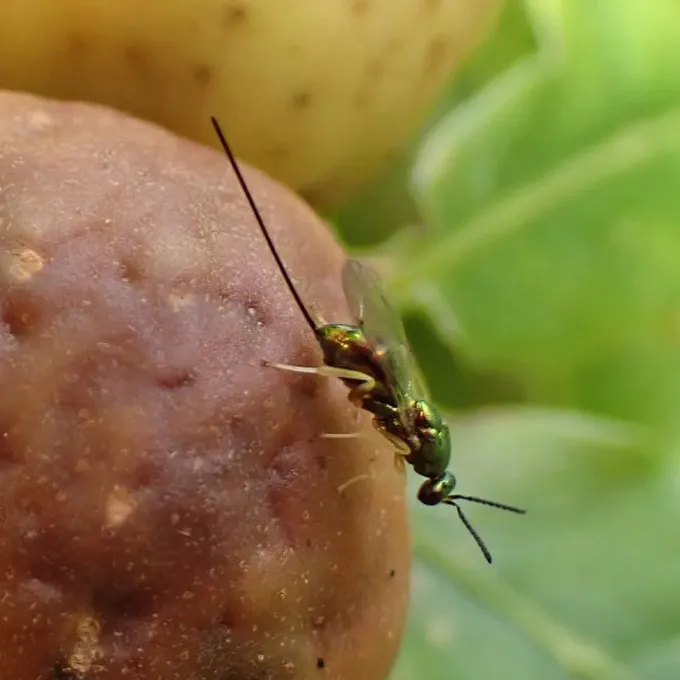
Description
How to identify
Torymus is a genus of parasitic wasps belonging to the family Torymidae. These insects are known for their metallic coloration and complex life cycles, often serving as parasitoids of gall-forming insects.
Adult females are easily identified by their elongated, needle-like ovipositors, which they use to pierce plant tissues or galls to deposit eggs directly onto their host larvae.
The biology of Torymus species is highly specialized, with most species targeting specific hosts. They locate their prey using chemical cues (volatile organic compounds) emitted by the host or the host-induced plant gall.
While many species are considered beneficial natural enemies, some can act as hyperparasitoids, potentially interfering with established biological control programs by attacking other beneficial parasitoids.
They are generally small, ranging from 2 to 5 millimeters in length, requiring magnification for accurate identification of species characteristics like wing venation and body sculpture.
What it damages
The damage caused by Torymus is often ecological or indirect. In agricultural settings, they are primarily associated with the parasitization of gall wasps that damage various tree species, most notably chestnut trees.
Crops such as Castanea species are frequently affected. While the primary damage is caused by the gall wasp, the activity of Torymus within the gall environment can influence the population dynamics of these pests.
Some Torymus species attack the seeds of plants, leading to direct losses in harvest quality and seed viability. This makes them a factor in both commercial orchards and botanical nurseries.
The economic impact depends on the specific species involved: some act as vital biocontrol agents reducing the need for chemical sprays, while others are viewed as nuisance pests in specific high-value crops.
Research indicates that high densities of these insects can lead to reduced plant vigor, though this is usually a secondary effect of the primary pest they target.
Signs of infestation
The most common sign of infestation is the presence of tiny, circular emergence holes on the surface of plant galls, indicating that the adult wasp has completed its development and exited.
Visible deformation of twigs and leaf buds, often where gall-forming pests are established, serves as a primary indicator of where Torymus activity might be found.
Mass concentrations of small, metallic-looking wasps on foliage during sunny periods are a common sign of peak emergence and mating activity within the orchard.
Reduced yield of sound, healthy seeds in affected crops often points to the internal feeding of parasitoid larvae, which can be confirmed through physical inspection of the fruits.
Monitoring programs use sticky traps or gall dissection to assess the presence and population levels of these wasps within the growing environment.
Control measures
Management strategy focuses on conservation biological control. Avoiding broad-spectrum insecticides is crucial, as these chemicals often kill the beneficial parasitoid wasps along with the target pests.
Enhancing habitat complexity by planting hedgerows and flowering perennials provides shelter and alternative food sources, which supports healthy populations of natural enemies.
In cases where Torymus is beneficial, such as Torymus sinensis against the chestnut gall wasp, controlled releases are used as a sustainable strategy to manage pest outbreaks.
If a specific Torymus species is causing damage to seeds or fruit, mechanical removal and destruction of infested plant parts are recommended to reduce the localized population.
Integrated Pest Management (IPM) practices, including regular monitoring and site-specific assessments, are the most effective way to determine whether intervention is necessary.
Taxonomy
- Latin name
- Torymus
- Order
- Hymenoptera
- Family
- Torymidae
- EPPO code
- TORYSP
Discussion
No discussions yet — be the first.