
Tomocerus minor
Tomocerus minor
Description
How to identify
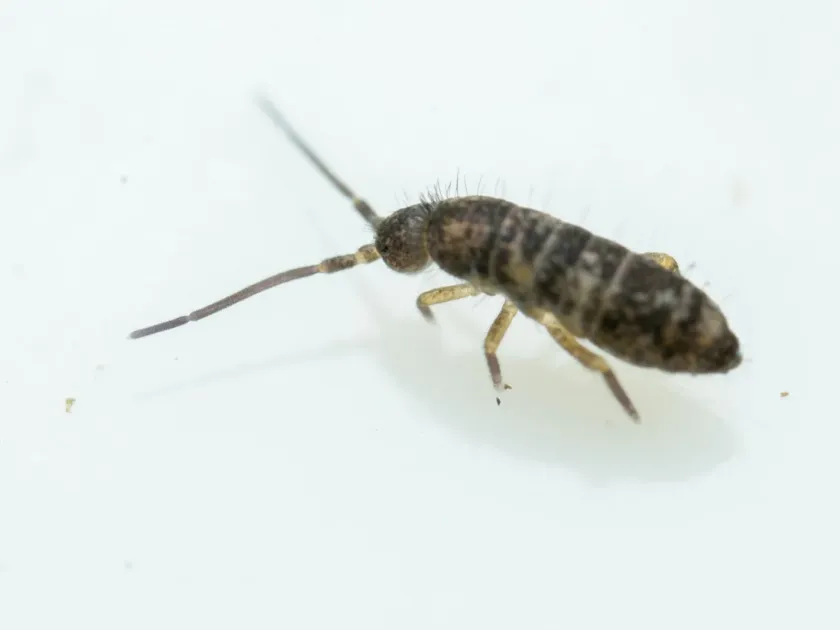
Tomocerus minor is a species of springtail belonging to the order Collembola and the family Tomoceridae. These tiny arthropods typically measure between 2 and 4 mm in length and are distinguished by a furcula on their abdomen.
The body of this pest is covered in scales, a feature that distinguishes it from many other common springtail species. Their coloration ranges from grey to brownish-black, providing excellent camouflage in potting media.
They are elusive creatures that thrive in moist, cool, and shady environments. In greenhouse conditions, they often hide in the top layers of moist soil or under organic debris where they remain undisturbed.
Their life cycle consists of simple metamorphosis. Eggs are laid in the soil or organic substrate, leading to nymphs that resemble adults in morphology and feeding habits.
Because they are highly sensitive to desiccation, they are most active in substrates with high organic content and consistent humidity, which explains why they often plague nursery-grown seedlings.
What it damages
In agricultural settings, Tomocerus minor primarily affects young seedlings in greenhouses. Both nymphs and adults can cause significant damage by feeding on tender plant tissues at the soil level.
They frequently target the root systems, feeding on fine root hairs and young epidermis, which impairs the plant's ability to take up water and nutrients, resulting in stunted and chlorotic growth.
The damage often creates entry points for soil-borne pathogens, such as Pythium or Rhizoctonia, which cause damping-off disease. Therefore, the presence of springtails is often linked to increased seedling mortality.
When populations reach high densities, they can consume cotyledons and small leaves that come into contact with the damp soil surface, resulting in irregular holes and tissue necrosis.
Seedlings suffering from springtail infestation often appear weak, fail to thrive, and may eventually collapse due to the combined stress of feeding damage and secondary infection.
Signs of infestation
The most noticeable sign of a Tomocerus minor infestation is the sudden jumping of small, dark insects when the soil is disturbed during irrigation or inspection.
Weakened, wilting, or yellowing seedlings in the presence of consistently moist soil are strong indicators of root-feeding damage by these springtails.
Visible feeding marks, such as tiny pits or necrotic spots on the hypocotyls or cotyledons of emerging seedlings, suggest that springtails are feeding above ground.
The presence of fine, granular excrement or a greyish film on the soil surface can also be a diagnostic sign of a high-density population of springtails living in the growing media.
If you inspect the base of the plant using a magnifying glass, you may observe the insects congregating around the roots or in small crevices within the potting soil.
Control measures
The most critical management practice is to manage soil moisture levels. Allowing the surface layer of the soil or substrate to dry out between waterings significantly reduces the springtail population.
Using high-quality, pasteurized potting media is essential to prevent the introduction of eggs or adult springtails into your greenhouse production cycle.
Regularly stir or cultivate the top layer of the soil to disrupt the habitat of the springtails and promote faster drying of the substrate surface.
In severe infestations, applications of biological controls or soil-applied insecticides can be used to mitigate population explosions, provided they are labeled for nursery use.
- Moisture regulation
- Substrate pasteurization
- Soil surface cultivation
- Biological insecticides
Taxonomy
- Latin name
- Tomocerus minor
- Family
- Tomoceridae
- EPPO code
- TOMCMI
Discussion
No discussions yet — be the first.