
Tomocerus
Tomocerus
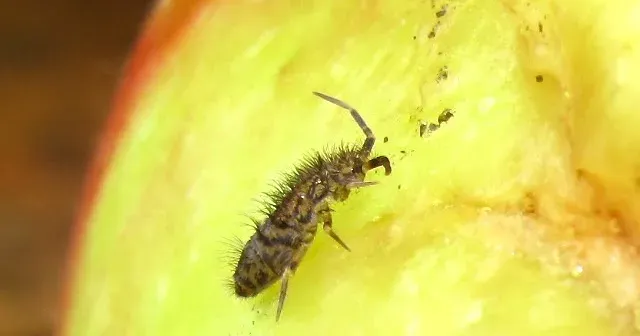
Description
How to identify
Tomocerus is a genus of springtails (order Collembola) belonging to the Tomoceridae family. These minute arthropods are commonly found in damp soils and organic matter.
They are characterized by a body covered in fine scales and a specialized leaping organ known as a furcula, which allows them to jump rapidly when threatened.
Adult individuals typically measure between 2 to 5 millimeters in length. Their coloration ranges from grey to dark brown, serving as camouflage within the soil environment.
They thrive in hidden, moist environments. In agricultural settings, their population density often increases significantly in areas with excessive moisture and decaying organic residues.
The biological development of Tomocerus does not involve metamorphosis in the traditional sense, as they grow through a series of molts, maintaining a similar form throughout their life cycle.
What it damages
Although Tomocerus species are primarily decomposers, they can turn into pests if organic food sources are scarce, causing damage to live plant tissues, particularly seedlings.
They feed on fine root hairs and young root systems, leading to nutrient and water uptake impairment, which weakens the plant significantly during its most vulnerable stage.
Greenhouse and nursery crops are most susceptible to damage, especially when soil moisture levels are consistently high, creating an ideal habitat for the pests.
The feeding wounds left on the roots act as entry points for secondary fungal and bacterial infections, often resulting in root rot and plant mortality.
Economic damage is usually seen as poor crop establishment, stunted growth, and a reduction in the overall uniformity of the plants within a nursery tray or plot.
When it appears
Activity peaks are closely tied to soil moisture and moderate temperatures. As mesophilic organisms, they require consistently damp conditions to survive and thrive.
In indoor environments such as greenhouses, they can remain active throughout the year, provided that overwatering maintains a constant high moisture level in the substrate.
In outdoor conditions, their population peaks during spring and autumn, correlating with periods of rainfall and moderate temperatures that favor their reproduction.
Dry periods force them to move deeper into the soil profile where humidity is higher, which often results in a temporary decrease in visible damage at the surface.
Their reproduction rate is high, allowing populations to expand rapidly when optimal conditions for moisture and organic matter are present.
Signs of infestation
The primary symptom of infestation is slow or stunted plant growth, with plants looking weak or yellowing despite regular care and sufficient fertilization.
Visible activity is often observed immediately after irrigation, where small, jumping greyish organisms can be seen moving across the surface of the soil or substrate.
Examination of the root system often reveals missing root hairs and visible lesions, indicating intensive feeding activity by the springtails in the rhizosphere.
A fine, dust-like residue on the soil surface, consisting of excrement and molted skins, serves as a clear indicator of a high population density of these pests.
Uneven germination and dieback of young seedlings are reliable signs that Tomocerus or other collembolan pests may be thriving in the growth medium.
Control measures
Managing soil moisture is the most effective cultural control method; allowing the top layer of soil to dry out between waterings disrupts their life cycle.
Strict sanitation practices, including the removal of dead plant debris and decaying organic material, significantly reduces the food source available for the pests.
If population numbers exceed economic thresholds, contact or systemic insecticides labeled for soil pest management can be applied according to local guidelines.
- Implement a drying-out period between irrigation cycles.
- Use heat-treated or sterile growth media to prevent initial infestation.
- Apply biological controls such as entomopathogenic fungi to target larvae.
Steam sterilization of soil or potting mix prior to planting is the most reliable prophylactic measure to ensure the absence of springtails in controlled environments.
Taxonomy
- Latin name
- Tomocerus
- Family
- Tomoceridae
- EPPO code
- TOMCSP
Discussion
No discussions yet — be the first.