
Spring Tiphia
Tiphia vernalis
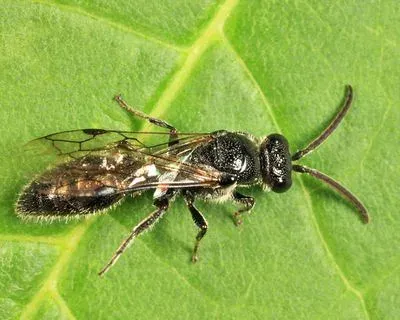
Description
How to identify
The Spring Tiphia (Tiphia vernalis) is a species of parasitic wasp belonging to the family Tiphiidae. These insects are small, dark, and often possess a subtle metallic sheen on their bodies.
Females are characterized by their sturdy build and are highly specialized for crawling through soil to locate their subterranean hosts. Unlike many other wasps, their wing development is adapted to their specific environmental niche.
The larval stage is parasitic, living as an ectoparasitoid on the larvae of scarab beetles. This unique lifecycle allows them to thrive in the soil ecosystem where their hosts reside.
Developmental stages include the egg, larva, pupa (within a cocoon), and adult. Their life cycle is perfectly timed to coincide with the activity of their primary host larvae.
As a beneficial insect, the Spring Tiphia serves as an important regulator of soil-dwelling pests, making it a critical component of healthy agricultural ecosystems.
What it damages
It is crucial to clarify that the Spring Tiphia is not a plant pest; it is a highly beneficial natural enemy. It does not feed on crops and does not cause any structural or physiological damage to plants.
The host of the Spring Tiphia is the larvae of scarab beetles, such as the Japanese beetle or the May beetle (white grubs). These grubs are known to cause severe damage to root systems in turf, orchards, and agricultural fields.
By parasitizing these grubs, the Spring Tiphia significantly reduces the population of damaging pests, thereby protecting the root health of various crops.
Their presence in a field is highly desirable as they provide effective and sustainable biological control, reducing the need for synthetic chemical interventions.
The economic value of this species lies in its ability to prevent crop failure caused by root-feeding larvae, thus maintaining yield stability and soil health.
When it appears
The adult activity period for the Spring Tiphia occurs in the spring, as indicated by its common name. Typically, they emerge in late spring when soil temperatures begin to rise.
Their emergence is synchronized with the availability of scarab larvae in the upper soil layers, ensuring that females can successfully locate and parasitize their hosts.
During their brief adult life, females spend significant time foraging for nectar and actively searching for host larvae within the soil profile.
After finding a host, the female paralyzes the grub and deposits a single egg on its skin. The resulting larva then feeds on the grub, eventually spinning a cocoon in the soil.
The insects overwinter as pupae within these cocoons, emerging as adults the following spring to continue the cycle.
Signs of infestation
Detecting the Spring Tiphia is difficult due to its cryptic, subterranean nature. They do not create conspicuous nests or visible damage, making their presence hard to spot.
The most reliable sign of their activity is a gradual decline in the white grub population in an infested area over several seasons.
During excavation or soil core sampling, one might occasionally encounter the protective cocoons of the wasp, though these are easily overlooked.
The presence of adult wasps can be observed on flowering plants or near aphid colonies, where they consume nectar and honeydew for nourishment.
A lack of root damage in areas historically known for heavy grub infestations may also indirectly indicate the successful establishment of this beneficial predator.
Control measures
Conservation of the Spring Tiphia is the most effective management strategy. Protection efforts focus on ensuring that the environment remains suitable for their survival.
The primary measure is to reduce or eliminate the use of broad-spectrum soil insecticides, which are lethal to beneficial wasps and disrupt natural biological control.
Encouraging the presence of flowering cover crops and nectar-rich border plants provides the necessary food sources for adult wasps, increasing their lifespan and reproductive success.
Practicing conservation tillage can help protect the underground cocoons from physical destruction during the dormant stage of the insect's life cycle.
- Minimize chemical soil treatments.
- Plant nectar-producing flowers nearby.
- Implement integrated pest management (IPM) practices.
- Avoid excessive cultivation during the pupal phase.
Taxonomy
- Latin name
- Tiphia vernalis
- Order
- Hymenoptera
- Family
- Tiphiidae
- EPPO code
- TIPHVE
Discussion
No discussions yet — be the first.