
Tiphia popilliavora
Tiphia popilliavora
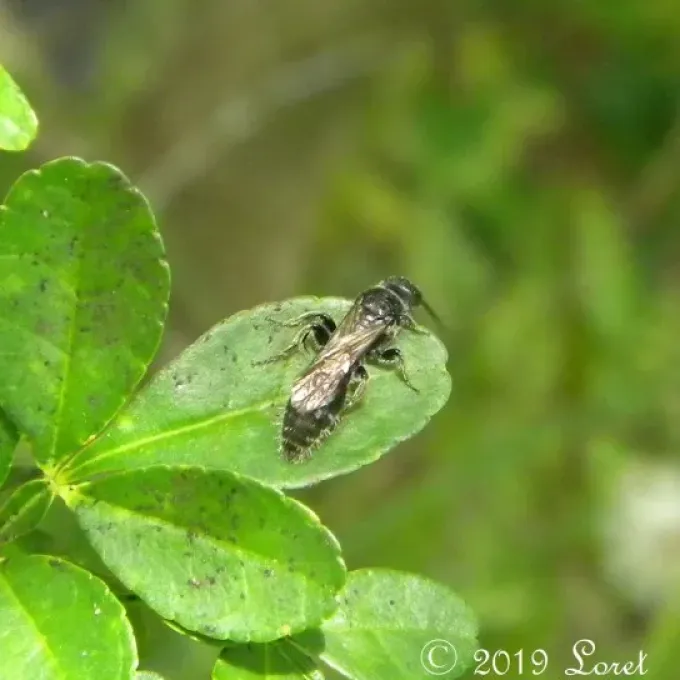
Description
How to identify
Tiphia popilliavora is a solitary wasp belonging to the Tiphiidae family within the order Hymenoptera. It is a relatively small insect, typically measuring about 10 to 12 mm in length, with a predominantly black body.
The females are well-adapted for burrowing, using their specialized mouthparts and legs to navigate through soil layers to locate their host. They are elusive and spend most of their life cycle underground.
Males, conversely, are often found hovering above lawns or visiting flowering plants to feed on nectar. They are slender and more active during the day compared to the cryptic females.
The wings of this wasp are clear with distinct venation, typical of the Tiphiidae family. Identification in the field can be challenging due to their small size and nondescript appearance.
As a specialized parasitoid, its biological role is strictly defined by its relationship with specific host species, making it an essential component of integrated pest management strategies.
What it damages
It is critical to note that Tiphia popilliavora does not cause any damage to plants. In fact, it is considered a highly beneficial insect in horticultural and agricultural settings.
The wasp acts as a specialized parasitoid of the Japanese beetle (Popillia japonica) larvae. By consuming these larvae, the wasp effectively reduces the population of a major agricultural pest.
The presence of Tiphia popilliavora serves as a natural defense system for gardens, parks, and agricultural fields. It is a biological control agent that eliminates the need for harmful chemical pesticides.
Because it does not attack crops or ornamental plants, it holds significant economic value for farmers who aim for organic or sustainable pest management practices.
No protective measures are required to prevent damage from this insect, as it is a helper rather than a threat to the ecosystem and the cultivated flora.
When it appears
The adult activity of Tiphia popilliavora typically occurs during the mid-to-late summer months. This timing aligns perfectly with the larval stages of the Japanese beetle residing in the soil.
During this period, females actively hunt for host larvae to lay their eggs. This synchronization is a result of evolutionary adaptation to the life cycle of the Japanese beetle.
Winter is spent in a dormant state, with the wasp larvae developing into pupae inside protective cocoons buried within the soil. This allows them to survive cold temperatures.
The emergence of adults the following year is temperature-dependent, ensuring that the wasps appear exactly when the new generation of host larvae becomes available.
The seasonal population dynamics are entirely reliant on the density of the host population, reflecting a classic predator-prey balance in the soil environment.
Signs of infestation
Since Tiphia popilliavora is a beneficial insect that works underground, observing its presence directly is difficult. However, a significant reduction in Japanese beetle infestations over several seasons is a strong indicator.
The detection of characteristic brownish cocoons in the soil during lawn renovation or digging activities may indicate the presence of this wasp.
Observations of small, black, wasp-like insects hovering low over lawns during warm summer days are common in areas where populations are established.
A lack of root damage in lawns that were previously infested with grubs often points toward successful biological control by native parasitoids like Tiphia popilliavora.
Monitoring the soil for host larvae and noting any signs of parasitism can help entomologists assess the effectiveness of these wasps in a specific geographic area.
Control measures
Management of Tiphia popilliavora focuses on conservation. Since it is a beneficial parasitoid, no extermination measures should be taken.
- Avoid the use of broad-spectrum soil insecticides during the summer months.
- Maintain patches of flowering plants to provide nectar for the adult wasps.
- Minimize deep soil cultivation in areas where overwintering cocoons may reside.
Biological control strategies rely on preserving such natural enemies to keep pest levels low. Enhancing habitat complexity is the best way to support these beneficial populations.
By protecting Tiphia popilliavora, land managers promote a sustainable and resilient ecosystem that naturally suppresses the destructive Japanese beetle.
Taxonomy
- Latin name
- Tiphia popilliavora
- Order
- Hymenoptera
- Family
- Tiphiidae
- EPPO code
- TIPHPO
Discussion
No discussions yet — be the first.