
Elm leaf aphid
Tinocallis ulmiparvifoliae
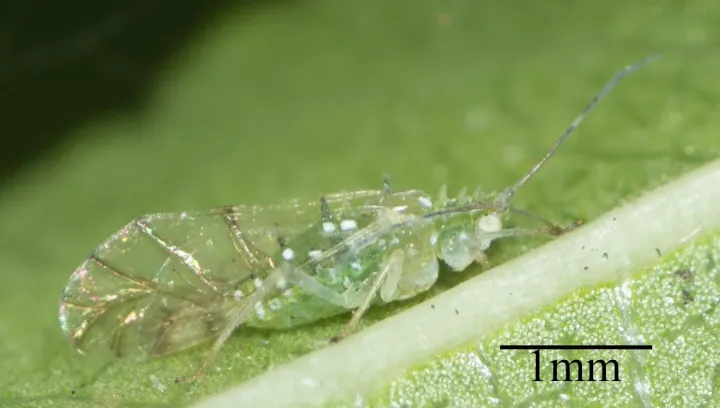
Description
How to identify
The elm leaf aphid (Tinocallis ulmiparvifoliae) belongs to the order Hemiptera and the family Aphididae. It is a highly specialized species that primarily targets specific members of the elm tree family.
Adult aphids of this species are characterized by their small size and specific patterns on their bodies, which provide effective camouflage on the underside of elm leaves.
The life cycle is closely synchronized with the elm tree's phenology. The species goes through multiple generations, with both winged and wingless morphs appearing depending on the season and population density.
They reside primarily on the underside of leaves, allowing them to remain shielded from direct sunlight and environmental stressors while feeding on plant juices.
Reproduction follows a cycle of parthenogenesis for most of the season, transitioning to sexual reproduction before winter to produce hardy eggs that survive in the bark crevices of the host tree.
What it damages
This pest exclusively affects elm trees (Ulmus species). Its impact is particularly noticeable on smaller-leaved varieties often planted for urban landscaping and decorative purposes.
By using their piercing-sucking mouthparts to feed on phloem, the aphids deprive the tree of vital nutrients, leading to reduced vigor and stunted growth in young shoots.
The saliva injected by the aphids during feeding often triggers physiological changes, causing leaf distortion, chlorosis, and in cases of heavy infestation, premature leaf drop.
The weakened physiological state of the infested tree makes it highly susceptible to secondary pathogens, including opportunistic fungi and wood-boring insects.
Over time, recurring infestations can significantly degrade the tree's architecture and contribute to the premature decline of ornamental elm populations.
Signs of infestation
Curling or yellowing of leaves on the terminal shoots is the most prominent indicator that an elm leaf aphid colony is present and actively feeding.
The production of honeydew is a diagnostic sign; this sugary excretion covers the leaf surface and often attracts ants, which aggressively defend the aphids from natural predators.
The development of sooty mold, which appears as a black, velvety coating on leaves and branches, is a secondary effect caused by the honeydew accumulation.
Presence of white, cast-off skins (exuviae) on the underside of the leaves or on the branches below indicates active shedding during the aphid's developmental stages.
A general lack of luster in the foliage and the visible activity of ants on the bark are clear indicators that the tree requires an inspection for aphid presence.
Control measures
Effective management begins with systemic insecticides, which are absorbed by the tree and provide long-lasting control as they circulate within the plant tissues.
Dormant oil sprays applied in late winter or early spring are highly effective at smothering overwintering eggs, significantly reducing the initial spring population.
Encouraging biological control agents, such as lady beetles, lacewings, and syrphid fly larvae, is essential for sustainable management in private gardens and parks.
- Conduct periodic visual inspections of terminal growth from late spring.
- Use insecticidal soaps for localized outbreaks to minimize environmental impact.
- Maintain tree vitality through appropriate irrigation and soil nutrient management.
For large trees in urban areas, trunk injection technology is a preferred method to deliver treatments efficiently while avoiding broad-spectrum environmental contamination.
Taxonomy
- Latin name
- Tinocallis ulmiparvifoliae
- Order
- Hemiptera (bugs, aphids, leafhoppers)
- Family
- Aphididae
- EPPO code
- TINCUP
Discussion
No discussions yet — be the first.