
Elm aphid
Tinocallis
Description
How to identify
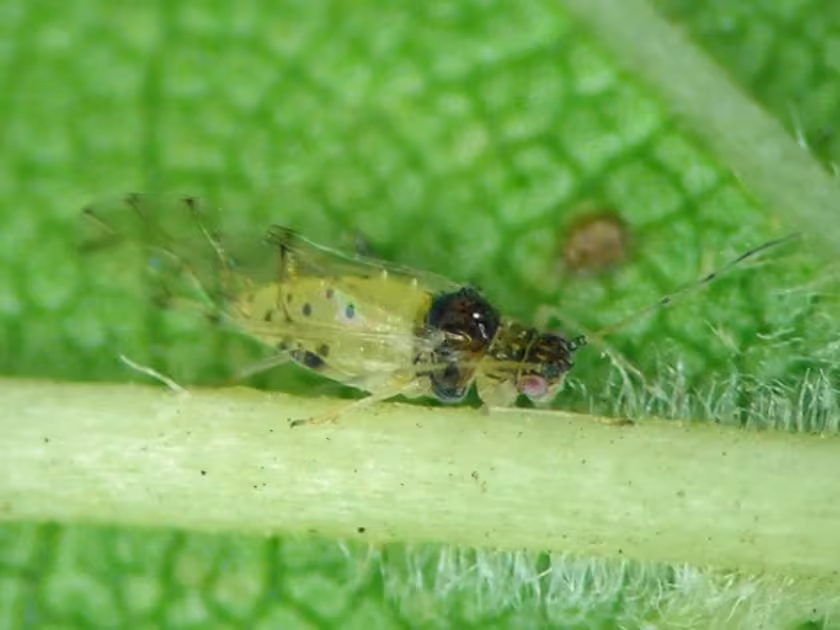
The elm aphid (genus Tinocallis) belongs to the order Hemiptera, family Aphididae. These small insects are highly specialized in feeding on the phloem of their host plants.
Adults often display subtle morphological traits such as patterned dorsal surfaces and long antennae, which help them blend into the foliage of elm trees.
The life cycle is characterized by rapid parthenogenesis, allowing populations to expand significantly during the spring and summer months.
Both winged and wingless morphs exist, enabling the species to move between different parts of the tree and colonize new branches effectively.
Overwintering occurs in the egg stage, typically tucked into bark crevices, making the population resilient to harsh winter conditions.
What it damages
The primary host plants are species within the Ulmus genus, commonly known as elms, which are widely used in urban landscaping.
By inserting their stylets into the leaves, aphids extract essential nutrients, leading to physiological stress and reduced growth rates.
Severe infestations can lead to premature leaf drop, weakening the tree's ability to store energy for the subsequent growing season.
Feeding often causes localized yellowing, curling, or distortion of the leaf lamina, which ruins the tree's aesthetic appeal.
Furthermore, the extraction of sap disrupts the plant's metabolic processes, making the host more susceptible to secondary pathogenic infections.
When it appears
Eggs typically hatch in early spring, synchronized with the bud break of the elm tree to ensure immediate access to food.
The peak of aphid activity occurs during late spring and early summer when the foliage is soft, nutritious, and rapidly developing.
Warm and stable weather conditions provide an ideal environment for rapid reproduction, leading to multiple generations in a single season.
As summer draws to a close, the insects transition to sexual reproduction to produce the overwintering eggs for the next year.
Monitoring should be most intensive during the active growth periods of the host tree to prevent the population from reaching economic damage thresholds.
Signs of infestation
A hallmark sign of an elm aphid infestation is the presence of honeydew, a sticky substance excreted by the aphids on leaves and stems.
This honeydew serves as a growth medium for sooty mold, which manifests as a black, powdery coating on the surface of the leaves.
Ants are frequently observed traveling up and down the trunk, as they actively farm and protect aphid colonies to harvest the sweet honeydew.
Close inspection of the underside of leaves usually reveals clusters of small insects and discarded white cast skins from molting.
- Curling or puckering of leaves.
- Sticky honeydew buildup on lower foliage.
- Sooty mold growth on leaves and branches.
- Increased ant activity on the tree bark.
Control measures
Biological control is highly effective when populations of natural predators like lady beetles, lacewings, and hoverflies are encouraged.
Systemic insecticides are the preferred chemical control method, as they are absorbed by the tree and provide long-lasting protection against sucking pests.
Dormant oil sprays applied in late winter or early spring can be very effective in suffocating overwintering eggs before they hatch.
Proper irrigation and fertilization help improve the host tree's overall vigor, allowing it to withstand and recover from pest attacks more easily.
Regular sanitation, such as pruning heavily infested or damaged branches, can significantly reduce the overall aphid population in the tree canopy.
Taxonomy
- Latin name
- Tinocallis
- Order
- Hemiptera (bugs, aphids, leafhoppers)
- Family
- Aphididae
- EPPO code
- TINCSP
Discussion
No discussions yet — be the first.