
Sacred ibis
Threskiornis aethiopicus
Description
How to identify
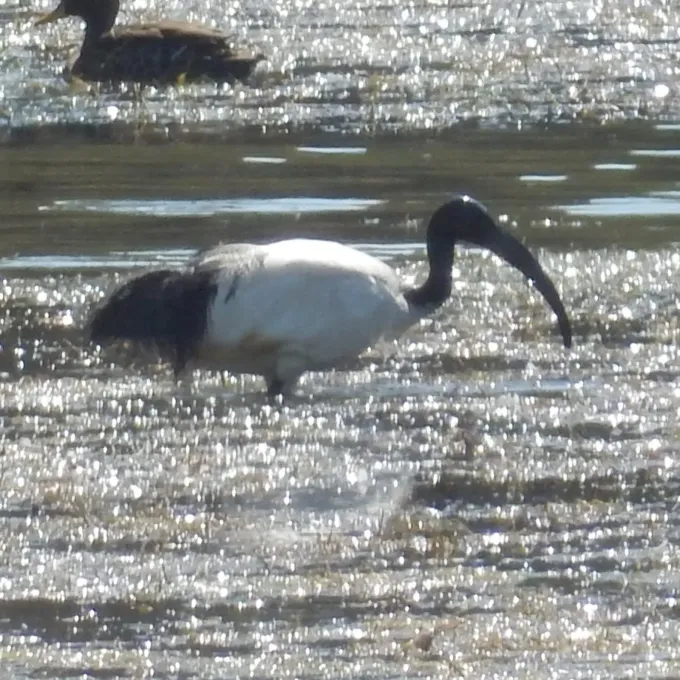
The sacred ibis (Threskiornis aethiopicus) is a large wading bird belonging to the Threskiornithidae family, characterized by a long, down-curved bill and a bald, black head and neck.
The plumage is predominantly white, featuring black wing feathers that create a distinctive dark appearance at the rear when the bird is at rest or in flight.
Native to sub-Saharan Africa, this species has successfully naturalized in many parts of the world, making it a globally recognized invasive avian pest.
These birds are highly intelligent and social, living in large colonies that facilitate their expansion into agricultural lands where food resources are readily available.
Adult birds typically reach a height of up to 90 centimeters, and their robust physical structure allows them to exploit a wide range of habitats, from wetlands to irrigated croplands.
What it damages
The primary agricultural impact of the sacred ibis is its consumption of seeds, sprouts, and young seedlings, particularly in rice paddies and various grain fields.
By probing the soil with their long, sensitive bills, they damage root systems and disrupt the soil structure, which negatively affects the growth of vegetable and root crops.
These birds are frequent visitors to livestock farms, where they consume animal feed and contaminate water supplies with their droppings, increasing the transmission risk of avian diseases.
The presence of large, feeding flocks leads to soil compaction and mechanical damage to tender plants, causing significant yield losses in affected agricultural sectors.
Due to their opportunistic feeding habits, they often switch between natural prey and cultivated crops, making them a consistent threat during various stages of the farming cycle.
When it appears
Feeding intensity peaks during the breeding season as adults forage extensively to provide nutrition for their offspring in nearby nesting colonies.
During the dry season, ibis populations are often concentrated near irrigation systems or remaining water sources, increasing the risk of localized damage to crops in these areas.
Post-harvest periods are also critical, as the birds forage on leftover grain and residue, which can lead to large accumulations of birds in a single field.
Young birds, having recently fledged, increase the overall pressure on agricultural resources as they learn to forage independently within the territorial range of the colony.
Seasonal patterns are often dictated by both the availability of natural aquatic prey and the irrigation schedules that make farmland more attractive for foraging.
Signs of infestation
Farmers can identify sacred ibis damage through clear visual indicators left behind after a feeding event in the field.
- Distinctive, deep conical holes in the soil caused by the bird's probing bill.
- Large bird footprints found in soft, moist soil, particularly around irrigation ditches.
- Visible deposits of white guano on crop leaves, equipment, or infrastructure near water.
- Widespread destruction of seedlings, resulting in thin, uneven crop stands.
- Aggressive noise and rapid dispersal of the flock upon the arrival of humans or machinery.
Control measures
Effective control requires an integrated approach, utilizing auditory scaring devices such as propane cannons or bioacoustic recordings to displace flocks.
Mechanical exclusion methods, such as netting or reflective covers, are effective for high-value vegetable crops that are particularly susceptible to avian damage.
Managing the habitat by draining small stagnant water holes or limiting access to farm waste can discourage the birds from settling in the immediate vicinity.
In regions where they are classified as invasive, population control measures including nest management are necessary to prevent the establishment of new breeding colonies.
Consistent monitoring and early intervention are essential; once a colony is established near an agricultural area, the economic impact becomes significantly harder to mitigate.
Taxonomy
- Latin name
- Threskiornis aethiopicus
- Family
- Threskiornithidae
- EPPO code
- THRKAE
Discussion
No discussions yet — be the first.