
Glossy ibis
Plegadis
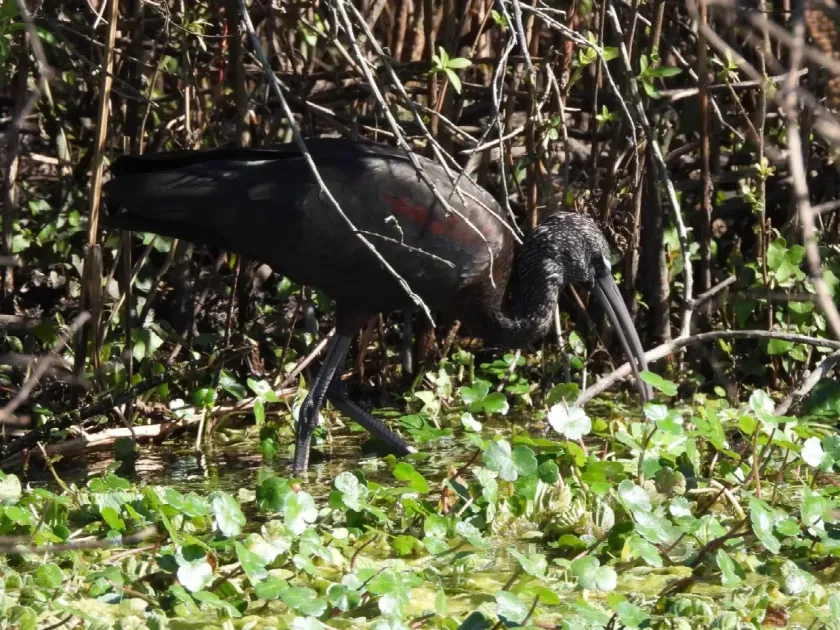
Description
How to identify
The glossy ibis (Plegadis falcinellus) is a species of bird in the ibis family (Threskiornithidae). It is easily identified by its long, thin, and decurved bill, which is uniquely evolved for probing into soft mud and marshy grounds.
The adult bird possesses a striking chestnut-brown plumage that displays a distinct metallic sheen, appearing green or purple under direct sunlight. They have a slender build and a wide wingspan, often seen in flight with the neck extended.
Unlike egrets or herons, they fly with their necks stretched out. They are gregarious birds that often nest in large colonies within dense wetlands, reeds, and marshy habitats near agricultural land.
Juvenile birds exhibit a duller, browner plumage with some light streaking on the head and neck. As they mature, their colors become more vibrant and uniform, peaking during the spring breeding season.
These birds are naturally attracted to shallow water systems, coastal lagoons, and flooded fields, which leads to their occasional interaction with large-scale agricultural operations like rice farming.
What it damages
The primary agricultural damage caused by the glossy ibis occurs in rice paddies during the germination phase and the emergence of young shoots. Flocks of ibises can mechanically trample seedlings.
By probing the soft mud with their long bills, these birds frequently displace or consume rice seeds, leading to uneven crop stands and potentially requiring costly reseeding of affected areas.
Beyond seed consumption, their intense probing behavior damages the root systems of young rice plants, which can stunt development and reduce the overall crop yield in heavily infested zones.
While these birds are insectivorous and can eat harmful pests like grasshoppers, the high density of ibises within small rice systems often results in damage that exceeds any benefits gained from insect control.
In cases where their natural food sources (crustaceans, mollusks, insects) are scarce, they may target adjacent crops, though this is less common than their impact on aquatic-based agricultural systems.
When it appears
The seasonal activity of the glossy ibis in agricultural areas is closely tied to their migratory patterns and the cultivation cycle of crops like rice. In early spring, birds return from wintering grounds.
The peak period for potential damage is late spring and early summer (May–June), coinciding with the sowing and early growth of rice. This is when the paddies are most attractive to feeding flocks.
During mid-summer, birds often retreat to more natural habitats like lakes and marshes as water levels in those areas stabilize, reducing the pressure on agricultural fields.
A second wave of potential disturbance can occur in late summer and early autumn as birds aggregate in large numbers before their southward migration, occasionally landing on agricultural land.
With the onset of cold weather, the birds migrate to warmer latitudes, ending the season of risk for farmers in the northern regions of their breeding range.
Signs of infestation
The most prominent sign of glossy ibis presence is the appearance of small, numerous holes in the muddy soil of rice paddies, caused by their long, rhythmic bill-probing motions.
Visual observation of thinned, patchy, or uprooted seedlings indicates that a flock has been feeding in the area. Young rice plants may be found floating or lying flat on the mud.
Footprints left in the saturated soil or droppings on the banks (levees) of the rice checks provide clear evidence of consistent usage of the field by the birds.
Frequent sightings of birds circling over fields or resting on nearby structures like dykes and irrigation gates indicate that the field is being targeted for feeding.
Auditory evidence, specifically the distinct, sometimes harsh calls made during flight or while foraging in groups, often alerts farmers to the proximity of an ibis flock.
Control measures
Protection strategies for rice fields involve integrated, non-lethal deterrent methods designed to discourage ibises from congregating on sensitive cultivation areas.
Acoustic deterrents, such as broadcasts of predator distress calls or electronic sonic devices, are effective at preventing initial landing and forcing flocks to relocate to natural habitats.
Visual deterrents including reflective tape, predator decoys (like kites or effigies), and automated wind-powered scarecrows are useful for protecting high-risk zones during germination.
Water management is a key control tool; manipulating the depth of water in rice paddies can make the ground less accessible for the probing bills of the birds, effectively limiting their foraging efficiency.
Since the glossy ibis is a protected species in many jurisdictions, farmers must ensure that all control methods remain compliant with wildlife protection laws and focus on non-destructive harassment.
Taxonomy
- Latin name
- Plegadis
- Family
- Threskiornithidae
- EPPO code
- PLEGSP
Discussion
No discussions yet — be the first.