
Sacred ibis
Threskiornis
Description
How to identify
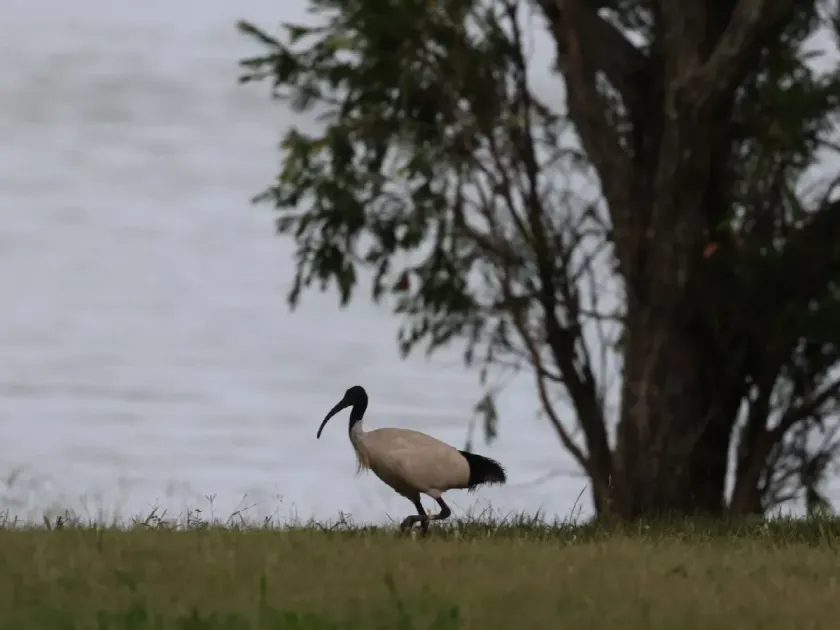
The sacred ibis (Threskiornis aethiopicus) is a large wading bird belonging to the Threskiornithidae family. It is characterized by its white plumage, a bare black head and neck, and a distinctive long, downward-curved black bill.
Originally native to parts of Africa, it has become an invasive species in various global regions. These birds are highly opportunistic and have successfully adapted to human-altered environments, including agricultural fields.
They exhibit colonial nesting and foraging behavior, which means they often appear in large numbers. Their ability to forage in diverse habitats—from wetlands to open farmlands—makes them a difficult target for management.
Their physical structure, particularly the long bill, is a specialized tool for extracting food items from soft soil, which frequently causes them to target newly sown seeds in agricultural settings.
The species is known for its high reproductive rate and social structure, which ensures that local populations can maintain high numbers despite various control attempts.
What it damages
The primary agricultural impact of the sacred ibis is the consumption of newly sown seeds, such as cereals, which leads to significant stand loss and forces farmers to replant affected areas.
Mechanical damage is a major concern. When large groups of ibises forage on a field, their trampling and movement significantly disrupt soil structure and flatten young seedlings, preventing recovery.
They are also known to damage various horticultural crops, including fruits and vegetables, by pecking at the produce, which ruins market quality and leads to significant economic loss.
Contamination is another issue; the accumulation of bird droppings on crops and in irrigation systems can promote the spread of pathogens and diminish the sanitary quality of the harvest.
Furthermore, in aquaculture operations, these birds prey on juvenile fish, acting as significant predators that negatively affect the yields of fish farms.
When it appears
The timing of ibis activity is closely linked to agricultural cycles. Spring sowing season is the most critical period, as these birds are highly attracted to open, disturbed soil containing fresh seeds.
During the summer months, they are frequently found in irrigated fields where they hunt for invertebrates, causing damage through trampling and soil compaction during the peak growth phase of crops.
Harvest time is another period of intense activity; they often congregate in orchards and vineyards to feed on ripening fruits, causing substantial damage to the produce just before or during collection.
In regions where the climate is mild, sacred ibises do not migrate, meaning they can pose a persistent threat to agricultural land throughout the year.
Environmental conditions such as drought play a role, as a reduction in natural wetland food sources often pushes these birds to rely more heavily on agricultural crops for sustenance.
Signs of infestation
A primary sign of ibis presence is the appearance of numerous funnel-shaped holes in the soil, created by their long bills as they probe for food items and seeds.
The presence of white fecal droppings on leaves, soil, or equipment is a clear indication that a flock has been foraging or resting in that specific area.
Irregular gaps in crop rows, especially those near field edges or water sources, often indicate that the seeds were consumed by these birds immediately after sowing.
Flattened vegetation and trampled patches across the field clearly demonstrate the physical impact of a large foraging group moving through the crop.
Increased vocalization and frequent flight activity between nearby water bodies and farmland are distinct behavioral signs of an established population in the vicinity.
Control measures
Effective management requires an integrated approach. Bio-acoustic devices that play alarm calls of the species are highly effective in inducing stress and causing the birds to abandon the area.
Visual deterrents, such as shiny reflective tapes and dynamic scarecrows, can be useful, provided they are frequently moved and updated to prevent the birds from habituating to them.
For high-value crops, physical exclusion through the use of netting is the most reliable method to protect young plants and fruit from damage.
Cultural control measures include adjusting planting dates to avoid peaks in bird activity and managing irrigation to make fields less attractive during susceptible plant growth stages.
- Regular removal of potential food sources near farmland.
- Deployment of motion-activated water sprayers.
- Collaborative efforts with local wildlife agencies for population monitoring.
Taxonomy
- Latin name
- Threskiornis
- Family
- Threskiornithidae
- EPPO code
- THRKSP
Discussion
No discussions yet — be the first.