
Spotted alfalfa aphid
Therioaphis trifolii
Description
How to identify
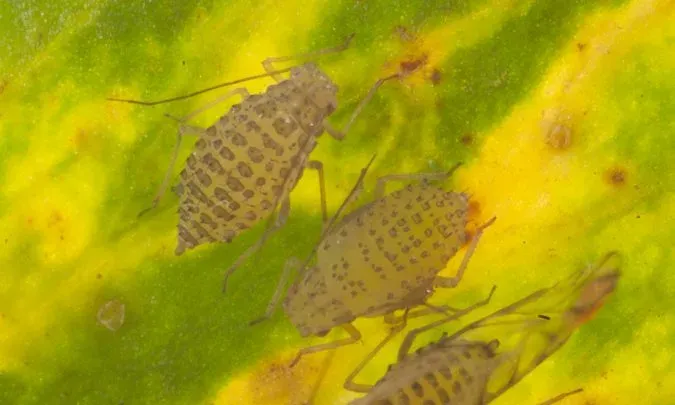
The spotted alfalfa aphid (Therioaphis trifolii) belongs to the order Hemiptera, family Aphididae. It is a small insect, usually reaching about 2 mm in length, with a coloration ranging from yellowish-white to pale green and distinct dark spots on the abdomen.
A key morphological feature used for identification is the absence of long cornicles (siphunculi), which are typical for many other aphid species. The insect's body is covered in sparse, dark-based hairs or setae, making them appear somewhat bumpy under magnification.
Both winged and wingless forms exist within the population. Winged individuals are characterized by darkened veins on their wings, which is a helpful field diagnostic feature when checking plants using yellow sticky traps.
This species thrives in warm, dry climates, which directly influences its rapid reproductive rate. Throughout the season, multiple generations develop as the species is capable of rapid asexual reproduction (parthenogenesis).
The spotted alfalfa aphid typically overwinters as eggs on the underside of leaves or the lower stems of alfalfa plants. However, in warmer regions, active nymphs and adults may persist throughout the winter months if temperatures remain favorable.
What it damages
The primary host is alfalfa, although the pest may occasionally infest other leguminous forage crops. Damage is caused by both adults and nymphs feeding on the plant's sap through their piercing-sucking mouthparts.
Severe infestations can lead to massive leaf drop and stunted plant growth, resulting in a significant reduction in biomass and forage quality. This often renders the crop unsuitable for high-quality hay production.
While feeding, the aphids inject toxic enzymes into the plant tissue, which causes systemic stress and necrosis. This leads to the yellowing of foliage and can cause the death of stems in extreme cases of infestation.
The spotted alfalfa aphid is a known vector for several plant viruses affecting legumes. The transmission of these viruses often causes more severe damage than the direct sap removal, leading to permanent stunted growth or total stand loss.
The economic damage is most pronounced during periods of drought, as the plants have less capacity to recover from the combined stress of water deficit and the toxic saliva injected by the feeding aphids.
Signs of infestation
Early symptoms of infestation include the yellowing of lower leaves, which eventually curl and drop off. Over time, the affected area of the field may take on a scorched, brown appearance as the foliage dies.
Checking the underside of leaves will reveal colonies of small, pale insects. Furthermore, heavy infestations produce abundant honeydew, which serves as a substrate for the development of sooty mold, further degrading the leaf surface.
The presence of ants attending to the aphid colonies is a strong indicator of an active infestation. Ants protect the aphids from natural predators to ensure their steady supply of sugary honeydew secretions.
Damage tends to start in patches, which expand as the population increases. If left unchecked, the affected patches eventually merge, causing significant yield losses across the entire field during the active growing season.
Regular field scouting, particularly in the morning, is crucial for early detection. The combination of leaf yellowing, presence of honeydew, and the visibility of small aphids on the underside of leaves confirms the presence of this pest.
Control measures
Effective management begins with timely harvesting, as early cutting of the alfalfa crop can physically remove a large portion of the aphid population and interrupt their reproductive cycle.
The use of resistant alfalfa varieties is the foundation of long-term control. Breeding programs focusing on plant resistance to aphid feeding have significantly reduced the risk of catastrophic yield losses in modern agricultural systems.
Chemical control should be employed only when the economic injury level is exceeded. The use of systemic insecticides is generally preferred, as they provide longer residual protection against re-infestation.
Biological control relies on the conservation of natural enemies, such as lady beetles, lacewings, and parasitic wasps (e.g., Aphidius species). Integrated pest management (IPM) practices prioritize these natural predators over broad-spectrum pesticides.
- Monitor fields regularly using yellow sticky cards for early detection.
- Maintain good crop vigor through optimal fertilization and irrigation.
- Manage weeds in and around the field that may serve as alternative hosts.
- Use selective insecticides to minimize impact on beneficial insect populations.
Taxonomy
- Latin name
- Therioaphis trifolii
- Order
- Hemiptera (bugs, aphids, leafhoppers)
- Family
- Aphididae
- EPPO code
- THERTR
Discussion
No discussions yet — be the first.