
Spotted alfalfa aphid
Therioaphis
Description
How to identify
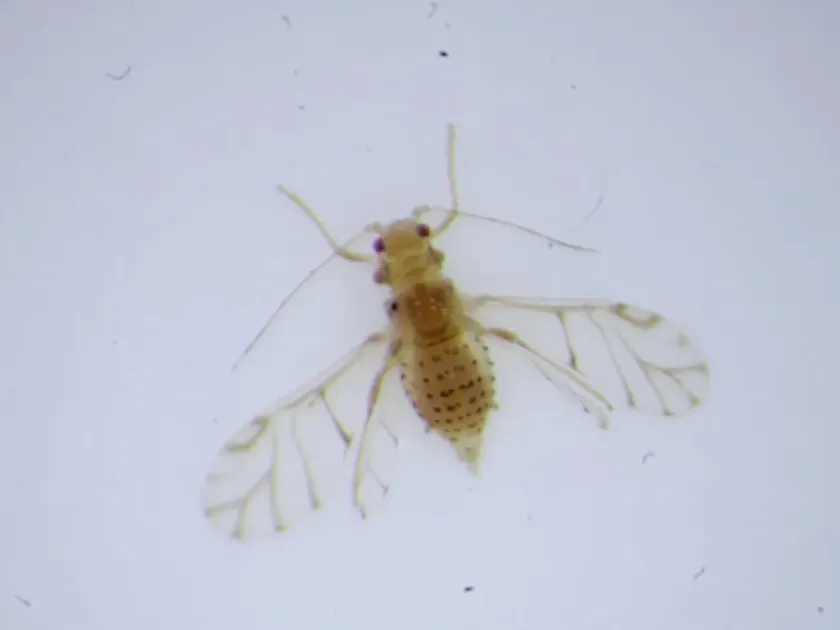
The spotted alfalfa aphid (Therioaphis trifolii) is a member of the Aphididae family. This small insect is characterized by a yellowish-green body with distinct rows of dark spots on its abdomen, which is the most reliable feature for field identification.
Adults can be either winged or wingless, measuring approximately 1.5–2.0 mm in length. Winged forms have transparent wings with noticeably darkened veins, which distinguishes them from other common aphid species found in legume crops.
The eggs are minute, oval-shaped, and initially greenish, turning black as they mature. Nymphs resemble miniature adults but lack fully developed reproductive organs and undergo several growth stages before reaching maturity.
This species is highly adapted to warm and arid conditions, which distinguishes it from many other aphid species. It thrives in dry weather, allowing its population to explode rapidly on host plants when environmental conditions are unfavorable for predators.
The life cycle involves both sexual and asexual reproduction. In temperate climates, the species often reproduces parthenogenetically throughout the growing season, enabling multiple generations to overlap and reach massive numbers quickly.
What it damages
The primary hosts of the spotted alfalfa aphid are legumes, with alfalfa being the most significant agricultural crop affected. It also colonizes clover, sainfoin, and other perennial forage crops, causing significant economic losses to farmers.
Aphids feed by sucking sap from leaves, stems, and petioles. During feeding, they inject toxic saliva into the plant tissues, which contains enzymes that cause stunting, leaf deformation, and yellowing, effectively disrupting the plant's physiological functions.
Severe infestations lead to a substantial reduction in both biomass and seed yield. In dry years, forage losses can reach 30–50% of the potential harvest, significantly reducing the profitability of alfalfa production.
The feeding damage causes premature leaf drop, starting from the lower parts of the plant. This leads to stem stripping and a drastic decrease in the nutritional quality of hay, as leaves contain the majority of the protein and essential nutrients.
In addition to direct damage, this aphid is a known vector for various plant viruses. These viruses, transmitted during feeding, cause chronic diseases that result in the long-term degradation and eventual death of the alfalfa stand.
When it appears
Aphid activity begins in the spring when temperatures consistently reach 15–18 degrees Celsius. Initial colonies are typically found on the undersides of leaves near the base of the alfalfa plants.
Peak population levels usually occur in June and July, coinciding with hot and dry weather conditions. During this time, winged aphids actively migrate to colonize new parts of the field and neighboring crop areas.
As temperatures decline in autumn, the aphids prepare for overwintering. They lay eggs on the crowns of alfalfa plants and plant debris, ensuring survival and the initiation of the next season's population.
The development time for a single generation can be as short as 7–10 days under optimal conditions. This allows for up to 12 generations per season, necessitating rigorous and frequent monitoring by field agronomists.
Because of its rapid reproduction rate, the spotted alfalfa aphid poses a threat to both newly seeded stands and mature alfalfa fields, requiring constant vigilance throughout the entire growing season.
Signs of infestation
The first sign of infestation is the appearance of yellow spots on the leaves, often described as a mottled or marble-like pattern. Leaves eventually curl, turn yellow, and drop off, signaling advanced toxic stress in the plant tissue.
Colonies of small, light-colored aphids are visible on the underside of leaves. Furthermore, a sticky substance known as honeydew accumulates on the stems, providing a substrate for the growth of sooty mold, which appears as a black coating.
Affected plants exhibit signs of stunted growth and a loss of turgor. Even with sufficient soil moisture, the plants appear wilted and lack the vibrant green color characteristic of healthy alfalfa stands.
The presence of ants in the alfalfa field is a strong indicator of aphid activity. Ants feed on the honeydew produced by the aphids and actively protect them from natural predators, further complicating natural biological control.
Agronomic scouting using a sweep net is the standard method for quantifying infestation. If a threshold number of aphids is collected per sweep, immediate management action is required to prevent further economic loss.
Control measures
Effective management begins with cultural practices, such as timely harvesting. Cutting the alfalfa early can physically remove a large portion of the aphid population from the field before they cause extensive damage.
Utilizing resistant alfalfa cultivars is the most sustainable approach for controlling the spotted alfalfa aphid. This method reduces the need for chemical interventions and lowers input costs while maintaining high-quality forage.
If economic thresholds are exceeded, chemical control using systemic insecticides may be necessary. It is crucial to apply these treatments according to label regulations, avoiding flowering periods to prevent harm to bees and other pollinators.
Biological control relies on conserving natural enemies such as lady beetles, lacewings, and parasitic wasps. Minimizing the use of broad-spectrum insecticides on field margins creates refuges for these beneficial insects.
- Conduct weekly field scouting during the growing season.
- Control weeds that act as alternate hosts for the aphids.
- Maintain adequate spatial isolation between alfalfa fields.
- Implement an integrated pest management (IPM) program.
Taxonomy
- Latin name
- Therioaphis
- Order
- Hemiptera (bugs, aphids, leafhoppers)
- Family
- Aphididae
- EPPO code
- THERSP
Discussion
No discussions yet — be the first.