
Oak aphid
Thelaxes conferta
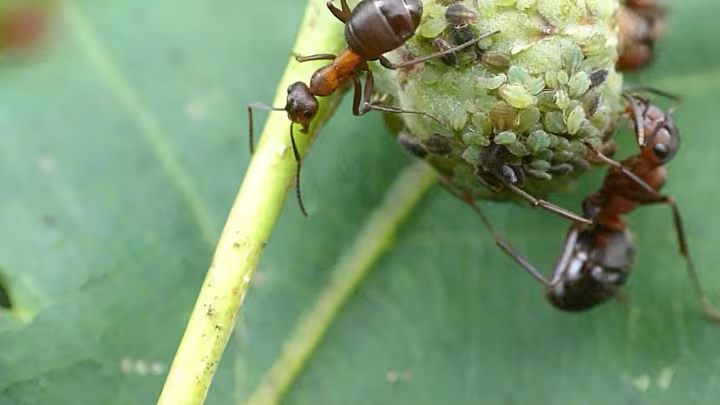
Description
How to identify
The oak aphid (Latin: Thelaxes conferta) is a small insect belonging to the family Thelaxidae within the order Hemiptera. It is specifically adapted to feed on oak species.
Adult aphids of this species typically exhibit an oval, slightly flattened body structure. This shape allows them to cling tightly to the rough bark or the undersides of leaves, providing protection from the elements and predators.
Their life cycle includes both sexual and asexual (parthenogenetic) phases. This dual strategy allows the population to grow exponentially during the spring when oak foliage is most tender.
The insect possesses short siphunculi, a diagnostic feature that helps differentiate Thelaxes conferta from other common aphid species found on various deciduous trees.
Observation of this pest often requires careful inspection of the shoots and leaf bases, where they aggregate in distinct colonies throughout the growing season.
What it damages
This aphid primarily targets various oak species (genus Quercus). They are particularly problematic for young trees in nurseries and mature trees in urban landscape settings.
By extracting sap from the phloem, the aphids deprive the tree of vital nutrients, leading to reduced vigor and stunted growth of the affected twigs and foliage.
The feeding process causes visible deformation and curling of the leaves, which hinders the tree's ability to perform photosynthesis efficiently.
The secretion of honeydew promotes the growth of sooty mold, a dark, fungus-like coating that covers the leaf surface and further interferes with the health of the tree.
Severe infestations can cause premature leaf drop in mid-summer, placing significant physiological stress on the tree and potentially making it more susceptible to other stressors.
When it appears
The active season begins in early spring, synchronized with the bud-burst of the host oak trees. Overwintering eggs hatch into nymphs, which immediately begin feeding.
The population density usually peaks between late May and June, as the combination of warm weather and available high-quality food facilitates rapid reproduction.
During the peak of summer, activity might decrease due to the hardening of the leaf tissues, but the colonies often remain present and continue to impact the plant.
As autumn approaches, the aphid produces the sexual generation, which lays eggs in the crevices of the bark to ensure the survival of the species during the winter.
Unseasonably warm springs can accelerate the life cycle, leading to earlier and more severe infestations that challenge the tree's initial growth phase.
Signs of infestation
Curled and distorted young leaves are the most apparent signs of an aphid colony presence, often accompanied by a loss of the leaf's healthy green color.
A sticky substance known as honeydew will be visible on the upper surface of lower leaves or on the branches themselves, acting as a substrate for fungal growth.
The constant presence of ant trails on the oak trunk is a reliable secondary indicator, as ants are attracted to the sugary honeydew excreted by the aphids.
Close inspection of the twig bases or the petiole-leaf junction will reveal small, aggregated colonies that appear as clustered specks on the plant tissue.
- Curling and wilting of tender leaf tips.
- Visible sticky honeydew on foliage.
- Presence of sooty mold (black coating).
- Active ant movement on the bark.
Control measures
Integrated pest management starts with monitoring the trees early in the season to detect the first signs of colonizing nymphs before the population explodes.
For ornamental or nursery oaks, the application of systemic insecticides can be highly effective, as the chemical is absorbed by the tree and affects the aphids feeding on the sap.
Promoting natural biodiversity, such as the presence of lady beetles and lacewings, serves as a crucial biological control measure against Thelaxes conferta.
Maintaining tree vigor through proper watering and soil management helps the oak withstand the stress caused by the feeding activity of these insects.
In cases of mild infestation, a focused wash of the affected branches with insecticidal soap can remove the colonies and disrupt their feeding cycle.
Taxonomy
- Latin name
- Thelaxes conferta
- Order
- Hemiptera (bugs, aphids, leafhoppers)
- Family
- Aphididae
- EPPO code
- THLXCO
Discussion
No discussions yet — be the first.