
Oak aphid scale
Thelaxes cerridis
Description
How to identify
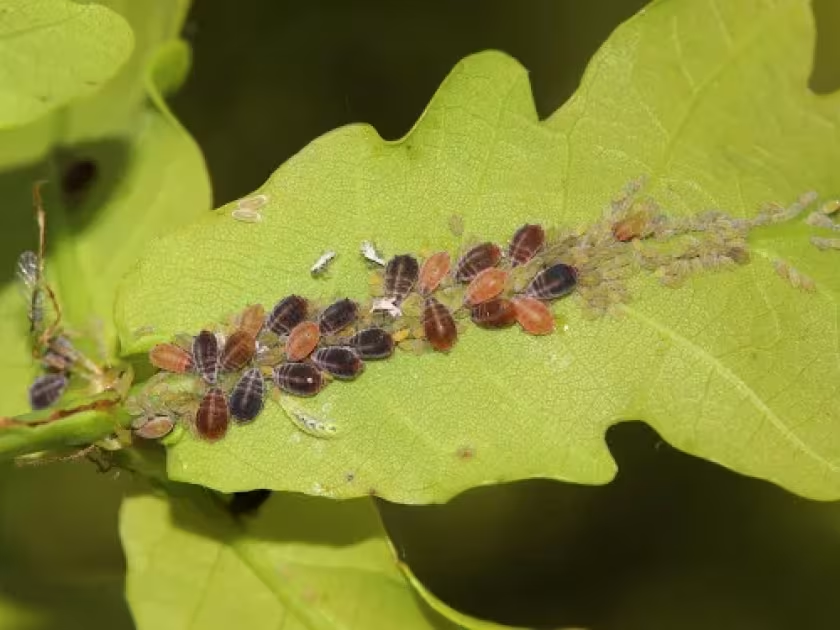
The oak aphid scale (Thelaxes cerridis) is a specialized insect pest belonging to the family Thelaxidae, possessing morphological characteristics of both aphids and scales.
Adults typically have a flattened body, often covered with wax secretions, which makes them appear similar to scale insects, although their life cycle is closer to that of aphids.
The coloration of the imago ranges from light yellow to dark brown, allowing the insect to blend perfectly with the bark of oak trees.
The species exhibits both winged and wingless forms, which is an evolutionary adaptation for colonizing different parts of the tree and ensuring propagation.
First-instar larvae, commonly known as crawlers, are highly mobile, facilitating the spread of the colony across new shoots during the growing season.
What it damages
The primary host for this pest is the oak tree, particularly species within the Cerris section, such as the Turkey oak and Austrian oak.
The pest targets young shoots, leaf petioles, and the stems of saplings, extracting essential plant sap and depleting the tree's energy reserves.
Other oak species can also serve as hosts, especially in environments where the pest population density is exceptionally high.
Severe infestations cause stunted growth and significant weakening, which is particularly detrimental to young nursery stock or trees under urban stress.
By exhausting the tree's resources, the infestation makes the host more susceptible to secondary pathogens and further environmental damage.
When it appears
The life cycle of Thelaxes cerridis is strictly synchronized with the phenology of the host tree, with egg hatching coinciding with bud break.
The period of peak activity occurs in late spring and early summer, matching the intensive growth phase of young shoots and foliage.
The species produces multiple generations throughout the growing season, allowing for a rapid increase in colony size in favorable conditions.
As autumn approaches, females lay overwintering eggs in the crevices of the bark, where they remain in diapause until the following spring.
Warm and humid spring weather serves as a catalyst for synchronized hatching and accelerates the development rate of the first generation.
Signs of infestation
The most prominent sign of infestation is the curling and distortion of young leaves, which prevents normal development and photosynthesis.
The insects secrete large amounts of honeydew, which serves as a substrate for sooty mold, causing a black layer to cover the leaves and stems.
Infested leaves tend to chlorose, dry out, and drop prematurely, leading to canopy thinning and reduced overall tree vigor.
Clusters of the insects can be observed on the bark of young shoots, where they look like small, flat, brownish spots or bumps.
- Curling of young leaves.
- Sooty mold accumulation on foliage.
- Honeydew secretion on shoots.
- Premature leaf drop.
Control measures
Sanitation practices, including the targeted removal of heavily infested branches, are effective in lowering the pest population in young plantings.
Systemic insecticides applied during the early spring growth period can be used to control established colonies in nurseries.
Dormant oil sprays applied before bud break are a proven method for eliminating overwintering eggs on the bark.
Encouraging natural predators such as lady beetles, green lacewings, and hoverflies helps maintain biological balance and suppresses pest numbers.
Continuous monitoring of tree health is essential, as early intervention prevents the establishment of large colonies and minimizes long-term damage.
Taxonomy
- Latin name
- Thelaxes cerridis
- Order
- Hemiptera (bugs, aphids, leafhoppers)
- Family
- Aphididae
- EPPO code
- THLXCE
Discussion
No discussions yet — be the first.