
Poplar leaf-folding aphid
Thecabius populiconduplifolius
Description
How to identify
The poplar leaf-folding aphid (Thecabius populiconduplifolius) is an insect belonging to the family Aphididae. It is a specialist feeder that specifically targets poplar trees as its primary host during the spring phase of its life cycle.
The aphid undergoes a complex biological process, migrating between different host plants throughout the seasons. This host alternation is a key feature of its life strategy.
Adults and larvae are equipped with specialized mouthparts to feed on leaf tissues, inducing the plant to create a protected gall. These galls provide a safe environment from predators and environmental stress.
Winter is passed in the egg stage, attached securely to the bark of poplar trees. In early spring, the eggs hatch into stem mothers, which start the colonization process.
The development of these insects is highly synchronized with the phenology of the poplar trees, ensuring that young leaves are available for the first generation of the season.
What it damages
The primary damage occurs on poplar trees, where the aphid feeds within newly formed leaf folds. This causes significant deformation of the leaf structure, which inhibits normal leaf development.
Secondary hosts include various herbaceous plants, particularly members of the Ranunculaceae family, where the aphids spend the summer months.
While this pest rarely kills mature trees, the aesthetic damage is substantial in urban landscaping, public parks, and forest nurseries.
Repeated heavy infestations can cause premature leaf drop, which weakens the tree and makes it more susceptible to other biotic and abiotic stressors.
Nursery stock is particularly vulnerable, as the damage can stunt the growth of young saplings, leading to economic losses for growers.
When it appears
The life cycle begins in early spring when the leaf buds start to open. This is the period when the overwintering eggs hatch and the first generation begins its activity.
By late spring and early summer, the characteristic leaf galls are fully formed and visible to the naked eye. This is the peak time for observing the presence of the aphid.
In mid-summer, the winged generation migrates from the poplar trees to their secondary herbaceous hosts, leaving the original trees behind.
As autumn approaches, the cycle reverses, and winged forms return to the poplar trees to lay the overwintering eggs on the bark.
Effective scouting and control measures must be aligned with these seasonal migration patterns to be successful.
Signs of infestation
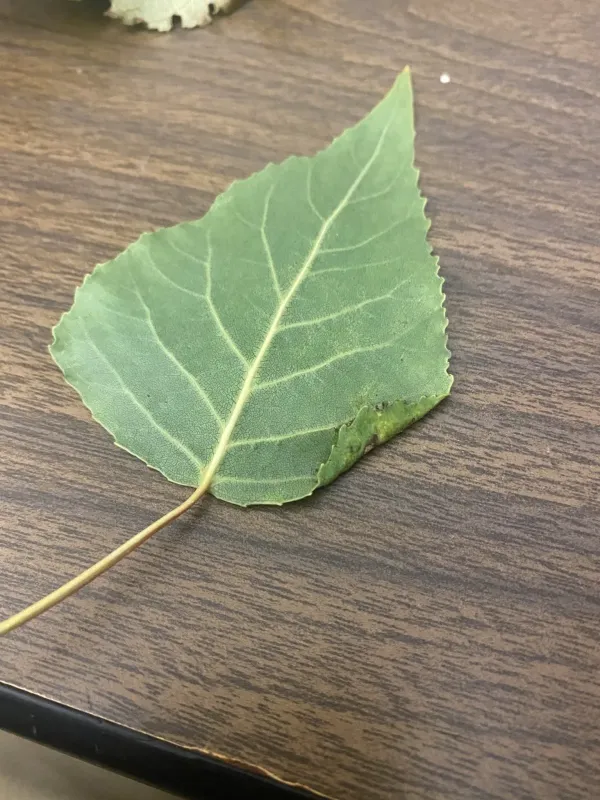
The most diagnostic sign of an infestation is the inward folding of the leaf along the midrib. This fold creates a distinct structure often referred to as a leaf pouch or gall.
Inside these folds, one can observe colonies of aphids accompanied by white, waxy secretions that protect the insects from desiccation.
The affected leaves often turn yellow or develop red spots as a reaction to the aphid feeding, providing a clear visual cue for detection.
In cases of severe infestation, the tree's canopy may appear thin or scorched due to the premature shedding of deformed leaves.
- Distinctive folding of poplar leaves along the midrib.
- Presence of waxy, white colonies inside the folded leaves.
- Deformed, stunted leaf growth.
- Premature yellowing and drop of foliage in early summer.
Control measures
Management of the poplar leaf-folding aphid is most effective when systemic insecticides are applied early in the spring, before the leaves have finished folding.
Once the gall is fully formed, the aphids are shielded from external contact insecticides, making chemical control significantly less effective.
Good horticultural practices, such as removing heavily infested leaves in small settings and maintaining tree health, can significantly reduce the pressure of the population.
Encouraging biological control agents, such as lady beetles, hoverflies, and lacewings, is a sustainable way to manage aphid numbers in residential and public parks.
Regular monitoring of the trees during the early bud-break stage allows arborists to intervene before the colony becomes established within the leaf tissue.
Taxonomy
- Latin name
- Thecabius populiconduplifolius
- Order
- Hemiptera (bugs, aphids, leafhoppers)
- Family
- Aphididae
- EPPO code
- THEAPC
Discussion
No discussions yet — be the first.