
Poplar-woodrush aphid
Thecabius gravicornis
Description
How to identify
The poplar-woodrush aphid (Thecabius gravicornis) belongs to the order Hemiptera and the family Aphididae, representing a specialized group of gall-forming insects.
This species is host-alternating, meaning it requires two different types of plants to complete its complex biological life cycle throughout the year.
During the spring, the aphid colonizes poplar trees (Populus), triggering the growth of characteristic galls on the leaves where the population thrives.
In mid-summer, the population produces winged individuals that migrate to woodrush (Luzula) plants, which serve as the secondary host for the remainder of the season.
The insects are generally small, and their presence is often camouflaged by the plant tissue they deform or by waxy secretions they produce for protection.
What it damages
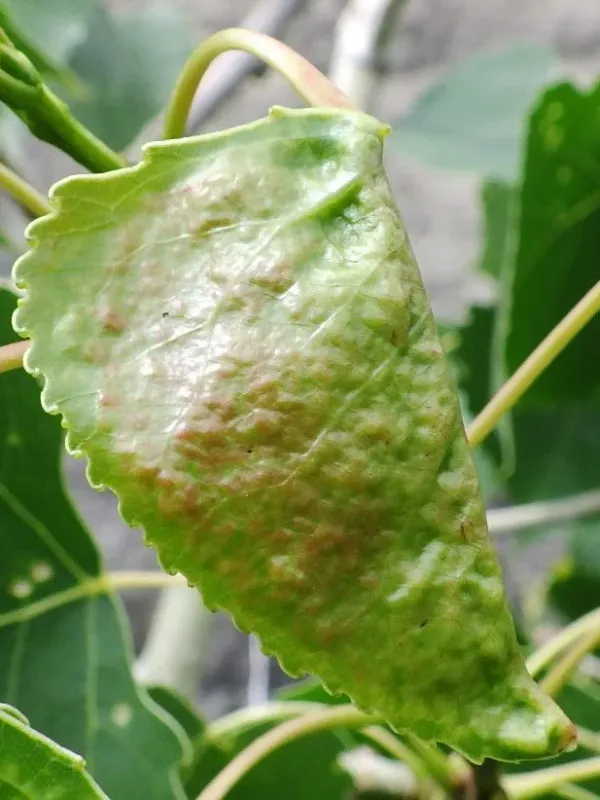
On poplar trees, the primary damage manifests as the formation of leaf galls, which are distorted, bladder-like growths that house the aphid colonies.
While feeding, the aphids extract essential sap, which disrupts the tree's physiological processes, including photosynthesis and nutrient transport.
On the secondary host, the woodrush, the aphids feed on the roots and the base of the stems, causing stunted growth and reducing the vitality of the plant.
In ornamental urban settings, the heavy infestation of galls on poplar trees significantly diminishes the aesthetic and visual quality of the canopy.
Continuous feeding over several seasons may weaken the tree's immune system, making it more susceptible to secondary infections or environmental stress.
When it appears
The cycle begins in early spring when the overwintering eggs on the poplar bark hatch, giving rise to the first generation that immediately attacks emerging leaves.
Gall development and rapid reproduction occur throughout late spring and early summer, peaking in activity as the foliage fully expands.
The migration phase takes place in summer, triggered by environmental cues that signal the shift from primary to secondary host plants.
As autumn approaches, the aphids migrate back to the primary poplar hosts to lay eggs in the crevices of the trunk and branch bark.
Understanding these seasonal windows is critical for implementing timely protection measures before the galls become fully developed and protected.
Signs of infestation
The most visible symptom is the appearance of leaf galls on poplars, which often appear as curled or swollen sections of the leaf blade.
Sticky honeydew secretions found on leaves and the ground below are a clear indicator of a massive aphid colony feeding on the tree canopy.
Sooty mold growth on leaves is a common secondary symptom resulting from the colonization of the honeydew by saprophytic fungi.
Premature yellowing and leaf shedding during the peak of summer are indicative of significant stress caused by the feeding insects.
In woodrush patches, checking the roots for pale, small insects during the summer months helps confirm the presence of this specific aphid species.
Control measures
Effective control relies on preventive measures such as the sanitation of fallen leaves in autumn to remove potential overwintering sites for eggs.
Chemical control is most effective when applied at the bud-break stage in spring, targeting the aphids before they form protective gall structures.
Systemic insecticides are recommended for larger trees, as they are absorbed into the sap and reach the aphids hidden inside the galls.
Integrated Pest Management (IPM) should emphasize the preservation of natural predators, such as lacewings and ladybugs, which are effective in reducing populations.
- Apply dormant oil sprays on poplar bark in late winter.
- Use systemic agents during early leaf development.
- Monitor for early signs of gall formation to time interventions.
Taxonomy
- Latin name
- Thecabius gravicornis
- Order
- Hemiptera (bugs, aphids, leafhoppers)
- Family
- Aphididae
- EPPO code
- THEAGR
Discussion
No discussions yet — be the first.