
Poplar-lettuce aphid
Thecabius affinis
Description
How to identify
The poplar-lettuce aphid (Thecabius affinis) is a member of the Aphididae family. It is a heteroecious aphid, meaning it alternates between two different host plants to complete its life cycle.
These insects are small, with a body length of about 2–3 mm. The appearance changes throughout the season, with spring generations on poplars differing in color and morphology from the summer generations on lettuce.
The life cycle begins with overwintering eggs on poplar bark. As spring temperatures rise, the stem mothers emerge and initiate the formation of galls on the leaves.
Once winged migrants are produced, they leave the poplar trees and colonize secondary hosts, specifically plants within the Asteraceae family, such as lettuce (Lactuca sativa).
They reproduce rapidly through parthenogenesis during the summer, forming dense colonies on the undersides of lettuce leaves, which can lead to significant outbreaks.
What it damages
The primary host plant is the poplar (Populus species), where the aphid spends its early life stages and creates protective galls along the central veins of the leaves.
Lettuce (Lactuca sativa) serves as the primary secondary host. The aphids feed by inserting their stylets into the plant tissue, extracting sap and causing localized nutrient depletion.
Economic damage is severe because infested lettuce plants lose their aesthetic quality and vigor, often becoming unmarketable due to leaf deformation and wilting.
The aphids also act as vectors for several plant viruses, which can infect the crop and lead to systemic diseases, causing further reduction in yields.
Under greenhouse conditions, the lack of predators and ideal climatic conditions often allow the population to explode, requiring intensive management intervention.
Signs of infestation
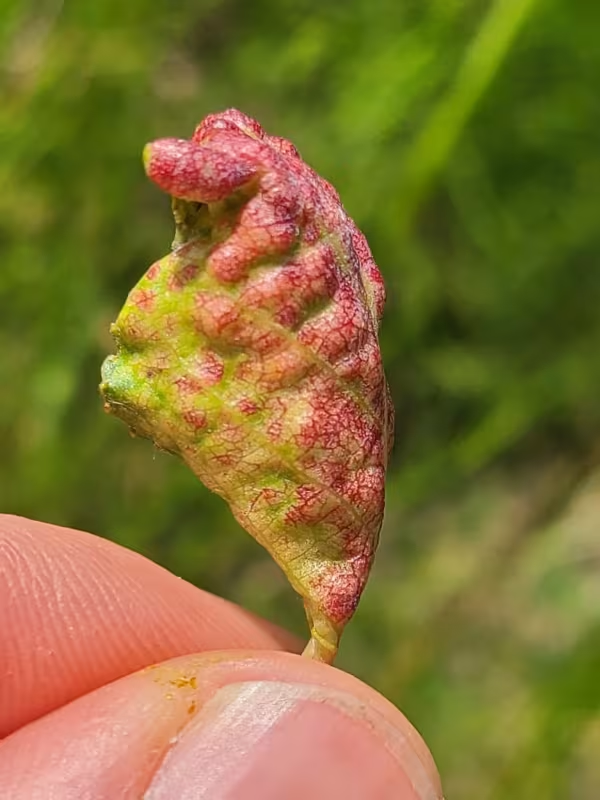
On poplar trees, the characteristic signs are flattened leaf galls along the midrib. These structures protect the aphids while they develop during the spring months.
On lettuce, the infestation is marked by leaf curling, yellowing, and stunted growth. The affected leaves often show signs of wrinkling and uneven expansion.
A sticky, shiny substance known as honeydew covers the leaves. This is a waste product of the aphids and often promotes the growth of black sooty mold fungus.
Close inspection of the underside of leaves reveals clusters of small, soft-bodied insects. These colonies are often found along the leaf veins where the sap flow is high.
As the infestation progresses, the plant exhibits symptoms of physiological stress, including reduced photosynthesis and, in extreme cases, total plant collapse.
Control measures
Cultural control is essential and involves keeping fields free of Asteraceae weeds that can act as alternate hosts for the aphids during the summer season.
Spatial separation between poplar stands and lettuce crops can help prevent the early-season migration of winged aphids onto the vulnerable lettuce plants.
Biological control agents, such as ladybird beetles, lacewings, and parasitic wasps, can significantly reduce aphid populations if they are allowed to establish in the environment.
Chemical control should be applied using selective insecticides when monitoring thresholds are exceeded, ensuring compliance with pre-harvest intervals for safety.
Integrating yellow sticky traps for monitoring purposes allows agronomists to detect the arrival of the first migrants, enabling timely applications and reducing overall pesticide usage.
Taxonomy
- Latin name
- Thecabius affinis
- Order
- Hemiptera (bugs, aphids, leafhoppers)
- Family
- Aphididae
- EPPO code
- THEAAF
Discussion
No discussions yet — be the first.