
Thecabius
Thecabius
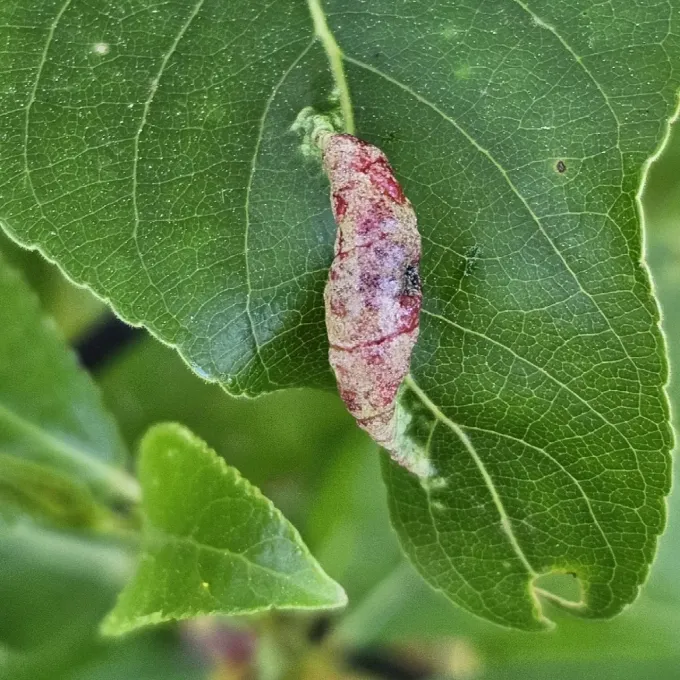
Description
How to identify
Thecabius is a genus of aphids belonging to the family Aphididae, which are primarily known for their unique life cycle involving host alternation and gall formation.
These insects are typically small, ranging from 1.5 to 3 mm in length, and their coloration often reflects their current developmental stage and host environment.
They are specialized suckers that possess piercing-sucking mouthparts, which they use to access plant fluids within the protected environment of leaf galls.
A key biological characteristic of this genus is the reduction of specific organs such as siphunculi, which distinguishes them from many other aphid species.
Correct identification often requires expert microscopic examination of morphological traits, as they can be easily confused with other gall-forming aphids.
What it damages
The primary hosts for Thecabius are typically trees within the Salicaceae family, particularly poplars, where they create distinct leaf galls.
By feeding inside these galls, they disrupt normal leaf development, causing deformation and reducing the tree's photosynthetic capacity.
Secondary hosts often include various herbaceous plants, where the aphids colonize the roots or stem bases, leading to systemic stress in the plant.
Severe infestations on young trees can significantly retard growth and reduce overall vigor, making the plants more susceptible to environmental stress.
Damage results not only from direct nutrient depletion but also from the structural damage caused by the formation of complex leaf galls.
When it appears
The lifecycle begins in early spring, when overwintering eggs hatch into fundatrices on the buds of primary host trees.
The peak period for gall development is late spring, coinciding with the rapid growth phase of the host's foliage.
During summer, winged morphs migrate to secondary herbaceous hosts to continue their life cycle, producing multiple generations.
As autumn approaches, winged migrants return to the primary host (poplar) to complete the sexual phase and lay overwintering eggs.
Environmental factors, such as warm and humid spring weather, significantly accelerate the development of colonies and increase their pest pressure.
Signs of infestation
The most visible sign of Thecabius presence is the formation of peculiar leaf folds, pockets, or galls on poplar trees.
If these galls are opened, one can observe clusters of small aphids, often surrounded by white, waxy secretions or filamentous exudates.
On secondary hosts, signs of infestation include general plant wilting, chlorosis, and stunted growth of roots or stems.
The presence of honeydew on the leaves below the infested sites often attracts ants and supports the growth of sooty mold.
Progressive browning and distortion of affected plant tissues are clear indicators of extensive feeding activity by the aphid colonies.
Control measures
Mechanical control, such as pruning and destroying galled leaves early in the season, is highly effective for reducing population numbers in gardens.
Biological control can be managed by preserving the populations of natural predators, such as lady beetles, lacewings, and hoverflies.
Chemical intervention should be reserved for nursery or young orchard settings where high population density threatens the plant's survival.
Spatial planning, ensuring that primary and secondary hosts are planted apart, can break the migration cycle of the pest.
Constant monitoring of the host foliage during the spring allows for early intervention, preventing the pest from spreading throughout the entire plantation.
Taxonomy
- Latin name
- Thecabius
- Order
- Hemiptera (bugs, aphids, leafhoppers)
- Family
- Aphididae
- EPPO code
- THEASP
Discussion
No discussions yet — be the first.