
Elm gall aphid
Tetraneura ulmi
Description
How to identify
The elm gall aphid (Tetraneura ulmi) is a member of the Aphididae family. It is a polymorphic insect that alternates between elm trees and various grass species during its development.
The insects are small and possess unique morphological traits that allow them to induce gall formation on elm leaves. These galls serve as protective environments for the aphid colonies.
The fundatrices, or founding females, emerge from overwintering eggs in early spring. They are responsible for stimulating the leaf tissue to create the characteristic galls.
Summer generations of the aphid develop wings, which enables them to migrate from the elms to their secondary hosts, primarily grasses, where they infest the root systems.
The reproductive cycle concludes in the autumn when winged individuals return to the elm bark to mate and deposit eggs, ensuring the survival of the species through the winter months.
What it damages
The primary damage to elm trees is caused by the formation of galls on the leaves. These structures disrupt photosynthesis and can lead to premature leaf drop, weakening the tree's health.
On grasses and cereal crops, the aphids infest the roots. They feed on plant sap, which stunts the plant's growth and reduces its overall vigor and biomass production.
In large-scale infestations, the damage to cereal crops like wheat and barley can lead to significant yield losses. This often goes unnoticed because the infestation occurs below ground.
Ornamental elms in urban areas suffer from aesthetic degradation due to the disfigurement of their canopy and the development of sooty mold on the honeydew produced by the aphids.
The honeydew accumulation also attracts other pests and promotes the growth of fungi, which further interferes with the respiratory and metabolic processes of the host plant.
When it appears
The life cycle begins in spring when the elm buds open. At this time, the fundatrices initiate the formation of galls by feeding on the emerging leaves.
Migration to grass hosts typically occurs during mid-summer. This period is marked by the flight of winged aphids searching for suitable root systems to colonize.
Throughout the summer, multiple generations of the aphid develop on the roots of grasses. Warm and dry weather conditions tend to accelerate their reproduction rate.
In the autumn, as temperatures drop, the winged aphids return to the elm trees. This seasonal migration is essential for the completion of their reproductive cycle.
The winter is spent in the egg stage, which is firmly attached to the bark of the elm tree, providing protection against extreme cold and environmental stress.
Signs of infestation
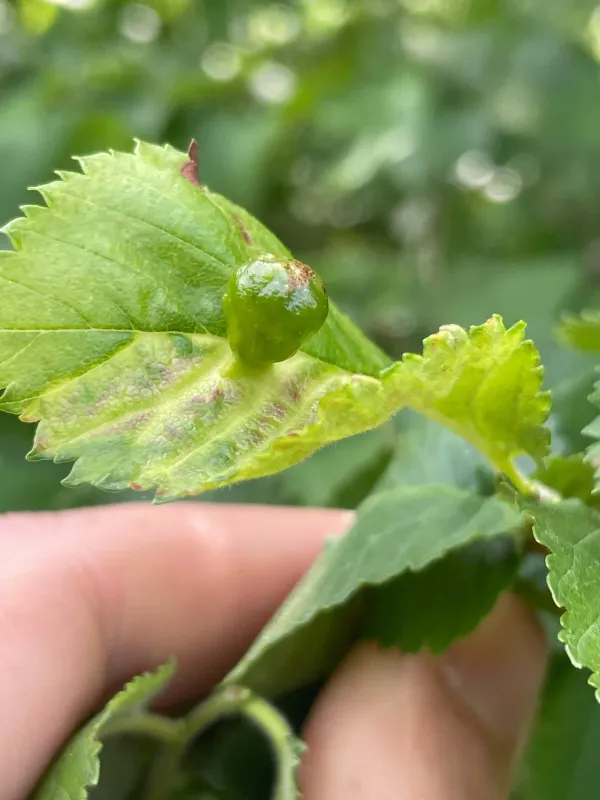
The most distinctive sign of an elm gall aphid infestation is the presence of galls on the upper surface of the leaves. These galls often resemble small red or green cockscombs.
The color of the galls is a useful indicator of infestation intensity. Bright red galls are particularly conspicuous against the green foliage of the tree.
Upon opening a fresh gall, you will find a dense colony of aphids, which confirms the presence of the pest rather than a physiological disorder of the plant.
On grass hosts, signs include patches of stunted, yellowing vegetation. Investigating the roots may reveal white, waxy secretions indicative of aphid activity.
- Leaf deformation on elms.
- Cockcomb-shaped galls on the top of leaves.
- Early leaf senescence and yellowing.
- Stunted growth in cereal field patches.
- Increased ant activity around tree bases.
Control measures
Chemical control on elm trees is only effective in early spring before the galls close. Once the aphid is inside the gall, it becomes largely protected from surface sprays.
Good agricultural practices, such as controlling weeds in and around fields, help eliminate the secondary hosts and reduce the aphid's ability to complete its cycle.
For cereal crops, applying systemic seed treatments can provide effective protection against root-feeding aphids during the early stages of plant development.
In landscape management, removing and burning infested branches before the winged migrants emerge can significantly lower the pest pressure for the following season.
Regular monitoring of tree health and early detection of gall formation are crucial strategies to mitigate the impact of this pest on both ornamental and agricultural plants.
Taxonomy
- Latin name
- Tetraneura ulmi
- Order
- Hemiptera (bugs, aphids, leafhoppers)
- Family
- Aphididae
- EPPO code
- BYRSUL
Discussion
No discussions yet — be the first.