
Citrus whitefly
Tetraleurodes citriculus
Description
How to identify
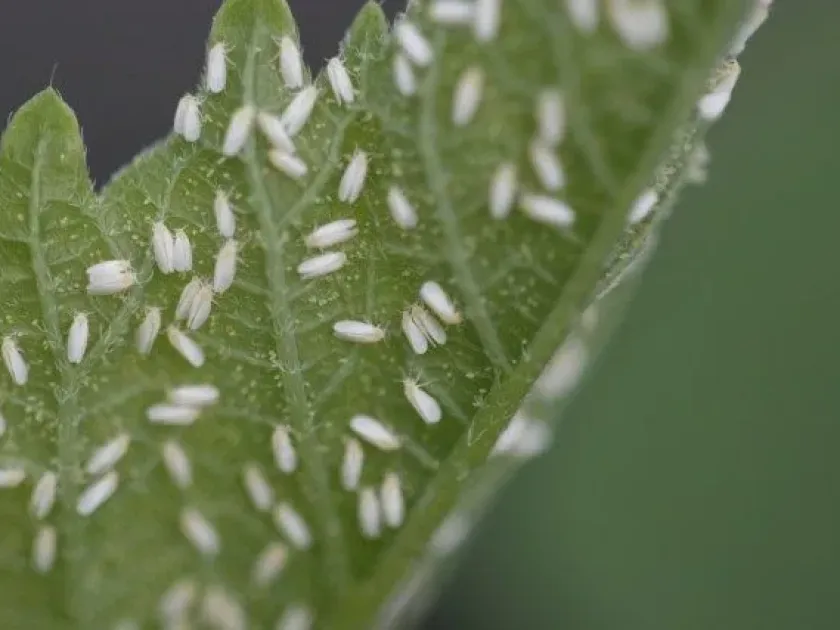
The citrus whitefly (Tetraleurodes citriculus) is a small sap-sucking insect belonging to the family Aleyrodidae. Adults are roughly 2 mm long, characterized by their white wings covered in a fine waxy powder.
Nymphs of this species undergo several stages of development. After the first instar, they become sessile, meaning they attach themselves firmly to the leaf surface, often turning dark brown or black.
These insects prefer to congregate on the abaxial (underside) surface of the leaves. This positioning provides them with protection from direct sunlight and natural predators, facilitating steady feeding.
The life cycle is highly influenced by temperature and humidity levels. In warmer climates or greenhouses, development can proceed rapidly, leading to overlapping generations throughout the year.
Identification is best achieved by examining the pupal cases. Morphological features such as the shape and texture of the pupal cover are critical for accurately distinguishing this species from other whiteflies.
What it damages
The primary hosts of this pest include citrus species such as lemons, oranges, and mandarins. They are a common concern in both commercial orchards and residential citrus gardens.
Besides citrus, the whitefly can infest various ornamental plants, especially in greenhouses or botanical collections, making it a highly adaptable pest in managed environments.
Damage occurs primarily through sap extraction, which depletes the plant's resources. This leads to chlorosis, leaf deformation, and, in severe cases, premature defoliation of the trees.
Like other whiteflies, they excrete honeydew, a sugary substance. This waste material promotes the growth of sooty mold, which covers the leaves and hinders the plant's ability to perform photosynthesis.
Heavy infestations reduce overall fruit yield and market value. Furthermore, the constant stress weakens the tree, making it significantly more susceptible to secondary infections and environmental stress.
When it appears
Citrus whiteflies are most active during warm months when temperatures provide ideal conditions for reproduction. The optimal range for rapid development is generally between 20°C and 28°C.
In greenhouses, the pest can remain active throughout the winter months, provided the indoor environment remains warm and stable. This creates a continuous threat if left unmanaged.
Spring is a critical monitoring period. As citrus trees produce new flushes of succulent growth, whiteflies migrate to these tender tissues to lay eggs, starting the primary infestation cycle.
Summer sees the peak of their population density. With short generation times in high heat, their numbers can explode within a few weeks if natural enemies or pesticides are not present.
Activity tapers off as autumn temperatures drop. However, because they can overwinter in sheltered environments, persistent populations often survive to re-emerge the following spring.
Signs of infestation
The most recognizable sign is the presence of white, moth-like adults taking flight when a branch is disturbed. A simple shake of the foliage usually confirms their presence.
The underside of the leaves often reveals dark, flattened scales or pupae. These stationary stages are firm to the touch and indicate a well-established colony on the plant.
The presence of sticky honeydew on the foliage is a telltale sign of an active infestation. This substance eventually turns black as sooty mold fungi colonize the surface, discoloring the leaves.
Visually, the plant may appear dull or stunted. Chlorotic spotting or yellowing leaves indicate the area where the whitefly population has been feeding for an extended period.
- Cloud of white insects upon disturbance
- Dark, sessile pupal cases on leaves
- Sticky honeydew residue
- Black sooty mold patches
- Leaf yellowing and wilting
Control measures
Chemical control focuses on the use of systemic insecticides. By absorbing the active ingredients, the plant becomes toxic to the whiteflies feeding on its sap, which effectively manages the population.
Biological control methods involve the introduction of natural enemies, such as parasitoid wasps (e.g., Encarsia spp.). These beneficial insects prey on or parasitize whitefly larvae, offering a sustainable solution.
Cultural practices are essential for suppression. Proper pruning to ensure airflow, maintaining appropriate humidity levels, and removing heavily infested branches help reduce the available habitat.
Yellow sticky traps are highly effective for monitoring and controlling adult whitefly populations. These traps should be placed strategically throughout the orchard or greenhouse.
Strict quarantine measures for incoming nursery stock prevent the introduction of the pest into clean areas. Regular inspections of the undersides of leaves remain the best line of defense.
Taxonomy
- Latin name
- Tetraleurodes citriculus
- Order
- Hemiptera (bugs, aphids, leafhoppers)
- Family
- Aleyrodidae
- EPPO code
- TETLCI
Discussion
No discussions yet — be the first.