
Tenuiphantes tenuis
Tenuiphantes tenuis
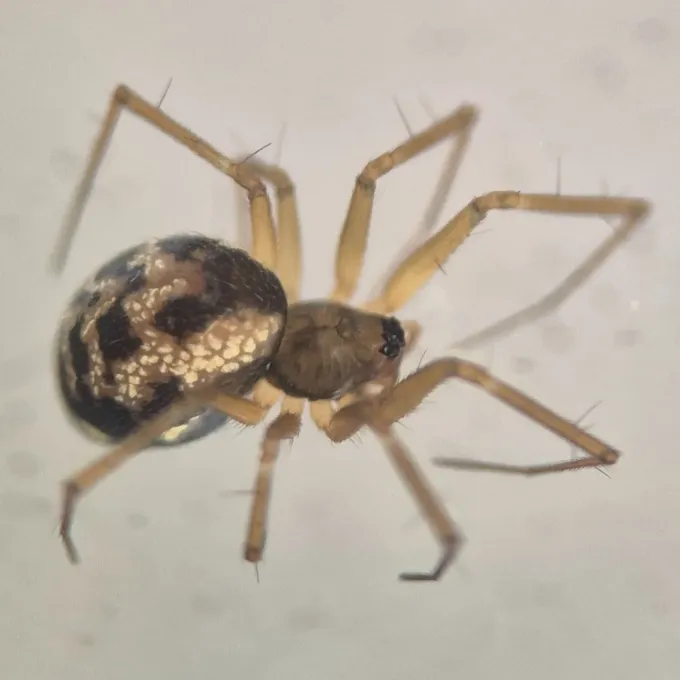
Description
How to identify
Tenuiphantes tenuis is a species of dwarf spider belonging to the family Linyphiidae. These spiders are notably small, typically measuring between 3 and 4 millimeters in body length.
They are characterized by a brownish color with subtle markings on the cephalothorax and long, delicate legs that allow them to navigate effectively through dense vegetation and crop stubble.
Field identification is best achieved through pitfall trapping or sweeping samples. These spiders are commonly found in the lower, humid layers of agricultural fields where they build their characteristic sheet webs.
Systematically, they fall under the order Araneae. While often beneficial as predators, they can sometimes be considered nuisance pests in specific storage environments where their webs affect hygiene.
Their anatomy includes well-developed chelicerae designed for capturing small invertebrates, making them efficient hunters in the diverse micro-ecosystems of agricultural landscapes.
What it damages
Tenuiphantes tenuis is primarily a predator and does not feed on plant tissues. Direct damage to crops is practically non-existent, as they play a role in controlling minor pest populations.
However, the economic damage arises in storage facilities. Their webs collect dust, debris, and moisture, which facilitates the growth of mold and negatively impacts the quality of stored grains or vegetables.
In greenhouses or nurseries, excessive webbing on seedling clusters can cause cosmetic damage to young plants, potentially leading to lower market value or reduced growth rates due to leaf binding.
For fresh produce, such as onions or leafy greens, the presence of spider webs during the harvesting and distribution phase is considered a major quality issue that can lead to product rejection.
In addition, their presence can sometimes be an indicator of imbalanced agricultural practices, where the over-application of pesticides has decimated other beneficial organisms, allowing spiders to dominate.
When it appears
The activity of Tenuiphantes tenuis begins in early spring as temperatures rise, typically remaining active throughout the summer months when humidity levels are favorable.
As autumn approaches and temperatures drop, these spiders seek shelter in warmer environments, often migrating into storage sheds, barns, and warehouses to hibernate and continue their lifecycle.
The lifecycle includes several larval stages. Adults frequently overwinter in soil cracks, plant residues, or protected crevices, ensuring their survival until the next planting season begins.
Springtime brings the "ballooning" phase, where young spiders use silk threads to travel on air currents, colonizing new fields and expanding their distribution across agricultural lands.
Reproduction is continuous during the warmer season, with females laying egg sacs in secure, hidden locations to protect their offspring from predators and environmental extremes.
Signs of infestation
The primary sign of infestation is the appearance of thin, sheet-like webs in the lower part of the crop canopy or near the soil surface, especially in shaded, damp areas of the field.
Dew accumulation makes these webs highly visible during the early morning hours, serving as a clear indicator of the population density and presence of these spiders in the area.
Closer inspection of the foliage often reveals small prey remains trapped in the webbing, confirming the spider's hunting activity and their role as a localized predator.
In warehouses, the accumulation of cobwebs in corners, on pallets, or around containers is a diagnostic sign of spider colonization within the facility.
The physical sighting of adult spiders when moving foliage or inspecting root zones confirms their active status and potential for further population growth in the area.
Control measures
Effective management relies on cultural practices such as consistent soil tillage, which disrupts overwintering sites and reduces the habitat available for spider colonization.
In storage environments, maintaining high levels of cleanliness, including the regular removal of webs and dust, is essential to prevent the accumulation of moisture and mold.
Avoiding the overuse of broad-spectrum insecticides is crucial, as maintaining a healthy population of other natural predators helps to balance the ecosystem and naturally regulate spider numbers.
Preventive measures in storage units, such as sealing containers and ensuring proper ventilation, effectively limit the suitability of the environment for the spider.
- Field hygiene and weed management;
- Regular cleaning of agricultural facilities;
- Maintaining proper plant spacing for better airflow;
- Using sealed packaging for harvested produce.
Taxonomy
- Latin name
- Tenuiphantes tenuis
- Family
- Linyphiidae
- EPPO code
- LETYTE
Discussion
No discussions yet — be the first.