
Tenuiphantes
Tenuiphantes
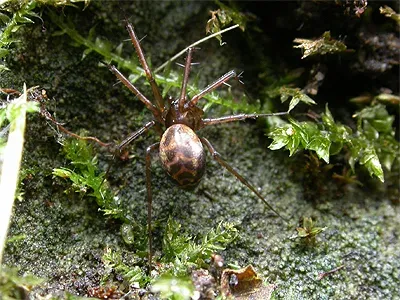
Description
How to identify
The genus Tenuiphantes belongs to the family Linyphiidae, commonly known as sheet weavers, which are widely distributed in agricultural ecosystems worldwide. These are tiny spiders, with body lengths rarely exceeding 2–3 millimeters.
A distinguishing feature is their ability to weave thin, horizontal, or irregular webs that often cover the soil surface or the lower tiers of agricultural crops.
They are visually difficult to identify in the field without entomological equipment, as they possess cryptic coloration, ranging from gray to brown hues.
The biology of these organisms is closely tied to environmental humidity; they prefer shaded areas with dense foliage, where a favorable microclimate for their development is created.
The life cycle involves multiple larval stages, and their activity significantly increases during periods of high soil moisture.
What it damages
Although Tenuiphantes are primarily predators by nature, their presence in agroecosystems can have a dual impact on the health of agricultural crops.
In certain situations, their mass accumulation leads to the formation of dense webs that hinder normal gas exchange and photosynthesis in the lower leaf layers of vegetable and grain crops.
Particular danger arises from damage to young seedlings, where webs entangle the plant's growth point, causing stem deformation and stunted development.
The presence of large amounts of silk on the soil surface can complicate agricultural operations and contribute to moisture stagnation, which triggers fungal infections.
On commercial plantations, the presence of excessive webbing reduces the marketability of produce, making it unsuitable for sale in fresh produce markets.
When it appears
Activity of Tenuiphantes spiders begins with the arrival of stable warmth, when the average daily soil temperature rises above 10–12 degrees Celsius.
The highest population density is observed during spring and summer rains, as high humidity is a critical factor for their survival and activity.
Throughout the season, several population peaks occur, which often correlate with the phases of intensive agricultural crop growth.
Towards the end of summer, as dry weather sets in, their activity significantly decreases as most individuals move into deeper soil layers or under plant debris.
In autumn, eggs are laid in protected cocoons that successfully overwinter in the soil or plant residues, preparing the population for the next cycle.
Signs of infestation
The primary sign of a pest presence is the discovery of thin, almost transparent spider webs stretched between leaves or near the ground surface.
Farmers may notice characteristic bending or curling of leaf tips, caused by the tension of the webbing produced by these spiders.
In the early stages of plant development, clusters of webs can be seen in the root zone, which gradually engulf the entire plant if left uncontrolled.
Damaged leaf areas may turn yellow due to the disruption of physiological processes caused by the constant pressure of the spider silk threads.
During visual inspections in the morning hours, when dew settles on the webs, the structures become clearly visible, facilitating the detection of infestation hotspots.
Control measures
An effective control method is regular weeding and the removal of weeds, which serve as natural shelters and breeding grounds for Tenuiphantes.
Agronomic techniques, such as deep autumn plowing, help destroy cocoon overwintering sites and significantly reduce the population for the following season.
In greenhouse conditions, maintaining an optimal ventilation regime is recommended to reduce humidity and create a less favorable microclimate for spiders.
In cases of high infestation, broad-spectrum insect-acaricides may be applied, but their use must be strictly regulated according to plant growth stages.
Biological control methods include the use of natural entomophages and predatory mites, which effectively limit the reproduction of these arachnids in the field.
Taxonomy
- Latin name
- Tenuiphantes
- Family
- Linyphiidae
- EPPO code
- TENPSP
Discussion
No discussions yet — be the first.