
Non-biting midge
Tanytarsus
Description
How to identify
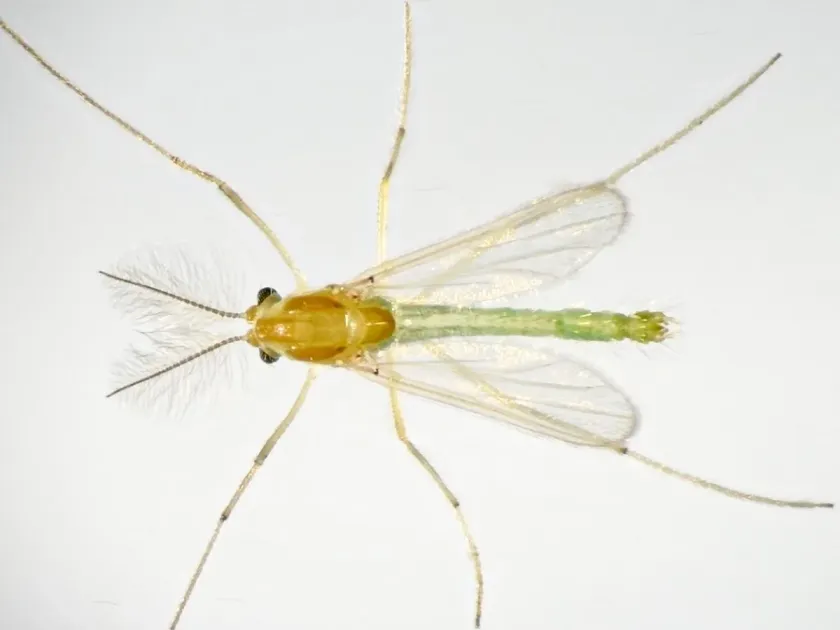
Non-biting midges, or chironomids (Chironomidae), belong to the order Diptera. The genus Tanytarsus consists of small midges that resemble common mosquitoes but lack piercing mouthparts.
Adults have slender bodies, long front legs, and characteristic feathery antennae in males. They do not feed during the adult stage, as their lifecycle is focused solely on reproduction.
The larvae are worm-like in shape and are often colored greenish, yellow, or transparent, rarely red due to the presence of hemoglobin.
They are primarily aquatic, developing in the sediment of water bodies, but under certain conditions, they transition to feeding on plant tissues in waterlogged substrates.
Systematically, this genus belongs to the Chironomidae family, which is one of the most abundant dipteran groups in temperate regions.
What it damages
The primary damage is caused by larvae, which infest seedlings of vegetable and ornamental crops in greenhouse environments and nurseries.
The pest is most dangerous to young plants in pots or trays, where larvae feed on root systems and the base of the stems.
Damage is frequently reported when using non-sterile substrates containing peat or silt from open water sources inhabited by these insects.
Crops grown via hydroponics or in peat-based mixes with excessive irrigation are at high risk of larval infestation.
Beyond direct mechanical damage to tissues, larvae create entry points for pathogenic microflora, which triggers the development of root rots.
When it appears
Mass emergence of adults and egg-laying occur during the spring and summer, when environmental temperatures reach optimal levels for generation development.
In greenhouses, the development cycle can continue uninterrupted if high humidity and standing water in trays or drainage systems are maintained.
Adult activity correlates with evening hours when they form swarms over breeding sites, serving as a signal to begin monitoring the pest.
Greenhouse temperatures of 20–25 degrees Celsius significantly accelerate metamorphosis, allowing the pest to produce multiple generations per season.
During the winter, the pest can survive in the form of diapausing larvae in soil substrates or in stagnant sections of irrigation systems.
Signs of infestation
The first sign of infestation is the sudden wilting of seedlings, which cannot be explained by irrigation or temperature mismanagement.
Inspection of the root system reveals characteristic gnawed areas and the presence of translucent larvae within the substrate or on the roots.
Signs of larval activity, such as thin silk-like tubes (cases) on the surface of peat mixes or substrates, are often noticeable.
The presence of large numbers of small midges flying around the greenhouse during morning or evening hours is an indirect indicator of a high population.
- Stunted plant growth.
- Yellowing of lower leaves.
- Development of lesions on the stem near the soil surface.
- Presence of larvae in the root ball.
Control measures
The primary control method involves using sterilized substrates and restricting excessive moisture within the root zone.
It is essential to avoid using open water sources for irrigation without prior filtration or disinfection.
The use of biological agents based on Bacillus thuringiensis israelensis is effective against larval stages in soil and water.
Utilizing yellow sticky traps helps monitor adult population density and reduce their overall numbers in confined spaces.
In cases of severe infestation, contact-stomach insecticides authorized for greenhouse use may be applied.
Taxonomy
- Latin name
- Tanytarsus
- Order
- Diptera (flies)
- Family
- Chironomidae
- EPPO code
- TANTSP
Discussion
No discussions yet — be the first.