
Chironomus
Chironomus
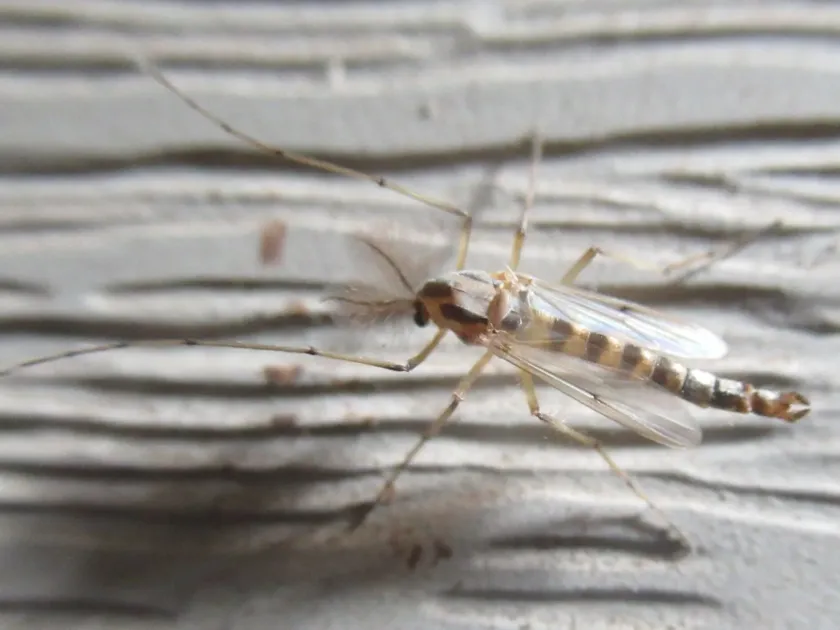
Description
How to identify
Chironomus, commonly known as the non-biting midge, belongs to the family Chironomidae in the order Diptera. Adult midges are small, slender insects that resemble mosquitoes but lack biting mouthparts.
The larval stage, frequently referred to as a "bloodworm," is easily identifiable by its bright red color, which is due to hemoglobin-like proteins. This allows them to thrive in oxygen-poor aquatic environments.
Their life cycle consists of four stages: egg, larva, pupa, and adult. Eggs are typically laid in gelatinous masses attached to submerged objects in water or moist soil substrates.
Development is highly temperature-dependent, and the species can complete multiple generations in a single season, allowing populations to surge rapidly under favorable conditions.
Adult midges live for only a few days, dedicating their short lifespan primarily to swarming, mating, and oviposition, which often occur in the vicinity of water bodies or damp fields.
What it damages
The primary agricultural impact of Chironomus is on rice crops, particularly during the germination and seedling emergence stages. The larvae feed on the roots and young stems of the rice plants.
In greenhouse settings or hydroponic systems, larvae may attack the roots of vegetable seedlings, causing significant growth stunting or plant mortality.
The damage is often characterized by uneven stands and patchiness in fields where larval density is high, leading to reduced overall crop yield.
Larval feeding creates lesions that facilitate the entry of secondary pathogens, such as bacteria and fungi, which can lead to seedling rot and stand depletion.
Young plants are particularly vulnerable during the first two weeks after planting, as their root systems are not yet robust enough to withstand severe larval pressure.
Signs of infestation
A key indicator of an infestation is the presence of dying or yellowing seedlings in flooded fields, which often display weakened stems and damaged root structures.
Upon closer examination of the sediment or soil around the roots, one can observe the characteristic red larvae. These larvae exhibit a typical wriggling movement when disturbed.
Gelatinous egg masses might be found attached to the base of plants or debris near the water surface, serving as a clear sign of ongoing reproduction.
Increased activity of avian predators, such as waders or ducks, in the field can be a visual indicator of high larval density, as they actively forage for the insects.
Physical signs of damage include missing root hairs or partially eaten stem bases, often accompanied by the presence of small, muddy tunnels constructed by the larvae.
Control measures
Water management is the most effective cultural control method; periodically draining the fields helps disrupt the aquatic environment necessary for larval survival.
Proper field leveling and seedbed preparation minimize low-lying areas where water stagnates and where midge populations tend to concentrate and flourish.
In cases of severe outbreaks, chemical insecticides registered for aquatic use can be applied, though this should be done with caution to protect non-target species.
Biological control using formulations of Bacillus thuringiensis var. israelensis is highly effective in suppressing larval populations without causing harm to the aquatic ecosystem.
- Timely field drainage.
- Thorough soil preparation and leveling.
- Use of microbial bio-insecticides.
- Monitoring larval density thresholds.
Taxonomy
- Latin name
- Chironomus
- Order
- Diptera (flies)
- Family
- Chironomidae
- EPPO code
- CHIRSP
Discussion
No discussions yet — be the first.