
Chironomus plumosus
Chironomus plumosus
Description
How to identify
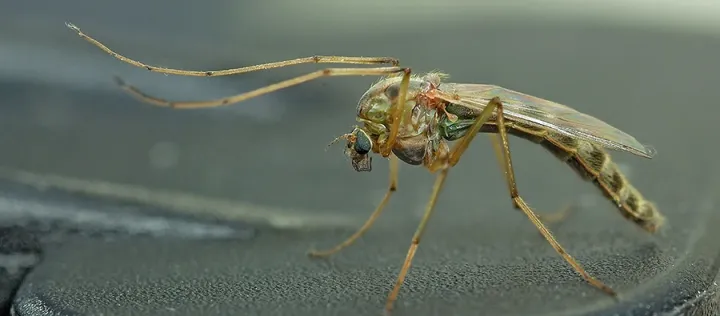
Chironomus plumosus, commonly known as the non-biting midge or chironomid, belongs to the family Chironomidae, order Diptera. Adults are delicate, mosquito-like insects that do not bite or feed.
The primary agricultural threat comes from the larvae, often referred to as bloodworms due to their bright red coloration. This color is caused by hemoglobin, enabling them to survive in oxygen-poor mud.
Full-grown larvae reach 15–20 millimeters in length, featuring a segmented body and a dark, hardened head capsule equipped with mouthparts for grazing on detritus and organic matter.
The life cycle encompasses eggs, four larval instars, pupae, and adults. The duration of these stages is heavily dictated by water temperature and the oxygen levels found in the substrate.
Adults are famous for their mating swarms, which typically occur at dusk. These swarms appear as dense columns of insects hovering over bodies of water, producing a distinct humming sound.
What it damages
In agronomy, Chironomus plumosus larvae are recognized as significant pests in paddy fields, specifically during the initial flooding and crop germination phases.
Larvae feed on the germinating seeds and young rice shoots. They are known to gnaw at the seeds and sever the primary roots, leading to sparse crop stands and potential plant mortality.
Fields with high organic matter content provide an ideal habitat for these larvae. Under these conditions, populations can reach densities sufficient to destroy entire sections of a rice crop.
Severe infestations necessitate reseeding efforts, which increase overall production costs, labor requirements, and resource consumption, significantly impacting farm profitability.
In addition to direct damage to seeds and roots, the burrowing activity of the larvae alters the physical structure of the soil surface, potentially hindering root establishment and promoting decomposition processes.
When it appears
The activity of Chironomus plumosus typically initiates in early spring, as soon as water temperatures in flooded paddies rise above 10–12 degrees Celsius.
The peak of larval damage usually occurs during May and June, coinciding directly with the planting of rice and the emergence of seedlings, which are the most vulnerable stages.
Depending on the climatic zone, the midge can complete multiple generations per season, with each generation cycle lasting anywhere from three weeks to over a month.
Mid-summer heat can accelerate reproductive cycles, but the most critical damage period for the crop is limited to the early vegetative stage after initial field flooding.
As autumn temperatures drop, larvae retreat deeper into the sediment to overwinter, remaining in a state of suspended animation until the conditions improve the following spring.
Signs of infestation
The first indicator of an infestation is the sudden appearance of bare patches in the rice field where germination should have occurred, despite proper environmental conditions.
Closer inspection of the substrate around the missing or damaged seedlings reveals the presence of bright red larvae, which are often found near the root zones of the rice plants.
The existence of tiny, interconnected silken mud tubes on the surface of the paddy soil serves as a strong indicator of high larval density in the underlying substrate.
Damaged seedlings may appear severed at the base or have missing roots, causing the plants to float to the water surface or collapse, leading to rapid deterioration.
Consistent evening swarms of adult midges above the fields serve as a warning sign, indicating a large larval population in the soil that poses a serious threat to the crop.
Control measures
The primary control measure is the use of proper agronomic practices, such as thorough soil preparation to reduce excess organic matter and eliminate food sources for larvae.
Briefly draining the rice paddies prior to planting is a highly effective cultural method, as it dries the top layer of soil and causes widespread larval mortality.
When necessary, specific insecticides designed for aquatic environments may be applied, though their use must be strictly regulated to minimize impact on the broader ecosystem.
- Implementation of crop rotation and field drying cycles.
- Precision management of water levels during the seedling emergence phase.
- Use of biological control agents like entomopathogenic bacteria.
- Monitoring larval density before and immediately after flood irrigation.
Integrating biological controls and habitat management allows farmers to maintain pest numbers below economic thresholds without relying solely on intensive chemical treatments.
Taxonomy
- Latin name
- Chironomus plumosus
- Order
- Diptera (flies)
- Family
- Chironomidae
- EPPO code
- CHIRPL
Discussion
No discussions yet — be the first.