
Bamboo aphid
Takecallis arundinariae
Description
How to identify
Takecallis arundinariae is a specialized aphid species belonging to the family Aphididae within the order Hemiptera.
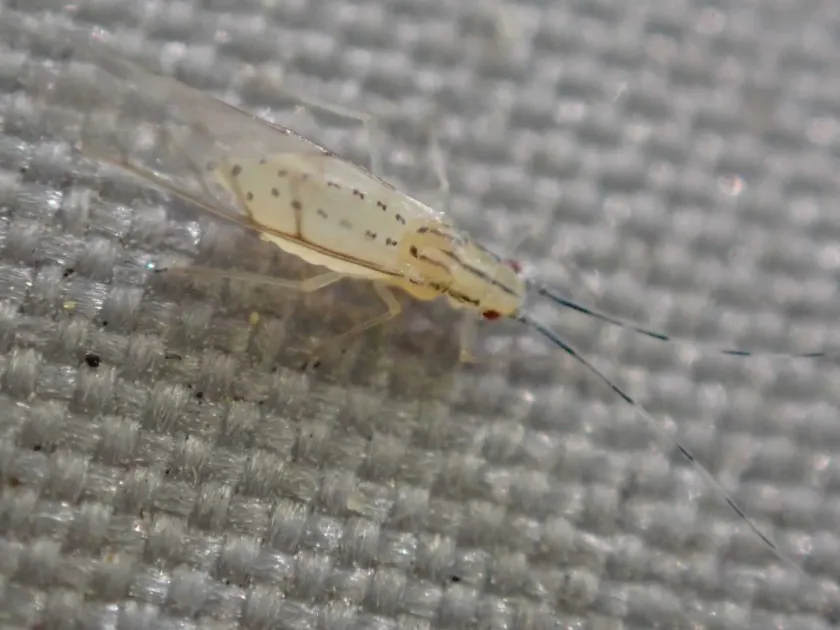
This insect is relatively small, typically measuring between 1.5 and 2.5 mm in length, which allows it to remain undetected for long periods.
The body color usually ranges from pale yellow to light green, providing excellent camouflage against the foliage of bamboo plants.
Both winged and wingless forms exist, enabling the species to colonize new areas and maintain robust populations throughout the season.
The species is primarily identified by its host specificity and distinct morphological features of its siphunculi and abdominal segments.
What it damages
This pest exclusively targets various bamboo species, including those in the genera Phyllostachys, Arundinaria, and Sasa.
The aphids concentrate on the undersides of leaves and on tender new shoots, extracting vital cell sap from the plant.
Heavy infestations can lead to significant weakening of the bamboo plants, resulting in stunted growth and a reduction in decorative value.
Besides direct mechanical damage, the aphids serve as vectors for various plant viruses, further compromising the host's health.
Excessive sap removal causes premature leaf drop and yellowing, which significantly impacts the aesthetic appearance of bamboo groves.
When it appears
The life cycle begins in early spring as temperatures rise and the bamboo enters its primary period of active growth.
Populations tend to reach their peak during mid-summer, favored by warm temperatures and high relative humidity.
As the season progresses toward autumn, the aphids produce overwintering eggs laid in sheltered areas of the bamboo culms.
Multiple generations occur within a single growing season, allowing for rapid population explosions under ideal climatic conditions.
Temperature fluctuations and rainfall patterns strongly influence the mortality and reproduction rates of the colonies.
Signs of infestation
The presence of honeydew, a sticky substance excreted by the aphids, is one of the most prominent signs of an infestation.
Sooty mold frequently develops on the honeydew, appearing as a dark or black coating on the leaves and inhibiting photosynthesis.
Leaves may show visible signs of curling or structural deformity due to the persistent feeding pressure of the insects.
Close inspection of the underside of the leaves reveals clusters of small yellowish or green aphids alongside their cast-off skins.
Significant yellowing or brown spotting on the leaves, followed by sudden leaf drop, indicates a severe and established population.
Control measures
Integrated pest management starts with regular monitoring of bamboo foliage to detect early signs of aphid activity.
For large-scale infestations, the application of systemic insecticides is highly effective as they move through the plant tissue.
Biological control agents, including lady beetles, lacewings, and parasitic wasps, play a crucial role in maintaining natural balance.
Manual cleaning or washing with insecticidal soaps can be used in small gardens to suppress populations without harsh chemicals.
Promoting overall plant vigor through proper fertilization and irrigation helps the bamboo withstand the stresses of pest pressure.
Taxonomy
- Latin name
- Takecallis arundinariae
- Order
- Hemiptera (bugs, aphids, leafhoppers)
- Family
- Aphididae
- EPPO code
- TAKEAR
Discussion
No discussions yet — be the first.