
Bamboo leaf aphid
Takecallis arundicolens
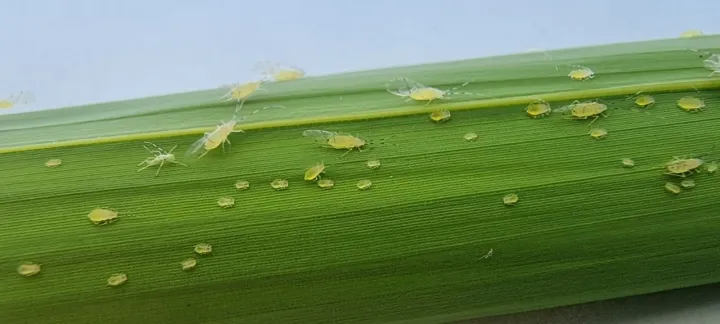
Description
How to identify
The bamboo leaf aphid (Takecallis arundicolens) is a specialized insect species within the family Aphididae that feeds exclusively on bamboo and related grasses.
Adult aphids are small, measuring roughly 1.5 to 2.5 mm in length, and exhibit a pale yellowish-green coloration that blends into the foliage.
They possess elongated antennae and, in the alate (winged) morphs, transparent wings with distinct venation, facilitating rapid colonization of new hosts.
As a member of the order Hemiptera, these aphids possess piercing-sucking mouthparts specifically evolved to tap into the vascular tissues of bamboo plants.
The species is widespread and highly adapted, often forming dense colonies on the undersides of leaves, which protects them from environmental stressors.
What it damages
The primary hosts for Takecallis arundicolens are various bamboo genera such as Phyllostachys, Sasa, and Pseudosasa.
By sucking phloem sap from the leaves, the aphids drain the plant's essential nutrients, leading to decreased vigor and overall stunted development.
Excessive feeding causes leaf yellowing, chlorosis, and in cases of severe infestation, premature leaf drop and twig dieback.
The damage extends beyond direct feeding, as the aphids excrete honeydew, which serves as a medium for sooty mold growth on the leaf surface.
Sooty mold accumulation covers the leaves, significantly reducing the plant's photosynthetic capacity and marring the ornamental value of the bamboo.
When it appears
Activity begins early in the spring as soon as new leaf tissue emerges, marking the start of the aphid's rapid population growth cycle.
The peak infestation period typically occurs during mid-summer, when warm temperatures accelerate the reproduction of the insects.
Depending on the climatic zone, Takecallis arundicolens can reproduce through multiple generations annually, often surviving mild winters in vegetative states.
The population tends to surge during prolonged periods of drought, as the sap concentration in plants becomes more favorable for the aphids.
Autumn triggers the production of overwintering eggs on leaf surfaces, ensuring the survival of the species until the following growing season.
Signs of infestation
The most immediate sign of an infestation is the presence of sticky honeydew deposits on the upper surfaces of leaves located below the aphid colonies.
Black sooty mold growth is a characteristic secondary indicator, often appearing as dark, powdery patches on the leaves and stems.
Visual inspection of the leaf undersides reveals clusters of pale aphids, their white cast skins (exuviae), and occasionally attendant ants.
Visually, the plant shows signs of decline, including curled or wilted leaves that eventually turn yellow and fall off prematurely.
If ants are present on the stems in high numbers, it is a strong indicator that aphids are present and being protected by the ant colony.
Control measures
Cultural control begins with maintaining plant health through proper irrigation and avoiding excessive nitrogen fertilization, which attracts aphids.
Mechanical removal can be achieved by spraying the foliage with a strong jet of water to dislodge the aphids, focusing on the leaf undersides.
Biological control agents, particularly lady beetles (Coccinellidae) and lacewings (Chrysopidae), are highly effective at suppressing aphid numbers naturally.
If chemical intervention is necessary, systemic insecticides or horticultural oils can be applied, ensuring thorough coverage of the affected areas.
- Use insecticidal soaps as a targeted, low-toxicity treatment for minor infestations.
- Encourage local predator populations by avoiding broad-spectrum pesticides.
- Monitor bamboo groves regularly during the spring to catch outbreaks before they reach critical levels.
Taxonomy
- Latin name
- Takecallis arundicolens
- Order
- Hemiptera (bugs, aphids, leafhoppers)
- Family
- Aphididae
- EPPO code
- MYZCAR
Discussion
No discussions yet — be the first.