
Strophocheilus miersi
Strophocheilus miersi
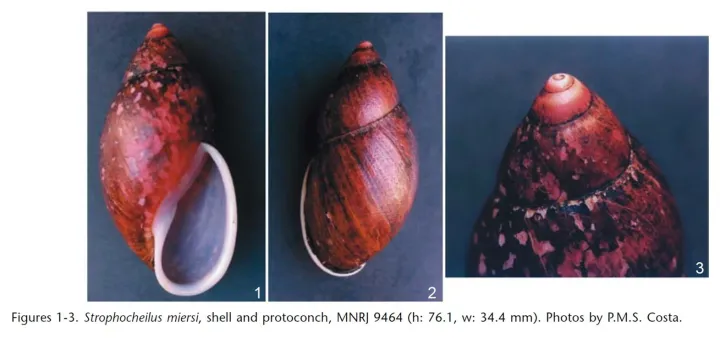
Description
How to identify
Strophocheilus miersi is a large species of land snail belonging to the Strophocheilidae family, within the order Stylommatophora.
This mollusc is characterized by its significant size and a robust, elongated shell that provides essential protection against environmental stressors.
The snail is primarily found in humid environments where vegetation is dense, providing both food and shelter throughout the year.
Its physical appearance, particularly the specific whorls and aperture of the shell, helps distinguish it from other local gastropod species.
Understanding the biology of this species is crucial for identifying its presence in agricultural fields or ornamental gardens.
What it damages
Strophocheilus miersi is a notorious polyphagous pest, meaning it feeds on a wide range of plants, including many economically important crops.
The feeding activity involves consuming leaves and soft tissues, which can lead to severe stunting or total death of young plant seedlings.
Fruit and vegetable crops suffer from both direct biomass loss and aesthetic damage, which renders the products unsellable in markets.
In nurseries and greenhouses, these snails can cause significant financial losses by feeding on the tender stems of young, high-value plants.
Moreover, the damage caused by these pests often creates entry points for various phytopathogenic bacteria and fungi, leading to secondary plant diseases.
When it appears
The activity of these snails is strictly governed by moisture levels; they are most active during wet seasons or rainy weather.
During dry or excessively hot periods, they retreat into the soil or under dense vegetation to enter a state of dormancy to prevent dehydration.
Their daily activity cycle is nocturnal, meaning they prefer to feed at night and stay hidden during the bright daylight hours.
The lifecycle, including mating and egg-laying, is highly dependent on environmental humidity, which determines the population growth rates.
Early identification of signs during the start of the rainy season is essential to prevent large-scale outbreaks on farm plots.
Signs of infestation
One of the most obvious signs of a Strophocheilus miersi infestation is the presence of dried, silvery mucous trails left on surfaces.
Leaves often show irregular, ragged edges or large holes, which are classic signatures of snail feeding behavior.
Detection at night with a flashlight often reveals the snails actively feeding on the foliage or moving across the soil surface.
The presence of feces near the base of plants or on leaves provides additional evidence of the pests' recent feeding activity.
In severe cases, entire patches of young seedlings may disappear overnight, indicating a dense population density in the immediate area.
Control measures
Cultural control is the first line of defense, which involves removing debris, rotting wood, and excessive weeds to eliminate hiding spots.
Creating physical barriers around vegetable beds using crushed stone, wood ash, or diatomaceous earth can effectively deter the snails.
Trapping methods, such as using beer-based traps or moist boards, can successfully reduce the number of active adult snails on the property.
Chemical control using ferric phosphate pellets is considered a relatively safer option compared to traditional metaldehyde-based molluscicides.
Encouraging the presence of natural predators like toads, ground beetles, and birds provides a sustainable and environmentally friendly management strategy.
Taxonomy
- Latin name
- Strophocheilus miersi
- Order
- Molluscs
- Family
- Strophocheilidae
- EPPO code
- STRPMI
Discussion
No discussions yet — be the first.