
Strophocheilus
Strophocheilus
Description
How to identify
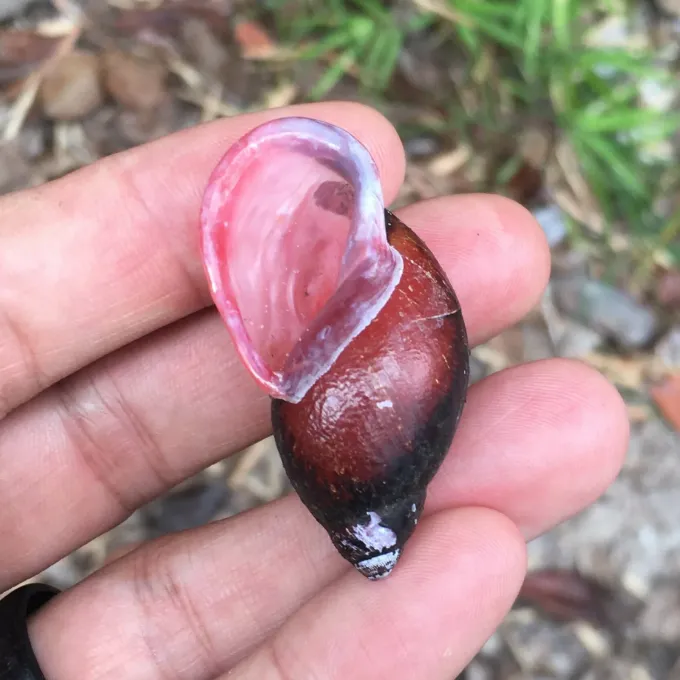
Strophocheilus is a genus of large, air-breathing land snails belonging to the family Strophocheilidae. These mollusks are notable for their robust, often elongated shells that can reach impressive dimensions.
The soft body is covered in mucus, which facilitates movement across various surfaces. Adult individuals possess a strong, muscular foot that allows them to adhere to substrates and move efficiently.
The shell coloration typically ranges from brown to yellowish hues, providing effective camouflage against soil or plant debris. These species are predominantly found in South American ecosystems.
The shell features a distinct aperture, often with thickened margins. Their sensory organs consist of two pairs of tentacles, with the eyes located on the upper pair.
These organisms are hermaphroditic, enabling rapid population growth under favorable conditions, which can lead to significant infestations in localized areas.
What it damages
These mollusks are polyphagous and consume a wide range of agricultural crops. Vegetables, berries, and ornamental plants suffer particularly heavy damage to their young shoots, leaves, and fruits.
In both natural and agricultural settings, they prefer succulent vegetation, feeding on the leaf epidermis and boring holes into young fruits, rendering them unfit for market.
They pose a significant risk to nurseries, where seedlings can be completely destroyed within a short period due to the intense feeding habits of these snails.
The damage caused by these pests often creates entry points for various fungal and bacterial infections, leading to secondary crop losses.
Under high humidity, population density can escalate rapidly, resulting in critical damage to entire plantations in a matter of days.
When it appears
Pest activity peaks during rainy seasons or periods characterized by high atmospheric and soil moisture. Optimal temperatures for reproduction and feeding generally range between +18°C and +25°C.
During dry spells or cold snaps, Strophocheilus enters an estivation phase, burying itself deep in the soil or hiding within plant debris until conditions improve.
Their life cycle includes laying eggs in moist soil or under decaying organic matter, providing protection from desiccation and direct sunlight.
Incubation periods are highly dependent on temperature. Juveniles begin active feeding almost immediately upon hatching, causing damage from their earliest life stages.
Peak damage usually coincides with the active growth phases of crops, when plants are most vulnerable to phytophagous attacks.
Signs of infestation
The primary sign of infestation is characteristic damage to leaves, manifesting as irregular holes with jagged edges, often concentrated in the lower canopy of the plant.
Traces of dried, silvery mucus are visible on the soil surface or plant foliage, indicating the recent movement of the snails.
During morning or evening hours, direct visual inspection of the planting area often reveals the individuals emerging from their daytime shelters to forage.
The presence of large amounts of granular excrement near the stems of plants is another clear indicator of active snail infestation.
- Deformation of young leaves and shoots.
- Holes in fruits resting near or on the ground.
- Dried mucus trails on plant stems.
- Damage to the root collar of young seedlings.
Control measures
Effective control involves cultural practices such as regular soil cultivation and the removal of plant debris that serves as shelter for the mollusks.
Installing physical barriers, such as wood ash, lime, or gravel, can deter these gastropods from reaching crops by creating an unfavorable environment.
Hand-picking pests during evening hours or using baited traps are effective monitoring and eradication strategies that help reduce population numbers.
Chemical control includes the use of molluscicides, such as metaldehyde-based pellets, applied in areas of high pest density, provided that safety regulations are strictly followed.
Biological control methods involve encouraging natural predators, such as birds, hedgehogs, or predatory insects, which can significantly suppress population density in gardens.
Taxonomy
- Latin name
- Strophocheilus
- Order
- Molluscs
- Family
- Strophocheilidae
- EPPO code
- STRPSP
Discussion
No discussions yet — be the first.