
Megalobulimus oblongus
Megalobulimus oblongus
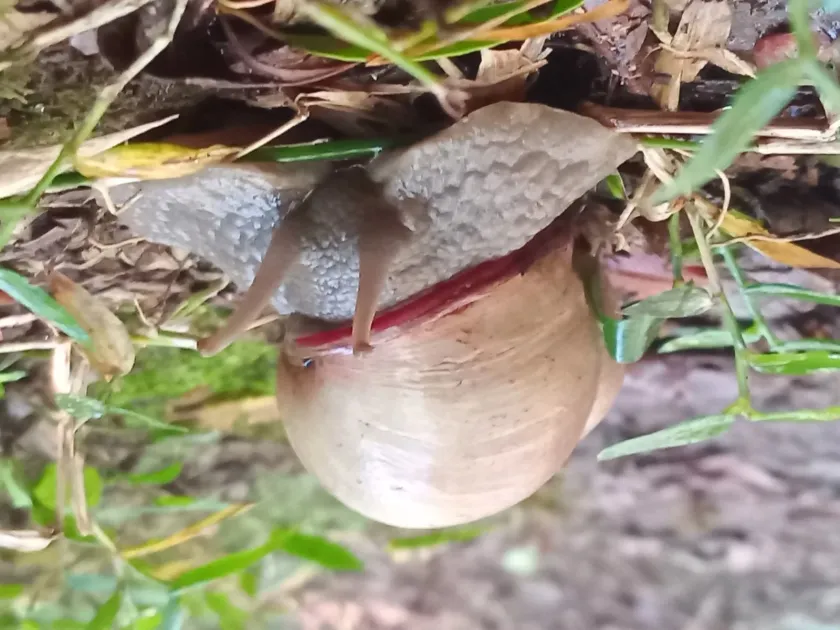
Description
How to identify
Megalobulimus oblongus is a large air-breathing land snail belonging to the Strophocheilidae family. Adult specimens are notable for their robust, elongated shells, which can grow up to 10–12 cm in length.
The snail's soft body is typically grayish or yellowish, covered in a thick layer of mucus that helps retain moisture during dry periods. They are primarily nocturnal and seek shelter in humid environments during the day.
Systematically classified under the order Stylommatophora, this species possesses a strong, heavy shell that provides substantial protection against many natural predators in its habitat.
The species exhibits high adaptability, making it a potentially invasive pest in tropical and subtropical agricultural regions where moisture levels remain consistently high.
Their reproduction cycle involves laying large eggs with calcareous shells directly into the soil, which ensures the survival of offspring even under changing environmental conditions.
What it damages
This snail is a significant polyphagous pest capable of feeding on a wide range of agricultural and horticultural crops, including vegetables and ornamental plants.
Young seedlings and tender foliage are particularly at risk, as the snail can consume entire shoots or growing points overnight, causing total crop failure in affected areas.
Beyond direct tissue consumption, the snail contaminates the surface of leaves and stems with mucus, which reduces the marketability and quality of harvested produce.
Feeding lesions caused by the snail's radula provide entry points for secondary pathogens, such as bacteria and fungi, often leading to rapid tissue decay and rot.
In high-density populations, the cumulative damage to plantations can be substantial, leading to significant economic losses for commercial growers.
When it appears
The pest's activity is highly dependent on humidity levels; it is most active and damaging during rainy seasons or periods of frequent irrigation.
During the day, they remain hidden in cool, damp locations such as under garden debris, stones, or thick mulch layers, emerging only when the temperature drops and moisture rises.
In periods of prolonged drought, they enter an estivation state, burrowing deep into the soil to survive, which makes them harder to target with control measures during these dry spells.
As spring temperatures increase, overwintering adults become active, which often coincides with the most sensitive growth phases of many agricultural crops.
Since the snail has a protracted developmental cycle, continuous monitoring is required throughout the growing season to prevent sudden population explosions.
Signs of infestation
The most common sign of infestation is the presence of large, irregular holes in leaves, often with jagged or tattered edges, indicating active feeding by large snails.
Glistening, dried slime trails left on soil surfaces, leaves, and stems are classic indicators of snail activity that can be easily spotted in the early morning.
Direct sightings of the snails under leaf litter or mulch during the early hours of the day can confirm the identity and presence of the pest.
Severe infestations often result in the total disappearance of young seedlings and the presence of snail droppings on the soil surface near the damaged base of the plants.
Finding empty, large shells on the field edges or near wet, overgrown areas serves as a warning sign for farmers to initiate preventive checks.
Control measures
The primary control measure is the removal of habitat; clearing vegetation debris, boards, and other garden clutter reduces the availability of daytime shelters.
Installing physical barriers around crops, such as copper tape, gravel, or abrasive substances like wood ash, can prevent snails from reaching protected areas.
Chemical control using molluscicides, such as iron phosphate or metaldehyde-based baits, is effective when applied during periods of peak activity and high population density.
Encouraging the presence of natural predators, such as hedgehogs, frogs, and predatory ground beetles, can contribute to reducing the snail population through biological means.
Hand-picking during evening hours or setting up manual traps (such as moisture-based shelters or beer traps) is highly effective for managing smaller plots and gardens.
Taxonomy
- Latin name
- Megalobulimus oblongus
- Order
- Molluscs
- Family
- Strophocheilidae
- EPPO code
- STRPOB
Discussion
No discussions yet — be the first.