
Giant oak aphid
Stomaphis quercus
Description
How to identify
The giant oak aphid (Latin Stomaphis quercus) is a member of the Aphididae family, order Hemiptera. It is recognized as one of the largest aphid species found in Europe.
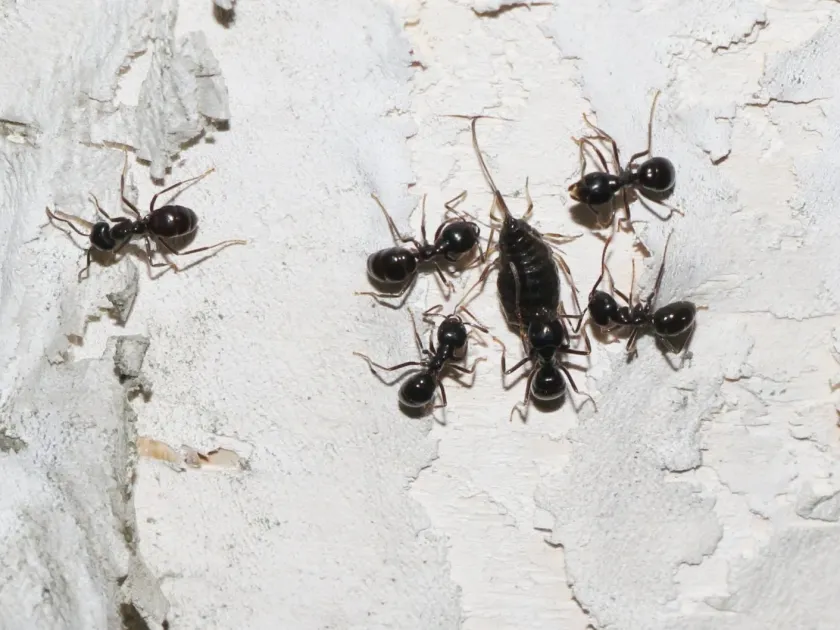
Adult specimens are quite large, with wingless females measuring between 6 to 8 mm. A defining physical characteristic is an exceptionally long rostrum (proboscis), which can sometimes exceed the total body length of the insect.
The coloration of these aphids ranges from dark brown to black, often covered with a subtle greyish or brownish dusting that provides camouflage against the bark.
This species maintains a complex symbiotic relationship with ants, which provide protection from predators and parasites in exchange for honeydew, a sugary secretion produced by the aphids.
They are notoriously reclusive, typically residing deep within the crevices of tree bark, which makes early detection a challenging task for arborists and gardeners.
What it damages
While the primary host is the oak tree (Quercus), the giant oak aphid can also be found on birch, maple, and beech trees if they are situated in close proximity to an infested oak.
The aphid feeds on the sap of the tree by piercing the bark with its long rostrum to reach the phloem tissues. This feeding process drains the tree of vital nutrients.
Heavy infestations of Stomaphis quercus can significantly weaken the tree, leading to stunted growth and reduced natural resilience against secondary diseases and environmental stressors.
The feeding wounds created by the aphids can serve as entry points for pathogens and wood-rotting fungi, which may cause localized tissue necrosis on the trunk.
In managed landscapes or nursery settings, prolonged high population levels may contribute to branch dieback and, in severe cases, threaten the overall health of the tree.
When it appears
The life cycle of the giant oak aphid begins in early spring, when nymphs emerge from eggs that have successfully overwintered on the host tree.
Multiple generations are produced during the growing season, with the population density typically peaking during the warmer months of mid-summer.
As autumn approaches, sexual forms (males and females) develop, and after mating, the females deposit their eggs into deep bark crevices to survive the winter.
The overwintering stage consists exclusively of eggs, which are remarkably cold-hardy and capable of enduring freezing winter temperatures.
While individuals can be present throughout the growing season, they are most easily observed in the latter half of summer due to increased colony density.
Signs of infestation
A primary indicator of infestation is the unusual presence of high numbers of ants traveling up and down the tree trunk, attracted by the abundant honeydew.
The bark often shows signs of sticky residue, known as honeydew, which frequently turns black due to the growth of sooty mold fungi thriving in the sugary deposit.
Upon closer inspection of bark crevices, clusters of large, dark-colored aphids can be spotted; they often remain stationary for long periods while feeding.
Areas of the bark where large colonies reside may show signs of tissue stress, including minor bark discoloration or localized weeping of sap.
- Increased ant activity on the tree trunk.
- Sticky honeydew secretions on bark and branches.
- Growth of black sooty mold on the trunk.
- Clusters of large, dark insects in bark fissures.
Control measures
Controlling this pest is difficult due to their habit of nesting deep within bark fissures, which provides a natural barrier against topical insecticide sprays.
The use of systemic insecticides is often the most effective strategy, as the chemical is absorbed by the tree and ingested by the aphids during their feeding process.
In forest and park management, removing loose, dead bark and moss can reduce the availability of suitable nesting sites, making the population more vulnerable.
Since the aphids rely on ants for protection, applying sticky barrier bands to the tree trunk can effectively disrupt this symbiosis and significantly reduce the aphid population.
Proactive tree care, including proper fertilization and adequate irrigation, helps maintain tree vigor and enhances the plant's natural resistance to aphid colonization.
Taxonomy
- Latin name
- Stomaphis quercus
- Order
- Hemiptera (bugs, aphids, leafhoppers)
- Family
- Lachnidae
- EPPO code
- STMAQU
Discussion
No discussions yet — be the first.