
Giant oak aphid
Stomaphis longirostris
Description
How to identify
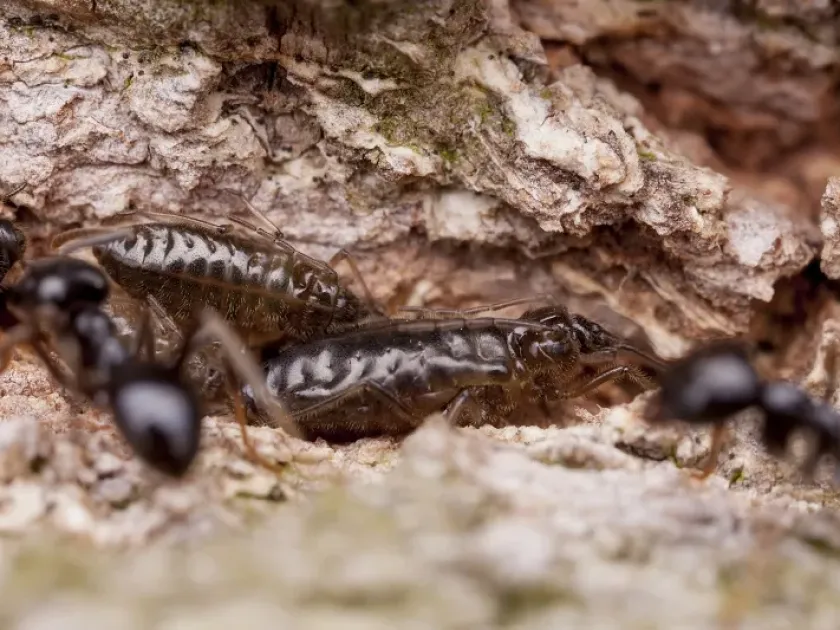
The giant oak aphid (Stomaphis longirostris) is a member of the Aphididae family, known for its remarkably long proboscis. This morphological feature is an evolutionary adaptation that allows the insect to feed from deep within the vascular tissues of the host tree.
Adults are relatively large compared to other aphid species and possess a dark, often brownish or blackish appearance. They are typically covered with a waxy secretion that provides some protection against harsh weather and chemicals.
These aphids usually live in crevices and fissures of oak bark, remaining immobile for long periods while feeding. This behavior makes them difficult to detect during standard inspections of the tree foliage.
Their life cycle is complex and often involves a symbiotic relationship with ant species. Ants actively tend to the aphid colonies, harvesting the honeydew they produce and protecting them from potential natural predators.
Reproduction involves both asexual (parthenogenetic) and sexual generations. This dual strategy allows the population to survive varying environmental conditions and quickly colonize suitable hosts.
What it damages
The primary host for Stomaphis longirostris is the oak tree (Quercus). They favor the trunk and thicker limbs where the bark provides sufficient protection and access points for their long feeding apparatus to reach the phloem.
By constantly extracting sap from the tree, these aphids cause significant nutrient depletion. This constant drain weakens the tree's physiological processes, leading to reduced growth rates and increased susceptibility to other stressors.
A secondary issue is the accumulation of honeydew on the bark surface. This sugary substance serves as a substrate for sooty mold fungi, which create a dark, unsightly layer that interferes with the tree's gas exchange capabilities.
Severe infestations can lead to premature leaf yellowing and a overall decline in canopy health. In young or already stressed trees, this can significantly jeopardize the plant's survival if not addressed.
The presence of these aphids often attracts wood-boring insects, which exploit the weakened tree. This creates a cascade effect where the initial aphid damage eventually leads to more severe structural degradation by secondary pests.
When it appears
The life cycle typically begins in early spring, when nymphs hatch from overwintering eggs. This timing is perfectly synchronized with the beginning of the tree's sap flow, ensuring an immediate food source for the developing insects.
Throughout the summer months, the population reaches its peak density. Multiple overlapping generations occur during this time, with activity being sustained as long as the environmental conditions remain favorable.
As autumn approaches, sexual forms of the aphid emerge to mate and lay eggs. These eggs are laid deep within the bark crevices, designed specifically to withstand winter conditions until the following spring.
Monitoring should be most intensive during the spring and early summer. Detecting the first colonies early is essential for preventing the rapid population buildup that characterizes this species during the peak season.
While their activity slows down during winter, the eggs remain a viable threat. Thus, winter observation and maintenance can be a vital part of a long-term management strategy.
Signs of infestation
The most reliable sign of an infestation is unusual ant activity on the tree trunk. Since ants protect these aphids to harvest their honeydew, a constant stream of ants on the bark is a strong indicator of an aphid colony underneath.
Sticky residue on the bark or the ground beneath the tree is a telltale sign. As this honeydew accumulates, it becomes contaminated with dust and black sooty mold, creating a blackened, greasy appearance on the tree.
Upon closer inspection of bark cracks, one may spot the dark bodies of the aphids. Because they keep their long proboscis deeply inserted, they often appear rigid and motionless, blending in with the surrounding texture of the bark.
Tree canopy decline is another indicator. Symptoms such as chlorotic leaves, sparse foliage, or premature wilting suggest that the tree is struggling to distribute nutrients due to the sap-feeding pressure on the main trunk.
Dead or dying branches in the upper canopy may eventually appear as a result of chronic infestation. This indicates that the tree is no longer able to support all its limbs due to systemic nutrient stress.
Control measures
Effective control requires the use of systemic insecticides that are translocated through the tree's vascular system. Since these aphids feed deep within the tissues, contact sprays are often ineffective unless applied directly to the insects.
Dormant season oil sprays can be used in early spring to coat the bark and suffocate overwintering eggs before they hatch. This is a critical preventive measure for heavily infested areas.
Interfering with the ant-aphid mutualism is highly recommended. Installing sticky barriers or glue bands on the trunks prevents ants from protecting the aphids, exposing the colonies to natural predators like ladybirds and lacewings.
Maintaining tree vigor through proper irrigation and fertilization can help the oak resist aphid feeding. A healthy tree is significantly better at compensating for the nutrient loss caused by aphid infestations.
- Use of systemic insecticides like imidacloprid or acetamiprid for deep penetration.
- Application of horticultural oils to target eggs in bark crevices.
- Installation of trunk barriers to disrupt ant protection.
- Encouraging natural biological control by conserving predator habitats.
Taxonomy
- Latin name
- Stomaphis longirostris
- Order
- Hemiptera (bugs, aphids, leafhoppers)
- Family
- Lachnidae
- EPPO code
- STMALO
Discussion
No discussions yet — be the first.