
Brown maple aphid
Stomaphis graffii
Description
How to identify
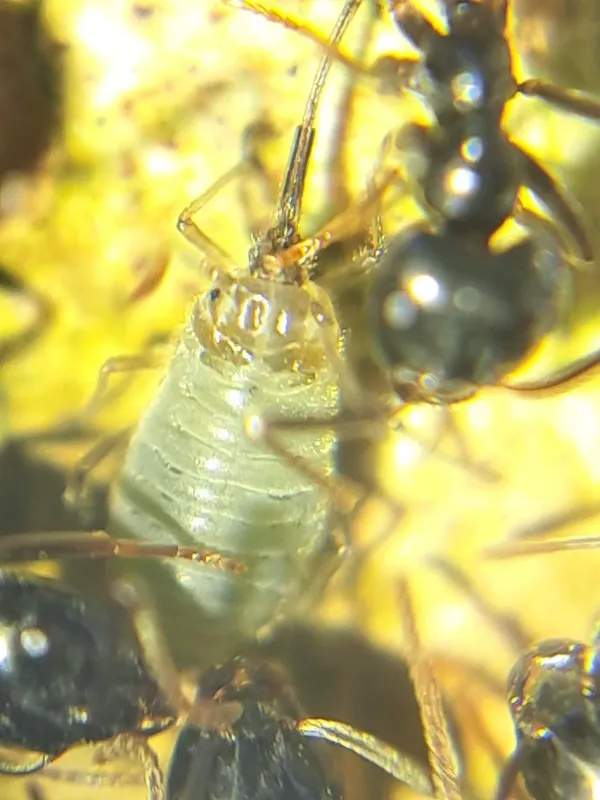
The brown maple aphid (Stomaphis graffii) belongs to the family Aphididae. It is a large, dark brown to black aphid species that is easily recognized by its distinct appearance and sedentary behavior on tree bark.
The most striking feature of this species is its exceptionally long rostrum (mouthpart), which allows it to reach deep into the bark of maple trees to feed directly on the conductive tissues containing sap.
These aphids usually live in dense colonies on tree trunks. They maintain a close relationship with ants, which protect the aphid colonies from predators in exchange for honeydew, a sugary substance secreted by the aphids.
The life cycle involves both winged and wingless forms. They overwinter in the egg stage, which are typically laid in bark crevices, ensuring the survival of the population through harsh winter conditions.
Morphologically, this species is highly specialized for life on woody plants, preferring surfaces with thick bark where they can effectively anchor themselves and utilize their elongated mouthparts.
What it damages
The primary host for this pest is the maple tree (Acer spp.), particularly Norway maple. The aphids tend to congregate on the trunks and major branches, making the infestation often go unnoticed until it becomes significant.
Damage is caused by the continuous extraction of plant sap, which depletes the tree's energy reserves. This weakens the tree, making it more susceptible to environmental stress, drought, and other opportunistic diseases.
The feeding punctures made by the long rostrum can cause localized necrosis in the bark, creating entry points for fungi and bacteria. This can lead to bark splitting and long-term structural health issues for the tree.
The honeydew produced by the aphids acts as a substrate for sooty mold, which covers the bark in a black, powdery layer. This mold disrupts gas exchange and significantly detracts from the tree's ornamental value.
In cases of severe infestation, premature wilting of branches and reduced growth vigor are common symptoms, especially in younger trees that cannot easily compensate for the loss of nutrients.
When it appears
Activity begins in early spring as soon as the sap starts flowing in the trees. The larvae emerge from overwintering eggs and immediately seek out feeding sites on the younger, more accessible parts of the bark.
During the summer months, the population grows rapidly. Aphid colonies can become quite large, expanding across the trunk and providing a constant source of drain on the host tree throughout the growing season.
Winged forms appear mid-summer, allowing the species to disperse to neighboring trees. This migration pattern can lead to widespread infestation across urban parks and forests within a single season.
As autumn approaches, reproduction slows, and the aphids focus on producing the next generation of eggs to overwinter in protective bark crevices, completing the annual cycle.
Environmental conditions such as mild, damp springs are particularly favorable for population growth, as they ensure sufficient sap flow for the aphids and support rapid development rates.
Signs of infestation
The presence of large numbers of ants patrolling the tree trunk is often the first visible sign of an infestation. Ants are attracted to the honeydew and actively guard the aphids from predators.
Upon closer inspection, you can spot clusters of dark, stationary insects on the bark. They appear as blackish patches and rarely move unless disturbed, as their mouthparts are deeply inserted.
A sticky residue covering the bark is another clear indicator of aphid activity. This honeydew may run down the trunk and attract other insects, such as wasps, bees, and flies, which feed on the sugar-rich fluid.
The development of black sooty mold on the bark gives the tree a dirty, scorched appearance. This mold is a reliable indicator that aphids have been present on that part of the tree for an extended period.
If you notice the leaves of specific branches yellowing or wilting prematurely, it suggests that the vascular supply to those branches has been severely impacted by the aphid colony.
Control measures
Mechanical control is effective in the early stages; scrubbing the bark to remove dead layers where eggs overwinter can significantly reduce the potential population size for the following season.
Systemic insecticides are the most effective chemical control method. Because they are absorbed by the tree, the aphids ingest the poison while feeding, leading to higher mortality rates than contact-based sprays.
Installing sticky bands on trunks can prevent ants from reaching the aphid colonies. Without their ant protectors, the aphid populations become highly vulnerable to natural predators like ladybirds and lacewings.
Maintaining tree vigor through proper watering and fertilization ensures that the maple tree has the resources to withstand the stress caused by the feeding insects and recover more quickly.
- Encourage natural predators like ladybeetles and syrphid larvae.
- Apply dormant oil sprays in late winter to smother overwintering eggs.
- Regularly monitor trunks during the growing season for early signs of ants.
Taxonomy
- Latin name
- Stomaphis graffii
- Order
- Hemiptera (bugs, aphids, leafhoppers)
- Family
- Lachnidae
- EPPO code
- STMAGR
Discussion
No discussions yet — be the first.