
Stegodyphus lineatus
Stegodyphus lineatus
Description
How to identify
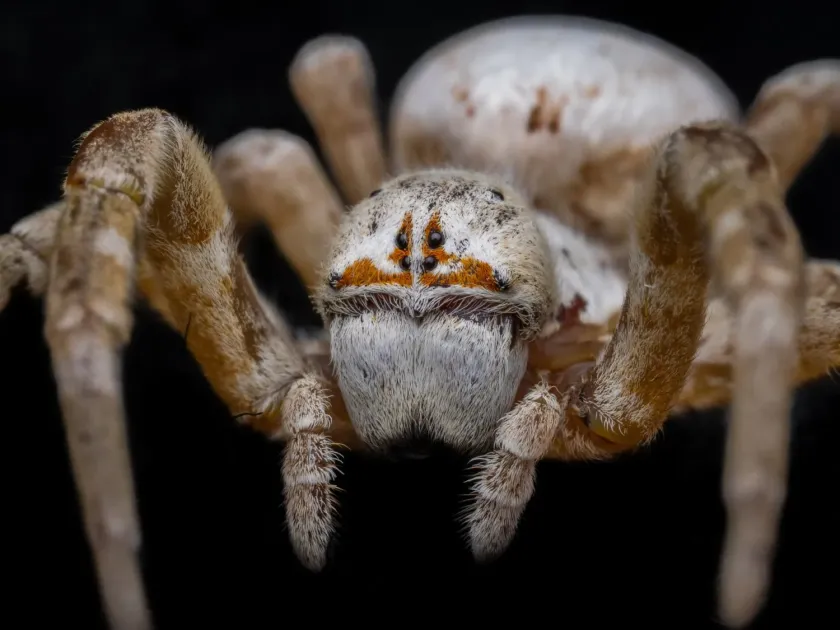
Stegodyphus lineatus belongs to the Eresidae family. These spiders are known for their distinct appearance, often featuring a light-colored line or stripe on the cephalothorax, which serves as a key identification marker.
Females are significantly larger than males and possess a robust abdomen. Their coloration ranges from gray to yellowish-brown, allowing them to blend seamlessly into dry vegetation and stems.
This species is notable for its social structure. Unlike most solitary spiders, they live in colonies and construct communal webs, which is an exceptional trait within this group of arachnids.
Maternal care is highly developed in this species. Females guard their egg sacs within specifically woven nests, ensuring the survival of their offspring during vulnerable developmental stages.
They prefer arid environments with abundant shrubs or tall grasses, which provide necessary anchor points for their extensive web structures.
What it damages
It is crucial to note that Stegodyphus lineatus is not a herbivorous pest. It is an obligate predator, meaning it does not feed on plant tissues or sap.
Damage is indirect and typically limited to mechanical interference. Dense webs can sometimes shade leaves, potentially reducing the rate of photosynthesis in local areas of the plant.
In cases of heavy infestation, the weight of the webs and the physical constriction of the nest on delicate shoots or buds may cause slight deformation or growth issues.
However, as predators, they also consume various insect pests, acting as a biological control agent that helps regulate insect populations within the agricultural field.
Generally, the economic threshold for this spider is negligible, and they are rarely considered a threat that requires active eradication measures in farming.
When it appears
The life cycle of Stegodyphus lineatus is strictly seasonal. Adult activity begins to rise in late spring when temperatures become consistently warm enough for web construction.
The peak period of reproduction and colony expansion occurs throughout the summer months when there is an abundance of prey available for these spiders.
Towards the end of summer, females focus on laying eggs and creating protected cocoons, which will house the offspring through the late season and into dormancy.
By autumn, spider activity gradually declines as older individuals die off, and younger spiders seek shelter in root zones or leaf litter to survive the cooler period.
The most visible phase, where large communal nests are evident on crops, occurs during the mid-summer months from June to August.
Signs of infestation
The primary sign of their presence is the appearance of dense, disorganized communal webs located on the upper parts of stems or near flower clusters.
Close inspection reveals whitish egg sacs protected by layers of silk, which are securely attached to plant structures, creating an unsightly appearance on the vegetation.
The presence of chitinous remains of trapped insects around the nest is a clear indicator that the colony is active and hunting effectively in the immediate vicinity.
Leaves under the web may show signs of yellowing or chlorosis due to shading, which can sometimes be misidentified as a nutrient deficiency or fungal infection.
Mechanical agitation of the nest usually triggers movement within the web, making it easy to confirm the presence of the spiders despite their effective camouflage.
Control measures
Specialized control measures against Stegodyphus lineatus are generally unnecessary, as they are not classified as significant agricultural pests.
If nest density becomes problematic for agricultural machinery or harvesting, manual removal of the nests from the field borders is the most efficient approach.
Chemical control via broad-spectrum insecticides is discouraged, as it eliminates beneficial natural predators and disrupts the ecological balance of the agro-ecosystem.
Cultural practices, such as maintaining weed control and adhering to proper crop rotation, effectively discourage the colonization of these spiders.
- Regular monitoring of crop health.
- Manual removal of webs if they cause significant mechanical stress.
- Implementation of standard crop rotation and weed management.
- Avoidance of indiscriminate insecticide application to preserve biodiversity.
Taxonomy
- Latin name
- Stegodyphus lineatus
- Family
- Eresidae
- EPPO code
- STGDLI
Discussion
No discussions yet — be the first.