
Eresus
Eresus
Description
How to identify
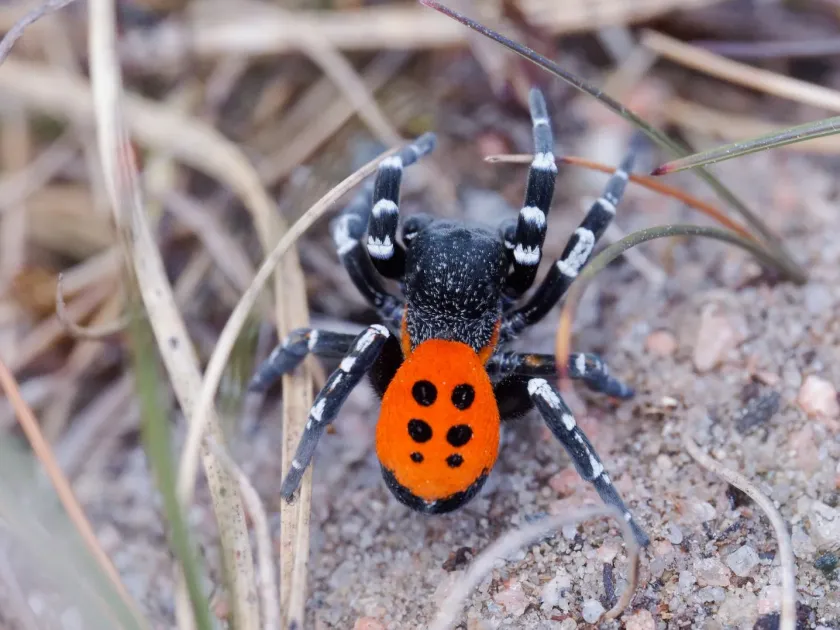
The genus Eresus, commonly known as ladybird spiders, belongs to the family Eresidae. They are easily recognizable due to the striking red abdomen with black spots displayed by the mature males, which serves as a warning signal.
These spiders are primarily subterranean, living in deep, silk-lined burrows in the soil. They are sedentary creatures, rarely straying far from the entrance of their shelters unless a male is searching for a mate.
The life cycle of the Eresus is quite slow compared to common agricultural pests, often taking multiple years to reach maturity. Their development is closely tied to the temperature and humidity of the soil microclimate.
As predators, they play a specific role in the ecosystem by feeding on various insects that walk near their burrows. They do not feed on plant sap or foliage, and therefore pose no direct threat to crops.
Farmers often mistake them for threats due to their vivid coloration, but they should be categorized as beneficial insects that contribute to the natural biological control of soil-dwelling pests.
Control measures
No agricultural control measures are needed for Eresus, as they are not pests. They do not cause damage to fruit trees, cereals, or vegetables, and their presence is harmless to plant health.
In areas where people frequently work with their hands in the soil, caution should be exercised. Although they are not aggressive, they may bite if they feel threatened, which can be painful for humans.
To avoid accidental encounters with these spiders during fieldwork, workers should always wear protective gloves and appropriate footwear when tilling or weeding around established burrows.
If population reduction is necessary due to safety concerns in garden areas, mechanical methods such as deep soil tillage or rototilling are the most effective ways to destroy their burrow systems.
Avoid using broad-spectrum insecticides, as these chemicals often eliminate beneficial predators like Eresus. Integrated Pest Management (IPM) practices should be prioritized to maintain ecological stability.
Taxonomy
- Latin name
- Eresus
- Family
- Eresidae
- EPPO code
- ERESSP
Discussion
No discussions yet — be the first.