
Spongilla lacustris
Spongilla lacustris
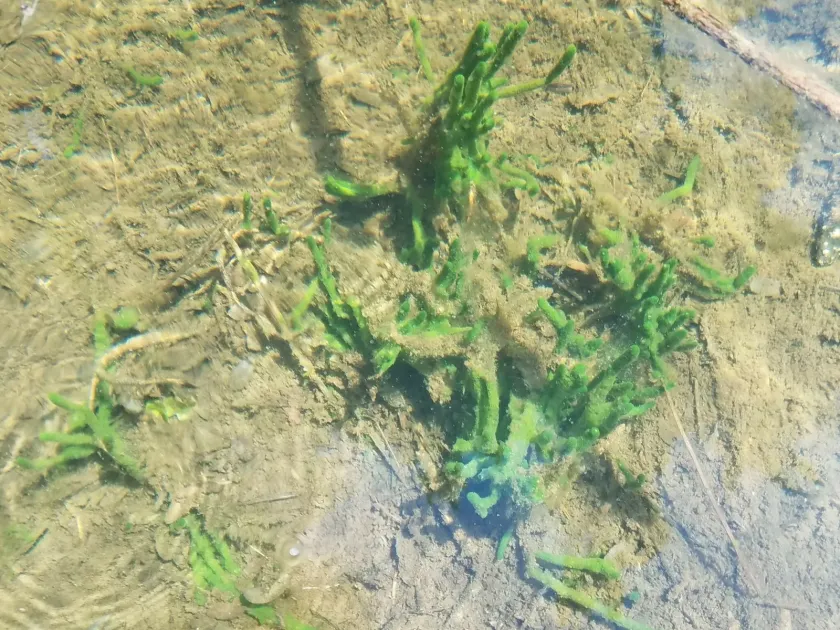
Description
How to identify
Spongilla lacustris is a freshwater sponge belonging to the phylum Porifera, class Demospongiae, order Spongillida, and family Spongillidae. It forms branching or encrusting colonies that typically exhibit green, yellow, or brownish hues.
The organism consists of a complex network of pores and canals used for water filtration. Its structural integrity is maintained by siliceous spicules, which provide a rigid support skeleton.
In natural habitats, these sponges attach to submerged surfaces in clean water bodies. They become an agricultural pest when their spores enter irrigation or hydroponic infrastructure.
A key biological survival mechanism is the production of gemmules—highly resilient reproductive bodies capable of withstanding freezing, desiccation, and harsh chemical conditions.
Spongilla lacustris reproduces both sexually and asexually, allowing for rapid colonization of interior surfaces within closed-loop water systems during favorable conditions.
What it damages
The primary economic impact of Spongilla lacustris is the significant biofouling and clogging of irrigation systems and hydraulic equipment used in modern farming.
They readily attach to the internal walls of pipes, suction filters, and pump impellers, which leads to immediate flow restrictions and mechanical strain on irrigation pumps.
In field operations, this causes uneven water distribution, potentially leading to crop stress or failure due to inadequate irrigation coverage in specific field zones.
In hydroponic installations, sponges can infiltrate feeding lines and block emitters, effectively outcompeting the crop for nutrients and disrupting the closed-loop system balance.
As the sponge colonies die, their decomposition releases organic matter that alters water chemistry and pH, promoting the growth of opportunistic bacterial and fungal pathogens.
When it appears
The active growth phase for Spongilla lacustris occurs during warmer months when water temperatures are optimal for constant filtration and colony development.
Initial colonization on equipment typically begins in late spring as water temperatures rise, usually exceeding 12-15 degrees Celsius in irrigation ponds or reservoirs.
Peak biomass accumulation is usually observed in mid-to-late summer, coinciding with high organic content in the water and warm thermal conditions.
During autumn, as temperatures drop, mature colonies die off, but release numerous gemmules that persist throughout the winter within the plumbing and reservoirs.
These dormant gemmules serve as the primary source of infestation for the following season, surviving the winter in a state of suspended animation until spring.
Signs of infestation
The earliest symptom is a noticeable decrease in water pressure at the emitters or sprinkler heads, despite the pump running at its normal operational capacity.
Visual inspection of secondary filters or intake screens often reveals slimy, tough, greenish-brown deposits that prove difficult to remove without thorough mechanical scrubbing.
A foul, decaying odor from the water supply, particularly when starting a pump that has been idle for several days, often indicates decomposing sponge mass inside the pipes.
Inspection of water intake structures in reservoirs may show clusters of growth attached to submerged pipes or metal supports.
- Increased pump load and energy consumption due to flow restriction.
- Frequent, recurring blockages in micro-irrigation emitters.
- Visible green or tan crusty growth on intake mesh and valves.
Control measures
Regular mechanical descaling and thorough flushing of irrigation piping prior to the peak season is the most reliable method to manage sponge build-up.
Applying anti-fouling coatings to the interior components of pumps and intake valves can significantly reduce the ability of sponge spores to anchor and grow.
Chemical control using authorized disinfectants, such as sodium hypochlorite, can be effective for cleaning lines, provided usage follows safety protocols to protect crops.
Implementing multi-stage filtration systems at the pump intake helps prevent the initial entry of sponge spores into the distribution network.
Covering water storage reservoirs to minimize sunlight exposure can inhibit the development of Spongilla lacustris, as light is often a factor in their growth cycle.
Taxonomy
- Latin name
- Spongilla lacustris
- Family
- Spongillidae
- EPPO code
- SPNLLA
Discussion
No discussions yet — be the first.