
Spongilla
Spongilla
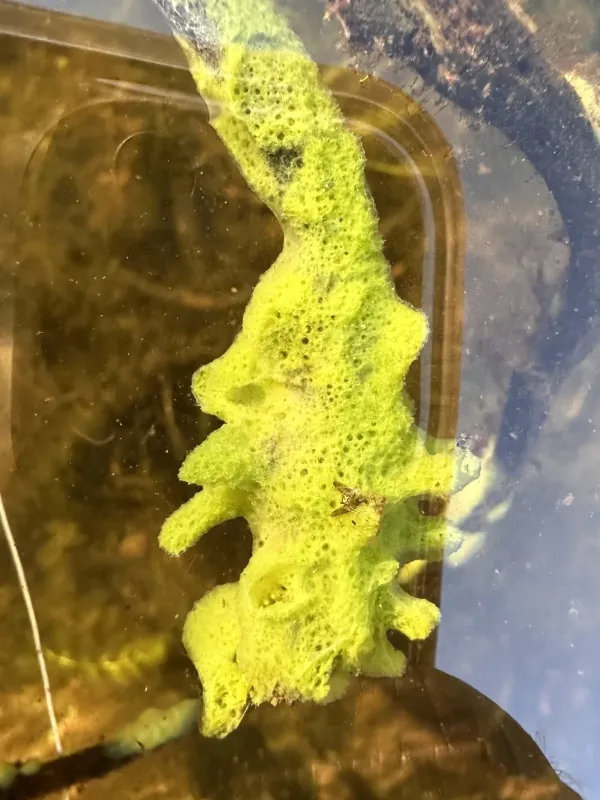
Description
How to identify
Spongilla is a genus of freshwater sponges belonging to the family Spongillidae. While not a typical agricultural pest like insects, it is considered a bio-fouling agent that can cause significant disruption in water management systems.
These organisms form colonies that appear as grayish, greenish, or brown encrusting or branched masses. They thrive on submerged surfaces, effectively anchoring themselves to the interior walls of pipes and tanks.
The structure of the sponge is reinforced by siliceous spicules, giving it a rough, rigid texture. This skeletal framework allows the colony to withstand water flow forces and makes physical removal challenging.
Spongilla operates as a filter feeder, extracting nutrients, microorganisms, and organic matter from the water. In agriculture, their presence is often encouraged by high levels of fertilizers in the irrigation supply.
They reproduce via gemmules — dormant, resistant buds that can survive freezing, drying, and chemical exposure for years, ensuring the infestation persists if the system is not thoroughly sanitized.
What it damages
The primary damage caused by Spongilla is the mechanical blockage of irrigation pipes, drip lines, and pumps. As colonies grow, they restrict water flow, leading to severe pressure drops.
In hydroponic systems, the sponge competes with plants for dissolved mineral nutrients. By absorbing these compounds, they create a nutrient deficit, directly impacting crop health and yield.
As colonies die and decay, they release toxins into the nutrient solution. These decomposition products can damage root systems, promoting the onset of various root diseases.
The buildup of sponge material inside pump assemblies causes excessive drag, leading to overheating, increased energy consumption, and premature failure of expensive agricultural machinery.
Uneven irrigation distribution, caused by clogged emitters or nozzles, results in heterogeneous plant growth across the greenhouse, creating management difficulties and potential harvest loss.
When it appears
Spongilla shows peak activity during the warmer months when water temperatures remain consistently above 15–20 degrees Celsius, which is optimal for their metabolic processes.
In indoor agricultural settings like greenhouses, stable temperatures allow these sponges to persist and grow throughout the entire year, requiring continuous monitoring.
During autumn or periods of nutrient scarcity, the sponge transitions into its dormant state, producing gemmules. These structures remain attached to surfaces, hidden from sight, waiting for spring conditions.
Spring startup of the irrigation system often triggers the germination of these gemmules. This can lead to a sudden and rapid infestation of new colonies within the water delivery lines.
Management efforts are most effective if conducted during the late winter or early spring before the sponges reach their maturity and clog the primary filtration units.
Signs of infestation
A major indicator of a Spongilla infestation is a gradual loss of pressure within the drip irrigation lines, despite the pump operating at full capacity.
Physical inspections of filtration units often reveal masses of slimy, brownish or greenish material. This substance is usually accompanied by a distinctive earthy or swampy odor.
Visual identification in open reservoirs involves looking for crusty, sponge-like growths on the walls or submerged objects. They often thrive in areas with high light exposure.
If the emitters or nozzles periodically discharge small, dense fragments of a tissue-like material, it is a clear sign that the sponge has colonized the interior of the distribution pipes.
Increased turbidity or changing water chemistry in hydroponic reservoirs can also indicate that a large colony is actively filtering and consuming elements from the solution.
Control measures
Mechanical cleaning is the most effective approach. Scrubbing the interior of pipes with specialized brushes or using high-pressure water jets is essential to remove all traces of the colony.
Shading irrigation tanks is a critical preventive measure. By limiting sunlight, you reduce the growth of algae, which serves as a primary food source for Spongilla.
Installing fine-mesh filtration systems at the water intake is necessary to block gemmules and sponge fragments from entering the plumbing infrastructure in the first place.
Routine system sanitation using approved agricultural-grade biocides or hydrogen peroxide solutions during the off-season can help neutralize dormant gemmules and break the lifecycle.
Regular maintenance of the water quality, specifically monitoring and adjusting nutrient levels, helps prevent the excessive enrichment of water that favors rapid sponge colonization.
Taxonomy
- Latin name
- Spongilla
- Family
- Spongillidae
- EPPO code
- SPNLSP
Discussion
No discussions yet — be the first.