
Freshwater sponge
Ephydatia fluviatilis
Description
How to identify
The freshwater sponge is a colonial organism that typically colonizes hard, submerged substrates in aquatic environments.
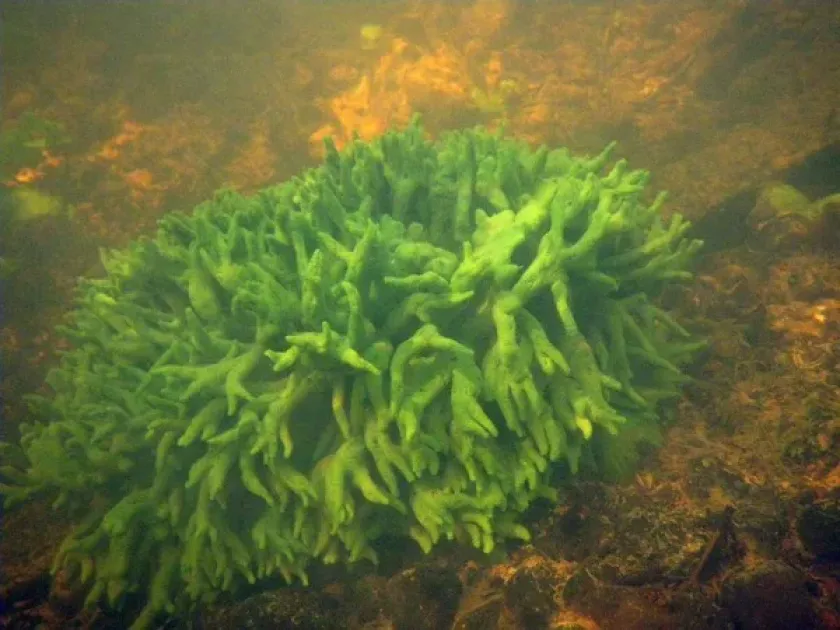
Colonies appear as amorphous, spongy masses with a yellow, green, or brown color depending on the presence of symbiotic algae.
The structure consists of a network of siliceous spicules that provide structural support and a rough, porous texture.
These organisms do not have specialized movement organs, so they firmly attach to the surface, creating permanent colonies.
Identification is confirmed by the presence of dense, organic masses that obstruct water flow and possess a distinct earthy scent.
What it damages
In agricultural settings, these sponges pose a significant challenge to hydroponic systems and precise irrigation networks.
They proliferate within irrigation pipes and feeding tubes, physically blocking the passage of nutrients and water to crops.
Heavy colonization disrupts the operation of water pumps and flow sensors, often leading to system failure and costly repairs.
Accumulation of organic matter around the sponge colonies encourages the growth of biofilms and other aquatic pathogens.
The reduction of water pressure caused by these blockages leads to uneven nutrient delivery, resulting in poor crop development.
When it appears
Growth activity is strictly correlated with water temperature, with peak colonization occurring during the warm summer months.
As water temperatures rise in spring, sponges transition from their dormant phase and begin rapid expansion.
Summer provides optimal conditions for the sponge to fill larger volumes of tubing and irrigation equipment in greenhouses.
In the autumn, the sponge produces gemmules — hardy survival capsules that can withstand freezing and drought.
These gemmules remain dormant throughout the winter and reactivate when conditions become favorable, ensuring seasonal recurrence.
Signs of infestation
A primary indicator of infestation is a gradual decline in irrigation flow rates despite the pump operating at full capacity.
Observing a rough, sponge-like coating inside transparent pipes or filters is a definitive sign of colonization.
Increased frequency of filter clogging in the water intake system often signals the presence of sponge fragments or gemmules.
A foul, swampy smell originating from the nutrient reservoir or water supply indicates the decomposition of sponge organic matter.
Irregular crop growth patterns and signs of local water deficiency are indirect symptoms of internal blockages in the system.
Control measures
Regular mechanical scrubbing is the most effective approach to clear pipes and surfaces of fully grown sponge colonies.
Installing high-quality filtration systems on the water intake is crucial to preventing sponge larvae and gemmules from entering.
Chemical treatments using diluted hydrogen peroxide can be used during system downtime to eliminate developing sponges.
UV sterilizers installed in the main supply lines provide an effective barrier by destroying free-swimming larvae.
- Routine inspection of all irrigation nozzles.
- Periodical system cleaning with specialized solutions.
- Using dark-colored pipes to reduce light penetration.
- Strict water quality monitoring at the intake point.
Taxonomy
- Latin name
- Ephydatia fluviatilis
- Family
- Spongillidae
- EPPO code
- EPHYFL
Discussion
No discussions yet — be the first.