
Eastern spotted skunk
Spilogale putorius
Description
How to identify
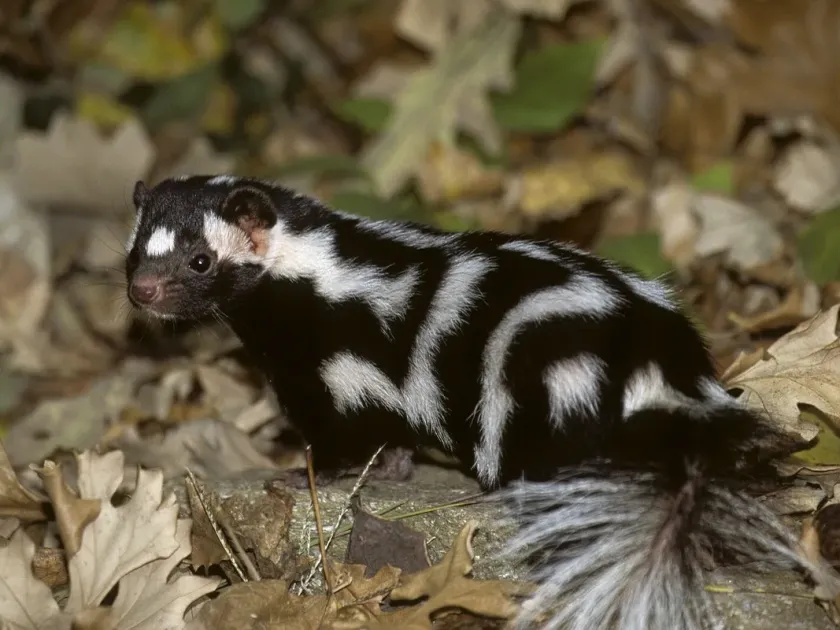
The Eastern spotted skunk (Spilogale putorius) is a small carnivore known for its distinct spotted pattern. Unlike its larger cousins, this skunk is highly agile and can climb trees and navigate complex structures with ease.
This species is nocturnal, spending its days in secluded dens. When threatened, it performs a unique handstand display before discharging a pungent scent, a defense mechanism that is highly effective against most predators.
They are primarily opportunistic feeders. While they play a role in controlling rodent populations, their presence in agricultural zones is often seen as detrimental due to their invasive behavior near human structures.
The biological cycle involves spring mating, followed by a gestation period. By mid-summer, the young emerge, often increasing the overall activity and impact of the skunk family on a farm property.
Their anatomy, characterized by small, muscular limbs, allows them to dig efficiently and squeeze through small gaps, making them persistent intruders in barns, sheds, and root cellars.
What it damages
Agricultural damage by Eastern spotted skunks is largely incidental but significant. Their habit of digging for grubs and larvae leads to destroyed lawns, disrupted garden beds, and the exposure of plant roots.
In orchards and berry patches, they may trample vegetation while searching for ripe fruit. Mechanical damage to stems and the soil disruption caused by their paws often lead to stunted plant growth or crop death.
When skunks infiltrate storage areas, they pose a threat to stored grains and seeds. They tear open bags, contaminating the supplies with waste and potentially attracting secondary pests like mice or rats.
Their interaction with poultry facilities is particularly problematic. They are known to raid nests for eggs, frequently causing panic in flocks and damaging equipment or feeders while looking for food.
The accumulation of waste and the lingering odors associated with their presence make areas unusable for storage, requiring deep sanitation and professional cleaning to restore hygiene standards.
Signs of infestation
The most immediate indicator is the presence of small, cone-shaped digging holes across the property. These holes are created as the skunk hunts for insects below the soil surface.
A strong, musky, and highly unpleasant odor is the most reliable sign of a skunk's presence. Even if you do not see the animal, the scent can linger in the air for several days in a confined space.
Scratch marks on wooden foundations or damaged mesh near ventilation points indicate attempts at entry. They often exploit existing gaps to gain access to warm, dry spaces under buildings.
The discovery of discarded eggshells or torn packaging for animal feed suggests that the animal has successfully accessed your food storage zones. Paw prints with visible claw marks confirm their specific travel routes.
Occasional rustling or soft vocalizations originating from under porches or storage sheds during the night confirm the presence of a denning site, which is likely being used for resting during the day.
Control measures
Exclusion is the most effective management strategy. All potential entry points around barns and sheds must be sealed with heavy-duty materials, such as hardware cloth or concrete, to prevent digging and burrowing.
Sanitation is key to reducing attractiveness. Keep all grain supplies in secure, skunk-proof metal containers and clean up any fallen fruit or garden debris that might provide a meal for foraging skunks.
Motion-activated lighting is a simple yet effective deterrent. Because Eastern spotted skunks prefer darkness for their activities, bright lights often compel them to move to less exposed areas.
Repellents, including commercial predator scents, may be used as a temporary measure to mark the territory as unsafe, though these must be rotated to prevent the animal from becoming accustomed to them.
- Install fencing with a buried base to prevent tunneling.
- Utilize live-catch traps according to local wildlife regulations.
- Eliminate brush piles and debris that provide daytime shelter.
- Contact professional wildlife control services for relocation advice.
Taxonomy
- Latin name
- Spilogale putorius
- Family
- Mephitidae
- EPPO code
- SPIGPU
Discussion
No discussions yet — be the first.