
Spotted skunk
Spilogale
Description
How to identify
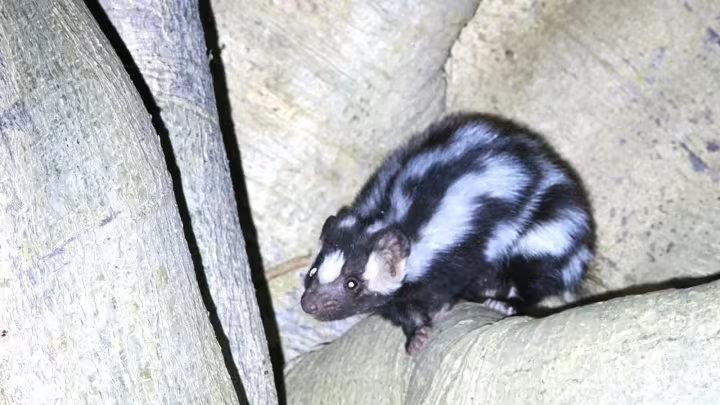
The spotted skunk (genus Spilogale) is a small carnivore belonging to the skunk family. Unlike its larger relatives, it is known for its intricate pattern of white spots and broken stripes against a dark, black coat.
These animals are exceptionally agile and have a slender body, allowing them to squeeze into tight spaces, such as crawl spaces or ventilation gaps in farm buildings. They typically measure between 20 and 35 centimeters in length.
The species is famous for its unique defensive maneuver: performing a handstand on its front legs to display its pattern before discharging a scent from its anal glands. This is a clear warning sign of their presence.
Spotted skunks are primarily nocturnal and shy, preferring to remain hidden during daylight hours. They are highly adaptable and often choose human-made structures as secure nesting sites.
Their opportunistic nature leads them to inhabit areas near agricultural activity, where they find a constant supply of food and shelter from environmental threats.
What it damages
The primary agricultural damage caused by spotted skunks involves the destruction of stored grains and the predation of small livestock. They frequently raid poultry houses to eat eggs and young chicks.
In fields and vegetable gardens, they cause damage by digging up the soil in search of grubs and insects. This activity disturbs root systems and can lead to the wilting or death of sensitive plants.
Skunks often damage irrigation systems, such as drip lines, by digging beneath them or chewing on materials. Their burrowing activities can also cause soil erosion and instability under greenhouse foundations.
Their presence poses sanitary risks to farms. Excrement and foraging debris can contaminate livestock feed and hay, potentially spreading diseases among other animals on the property.
Furthermore, their tendency to nest in barns and storage sheds leads to structural damage as they gnaw through wood or tear insulation to create dens.
Signs of infestation
The most common sign of a spotted skunk is a series of small, cone-shaped holes in the soil, usually 5 to 10 centimeters deep. These are dug while the animal is foraging for larvae and insects.
A strong, pungent, and musk-like odor is the most reliable indicator of a skunk's proximity. They mark their territory, and if startled or defensive, they release a scent that persists for days.
Tracks left by spotted skunks are distinctive, showing five toes with long claws on the front feet. These prints are often found near foundations or barn entrances.
Evidence of torn screening on vents or disturbed earth around building perimeters suggests an attempt to create a burrow. They are persistent and will exploit any weakness in structure.
Frequent loss of eggs from coops without signs of larger predators often points specifically to the activity of smaller carnivores like the spotted skunk.
Control measures
Effective control focuses on exclusion. All potential entry points into sheds, barns, and crawl spaces should be sealed with hardware cloth or heavy-duty metal mesh to prevent access.
Sanitation is key to deterring skunks. Removing piles of lumber, garden debris, and managing insect populations in the soil reduces the attractiveness of the area to foraging skunks.
Installing motion-activated floodlights or ultrasonic deterrents can discourage nocturnal activity near vulnerable areas like coops and storage bins. Skunks avoid brightly lit environments.
For greenhouse protection, burying metal mesh fences at least 30 to 40 centimeters into the ground prevents the animals from burrowing underneath the perimeter.
- Seal all openings to buildings and foundations.
- Eliminate piles of debris and nesting habitats.
- Use buried mesh fencing for perimeter protection.
- Contact professional wildlife control services for relocation.
- Ensure feed is stored in airtight, skunk-proof containers.
Taxonomy
- Latin name
- Spilogale
- Family
- Mephitidae
- EPPO code
- SPIGSP
Discussion
No discussions yet — be the first.