
English grain aphid
Sitobion avenae
Description
How to identify
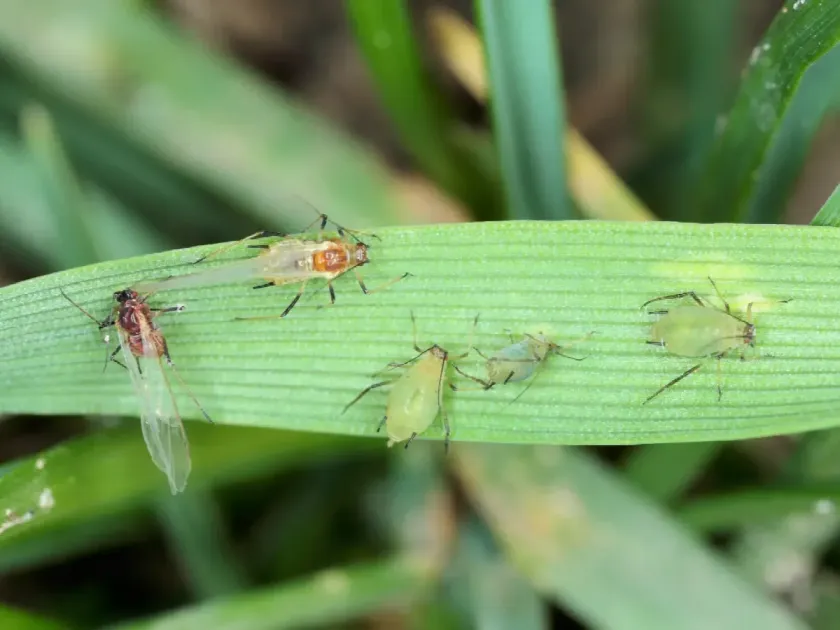
The English grain aphid (Sitobion avenae) is a member of the Aphididae family. Adult specimens typically reach 3 mm in length and possess an elongated body ranging from light green to reddish-brown in color, with long black antennae and cornicles.
These insects prefer secluded habitats, often settling on the upper leaves or within the ears of cereal crops. The population consists of both winged and wingless forms, allowing for rapid colonization of fields.
The species reproduces via parthenogenesis during the spring and summer months, while sexual reproduction occurs in the autumn, leading to the production of overwintering eggs.
Their life cycle is highly sensitive to temperature fluctuations; warm, humid spring conditions often trigger rapid population explosions within a short timeframe.
As a highly mobile and fecund pest, this aphid is considered a major threat to cereal productivity globally, requiring constant monitoring during the growing season.
What it damages
This pest targets a wide range of cereals, including wheat, barley, oats, and rye, as well as various wild grasses. Damage is primarily caused by phloem-sap feeding, which drains the plant of essential nutrients.
The most severe impact occurs during the grain-filling stage, as aphids congregate on the ears, directly competing with the plant for nutrients intended for grain development.
In addition to direct feeding damage, the excretion of honeydew promotes the growth of sooty mold, which interferes with photosynthesis and reduces the overall vigor of the crop.
Furthermore, the English grain aphid acts as a significant vector for several plant viruses, most notably the Barley Yellow Dwarf Virus (BYDV), which can cause catastrophic yield losses.
The cumulative effect of aphid infestation includes reduced thousand-kernel weight, poor grain quality, and potential yield losses ranging from 15% to over 30% in severe cases.
When it appears
The initial infestation usually occurs in the spring during the tillering stage of winter crops, as nymphs emerge from eggs that overwintered on grasses or volunteer crops.
Activity peaks during the booting and heading stages, where favorable temperatures and nutrient availability allow the population to grow exponentially.
As summer progresses and the crop matures, the aphids may migrate to late-sown fields or remain on weeds, depending on the moisture levels and local microclimate.
Optimal development temperatures range from 15°C to 25°C; however, the population is sensitive to extreme heat and heavy rainfall, which can physically dislodge them.
The life cycle concludes in late autumn when winged adults migrate to winter cereals to lay eggs, ensuring the species survives the winter months.
Signs of infestation
Early symptoms include leaf curling, the presence of sticky honeydew on the foliage, and increased activity of ants that feed on the aphids' sugary secretions.
Close inspection of the ears during the milk stage often reveals visible clusters of aphids, which stand out due to their distinct color against the grain heads.
Infested areas often show patches of chlorosis or yellowing, and if the infestation is heavy, the flag leaf may wither prematurely, hindering plant health.
- Visible aphid colonies on the ears.
- Sticky honeydew and sooty mold on the leaves.
- Premature yellowing or necrosis of leaves.
- Deformed ears and shriveled grains.
Regular field scouting is essential to determine the economic injury level, as timely intervention can prevent widespread damage to the final harvest.
Control measures
Cultural control strategies include managing grassy weeds that harbor the pest and selecting crop varieties with known tolerance or resistance to aphid feeding.
Preserving natural enemies, such as lady beetles, lacewings, and hoverflies, is a crucial component of integrated pest management (IPM) to keep aphid populations below threshold levels.
Chemical control involving systemic insecticides is recommended only when the economic threshold is reached, typically during the heading phase of the cereal crop.
It is vital to use selective insecticides whenever possible to minimize the impact on beneficial insects, thereby maintaining a balanced ecosystem within the agricultural field.
Effective management relies on a combination of monitoring, biological control support, and precise chemical application to ensure both crop security and environmental sustainability.
Taxonomy
- Latin name
- Sitobion avenae
- Order
- Hemiptera (bugs, aphids, leafhoppers)
- Family
- Aphididae
- EPPO code
- MACSAV
Discussion
No discussions yet — be the first.