
Pomegranate whitefly
Siphoninus granati
Description
How to identify
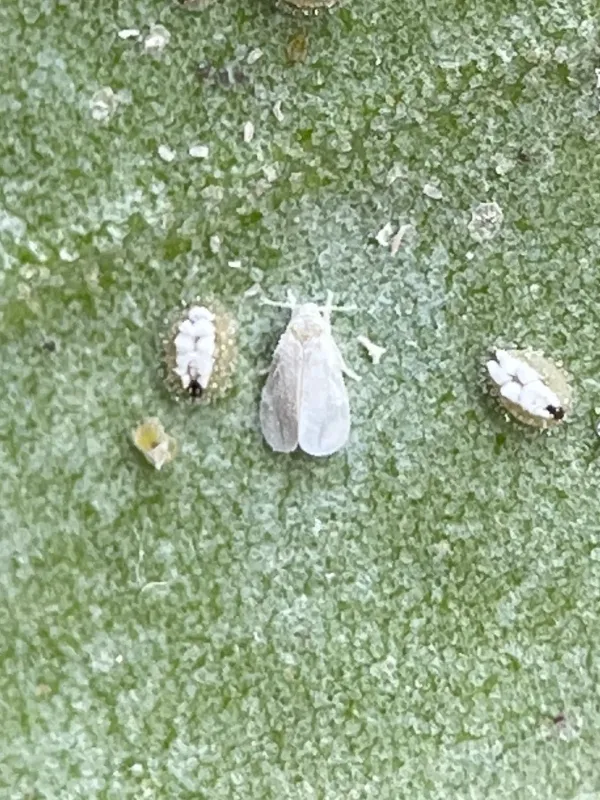
The Pomegranate whitefly (Siphoninus granati) is a small hemipteran insect belonging to the Aleyrodidae family. Adults are tiny, white-winged insects covered in a characteristic powdery wax secretion.
The lifecycle consists of egg, larval, and pupal stages. As the larvae mature, they become sessile and develop distinctive, tube-like wax structures on their backs, which is a unique trait for this species.
This species is highly adaptable and can reproduce rapidly under favorable climatic conditions. They prefer protected environments such as the underside of leaves to hide from direct sunlight and predators.
Adult whiteflies are typically 1-2 mm long. They are very active during warm daylight hours, often clustering in dense colonies that can be easily seen upon close inspection of the foliage.
Because they are capable of rapid population expansion, their presence can quickly turn from a minor concern into a major infestation requiring immediate agricultural intervention.
What it damages
The primary host is the pomegranate, but the pest is known to affect various fruit trees and ornamental shrubs. By feeding on sap, they remove vital nutrients, causing the host plant to lose vigor.
The secretion of honeydew is a significant issue, as it promotes the growth of sooty mold. This black fungus covers leaves and prevents photosynthesis, leading to reduced growth and poor tree health.
Heavy infestations cause leaves to yellow, curl, and eventually drop prematurely. This stress can significantly decrease the fruit yield and the overall quality of the harvest.
In nursery settings, young trees are particularly vulnerable, as the loss of sap and the presence of mold can stunt their growth permanently if not addressed promptly.
The cumulative effect of direct sap feeding and secondary fungal growth weakens the tree's immune system, making it more susceptible to other diseases and environmental stress.
When it appears
The life cycle of the Pomegranate whitefly is highly dependent on temperature. Activity usually begins in the spring as the weather warms, triggering the emergence of the first generation.
Summer is the period of maximum activity, with multiple generations developing in short intervals when temperatures remain consistently high and humidity is adequate.
As autumn approaches, the life cycle begins to slow down. However, the pest remains active until the onset of significant cooling, after which it prepares to overwinter.
Overwintering occurs primarily in the larval or pupal stages, often tucked away in cracks of the bark or on fallen leaves, which makes sanitation a key part of seasonal pest control.
Monitoring should be conducted consistently throughout the growing season to ensure that population spikes are detected and treated before they cause extensive damage to the orchard.
Signs of infestation
The first visual indicator is the presence of small, white, cottony colonies on the undersides of leaves. Touching an infested branch will often cause a swarm of whiteflies to take flight.
A sticky, shiny residue known as honeydew on the leaves and fruit is a clear sign of an active whitefly infestation and often attracts ants as well.
The growth of sooty mold, appearing as black patches on leaves and stems, indicates that the infestation has reached a level where honeydew accumulation is excessive.
Leaves showing signs of chlorosis, curling, or abnormal wilting suggest that the tree is suffering from the heavy nutritional drain caused by the insects' feeding habits.
Stunted branch tips and a general lack of vitality in the tree are late-stage signs that confirm the presence of a sustained and harmful pest population.
Control measures
Managing the Pomegranate whitefly requires an integrated pest management (IPM) strategy that combines physical, biological, and chemical methods for the best results.
- Regular pruning to increase airflow and sunlight penetration within the tree canopy.
- Proper disposal of fallen leaves and infected plant debris to reduce overwintering sites.
- Strategic application of systemic insecticides during peak infestation periods.
- Installation of yellow sticky traps to capture adults and monitor population density.
- Encouraging natural predators such as ladybugs, lacewings, and parasitic wasps.
When applying sprays, it is essential to ensure full coverage of the lower leaf surfaces, as this is where the majority of the population resides and feeds.
Horticultural oils can be used to effectively smother the larvae, offering an environmentally friendly alternative that poses less risk to beneficial insects in the orchard.
Consistent monitoring of the orchard allows for early detection, which makes control much easier and reduces the reliance on heavy pesticide usage during the harvest season.
Taxonomy
- Latin name
- Siphoninus granati
- Order
- Hemiptera (bugs, aphids, leafhoppers)
- Family
- Aleyrodidae
- EPPO code
- SIPOGR
Discussion
No discussions yet — be the first.